The construction started during the 1270s and the Cathedral was inaugurated in 1435.
The church is 118,7 m high and 118,7 m long.
Two kings, 5 queens and many famous scientists are buried here.
The mural paintings cover an area as big as two footboll fields.
Uppsala Cathedral is the biggest church in Scandinavia and the seat of the Church of Sweden.
Since 1164, Uppsala Cathedral has been the seat of the Swedish Church (Catholic and Protestant). The church is today the seat of the Archbishop of Sweden (the head of the Church of Sweden), national shrine (rikshelgedom), the seat of the Archdiocese of Uppsala (Uppsala stifts biskopskyrka) and local parish church (Uppsala domkyrkoförsamling).
The original cathedral was built in what is today known as Gamla Uppsala (Old Uppsala), 5 km north of modern Uppsala. Partly because it became more difficult to travel north by Fyris river (Fyrisån) and partly because of a big fire in the beginning of the 13th century, a new cathedral was built 5 km to the south of Old Uppsala, in the city of Östra Aros (Eastern Aros). The construction of the new cathedral started during the 1270s, after king Valdemar Birgersson donated the land to the Church in 1270. Pope Alexander IV gave his permission for the cathedral to be built, on the condition that the new cathedral took the same name of Uppsala. Thus, the city of Östra Aros became Uppsala. The old Holy Trinity church (Heliga Trefaldighets kyrka) that stood on the place, was left untouched until the 1290s, when it was replaced by a wooden church.
In 1287, a contract was written with the French master architect Estienne de Bonneuil, but the architectural style of the construction was not French Gothic, but North German Gothic. The church was constructed entirely of bricks which was not the trend at the time. After years of hard work and economical, practical and weather problems, the construction entered a new phase during the 1360s, under the leading of master Nikolaus from Västerås. In 1435, after 165 years since the start of the construction, the cathedral was inaugurated by Archbishop Olof Larsson.
The Cathedral is in fact a basilica, which means that the nave (mittskeppet) is higher than the aisles (sidoskeppen) and that a second row of windows high up in the nave let the light pass through. The Cathedral has been used also as a burial place until 1794 and at least 1 000 people are buried inside.
After the big Uppsala fire in 1702, the Cathedral got its new, modern appearence, thanks to architect Carl Hårleman’s (1700-1753). From this period date the Cathedral’s buttresses (strävmurar) and the Barock towers. Another big restauration took place between 1885 and 1893 under Architect Helgo Zettervall (1831-1907). The Cathedral got its spires and its arcs and its mural paintings got resurfaced and repainted. The last big restauration/conservation took place between 1971 and 1976 under leadership of Architect Åke Porne (1905-2007).
Uppsala Cathedral is one of Sweden’s most visited touristical sites, with more than 500 000 visitors per year.
The entrance and the porch / Ingång och vapenhus
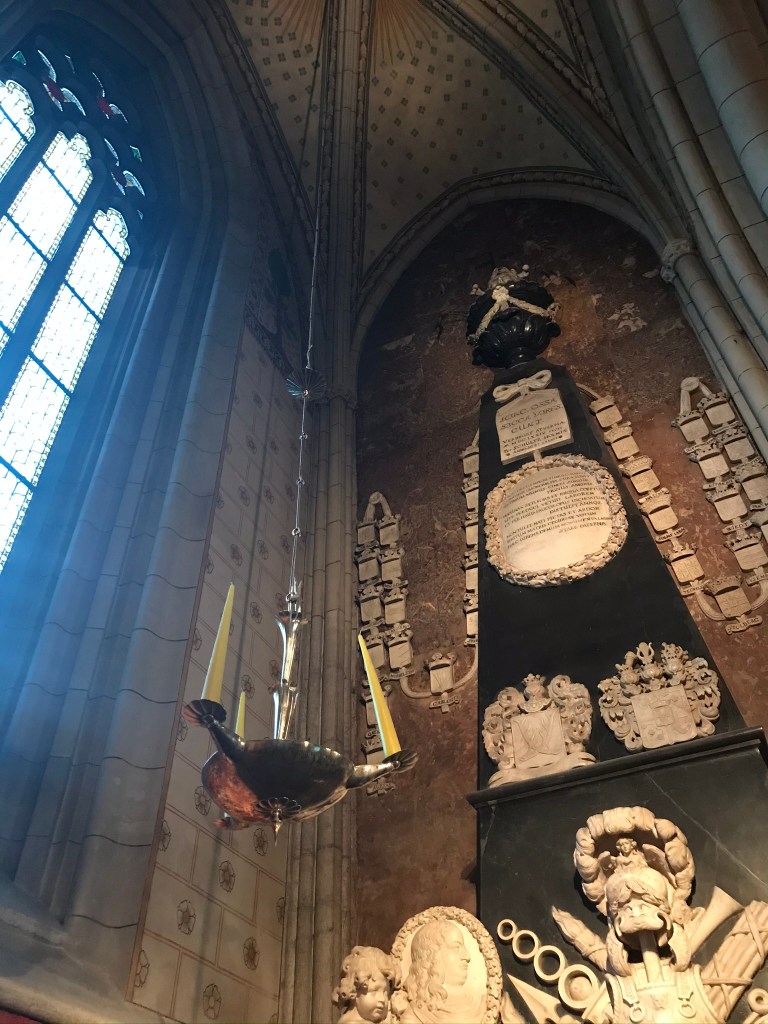
2. The Choir of Rememberance (von Dohna’s vault) / Minneskoret (von Dohnas gravkor)
The silver crown and candles donated by Ras Taffari, the later Ethiopian Emperor Haile Selassie I (1892-1975). In the background, the monument over Count Christopher von Dohna (1628-1668) and his wife Anna Oxenstierna.The textile on the wall made by Ann-Mari Forsberg (1916-1992) and shows the most important historical events from the history of the Cathedral
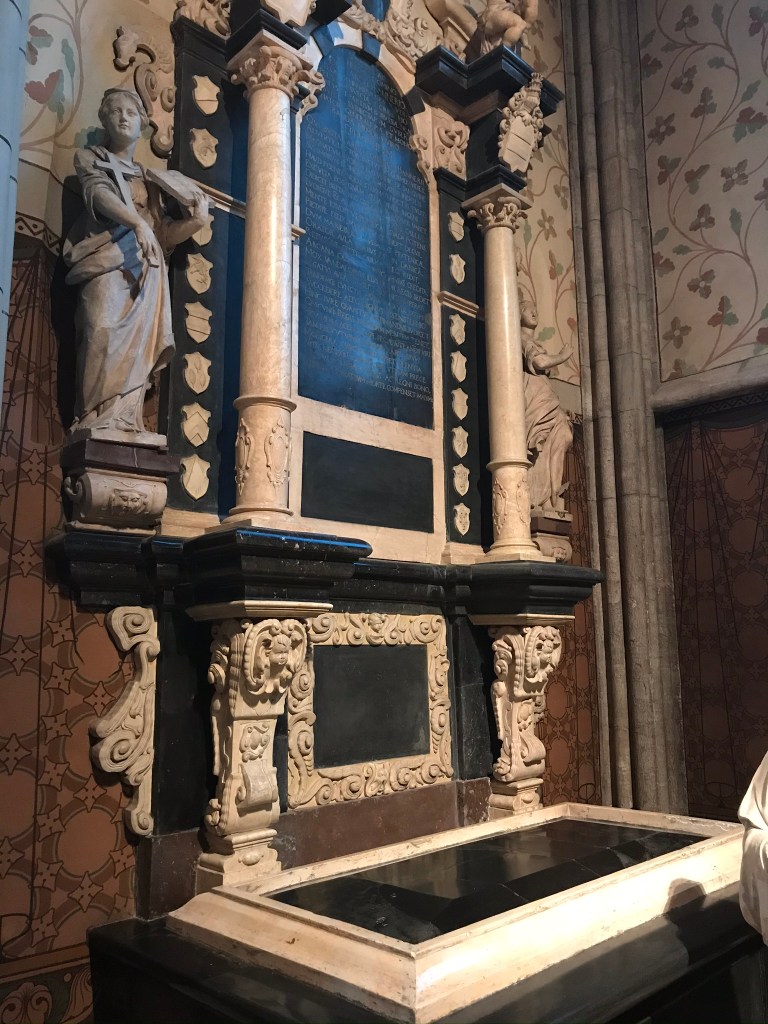
3. Banér’s vault / Banérs gravkor
Monument over Carl Banér (1598-1632) and his wife Christina Sigrid BielkeStatues representing Saints Lars (ca 1300), Erik Jedvardsson (end of 19th century) and Olof of Norway (ca 1300)
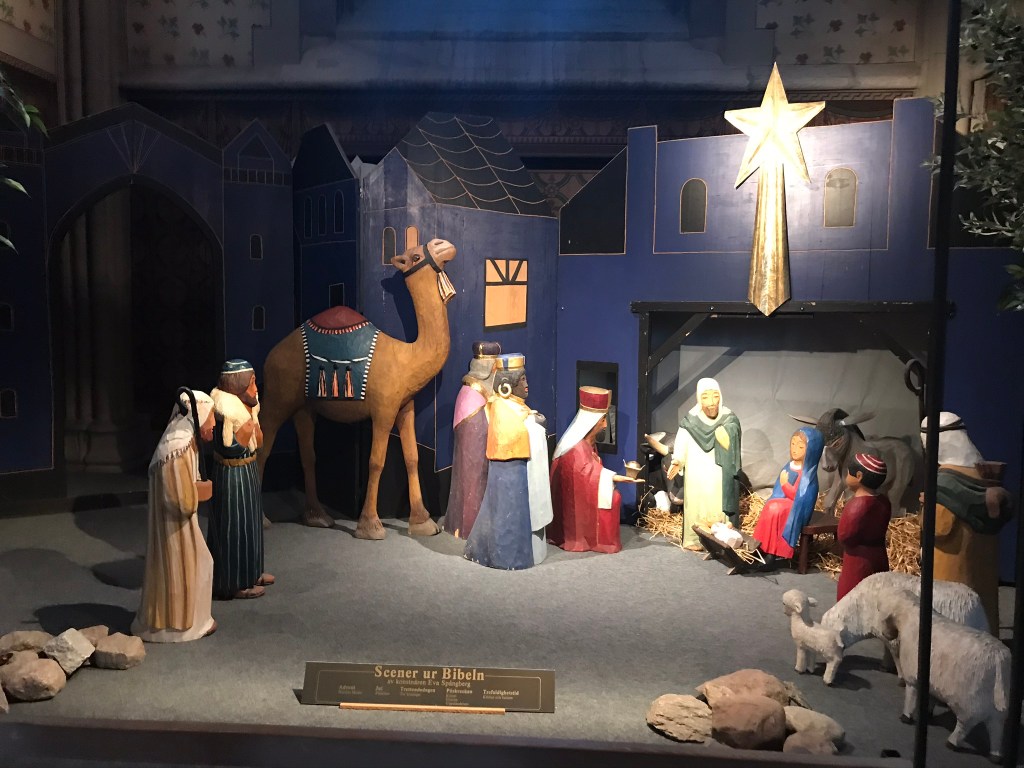
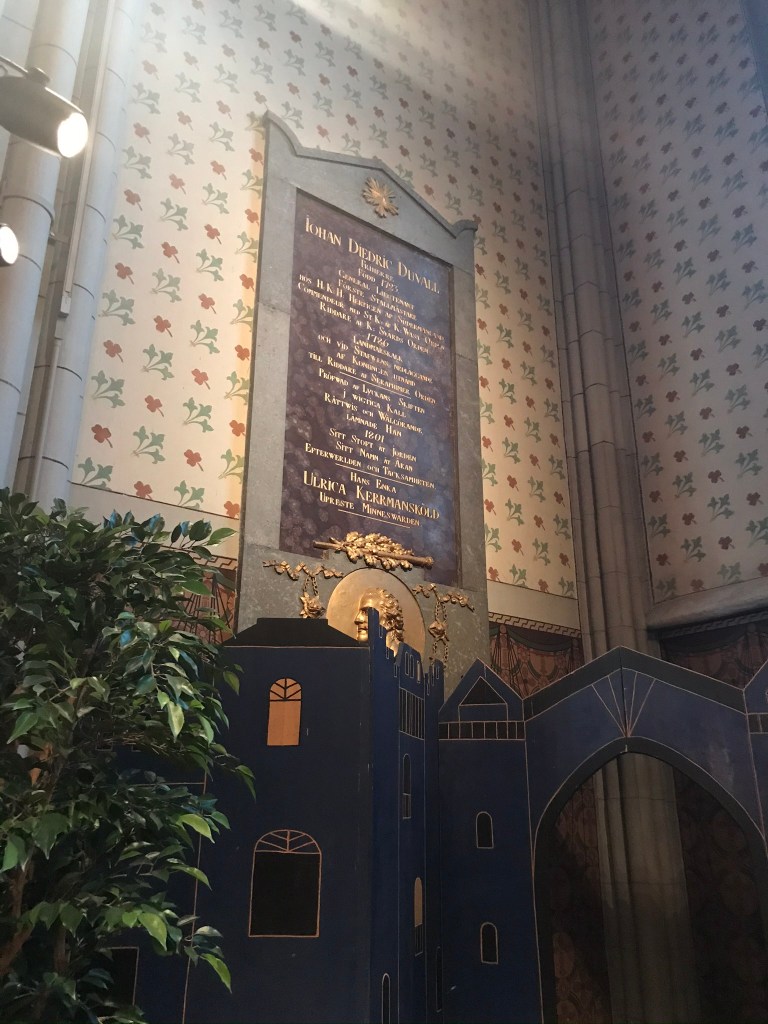
4. Andrew’s vault / Andreaskoret
Christmas scene by Eva Spångberg (1923-2011), one of the three SpångbergstablåerIn the vault are the graves of Lucretia Magnusdotter (ca 1560-1624), her husband Christoffer von Wernstedt, baron Johan Didrik Duvall (1723-1801) and his wife Ulrika Kerrmansköld
5. Masenbach’s vault / Masenbachska gravkoret
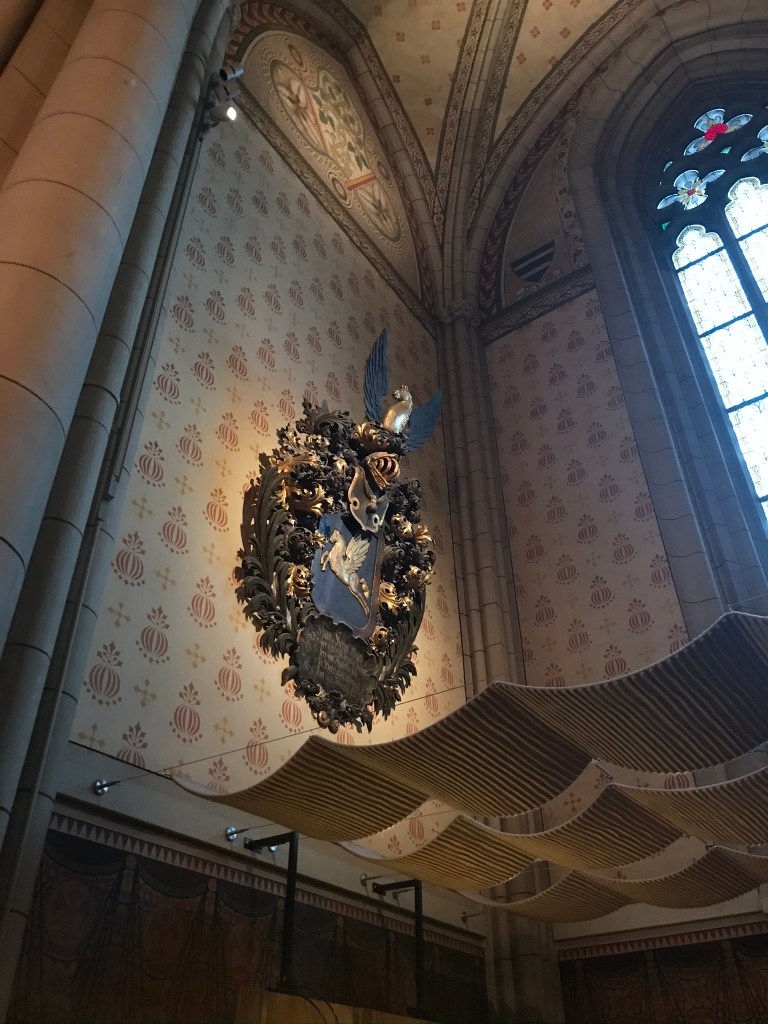
This vault is named after Hans von Masenbach (d. 1607), but contains the funeral coat-of-arms of Petter von Danckwardt (1662-1732) and Anders von Flygarell (d. 1734)
6. Gyllenborg’s vault / Gyllenborgska gravkoret
7. Northern Transept / Norra tvärskeppet
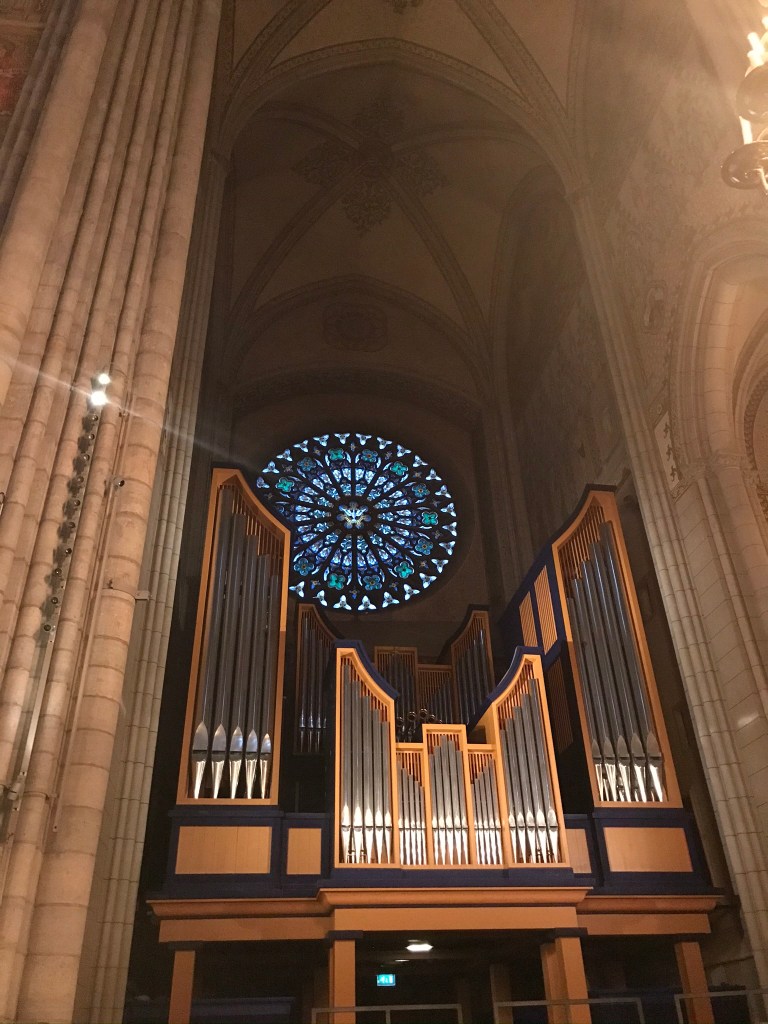
The organ built by Fratelli Ruffatti from Italy hides many mural paintings and commemorative plaques. Behind it, the Rose Window, the church’s oldest window, constructed in Gothic style, more probably of the French architcts. It resembles the windows from Notre Dame in Paris. The Southern church window, Sweden’s biggest church window, also named The Son’s or The Saviour’s window. Itis 18 x 7 m, the glas area is 50 km².
8. The Pulpit / Predikstolen
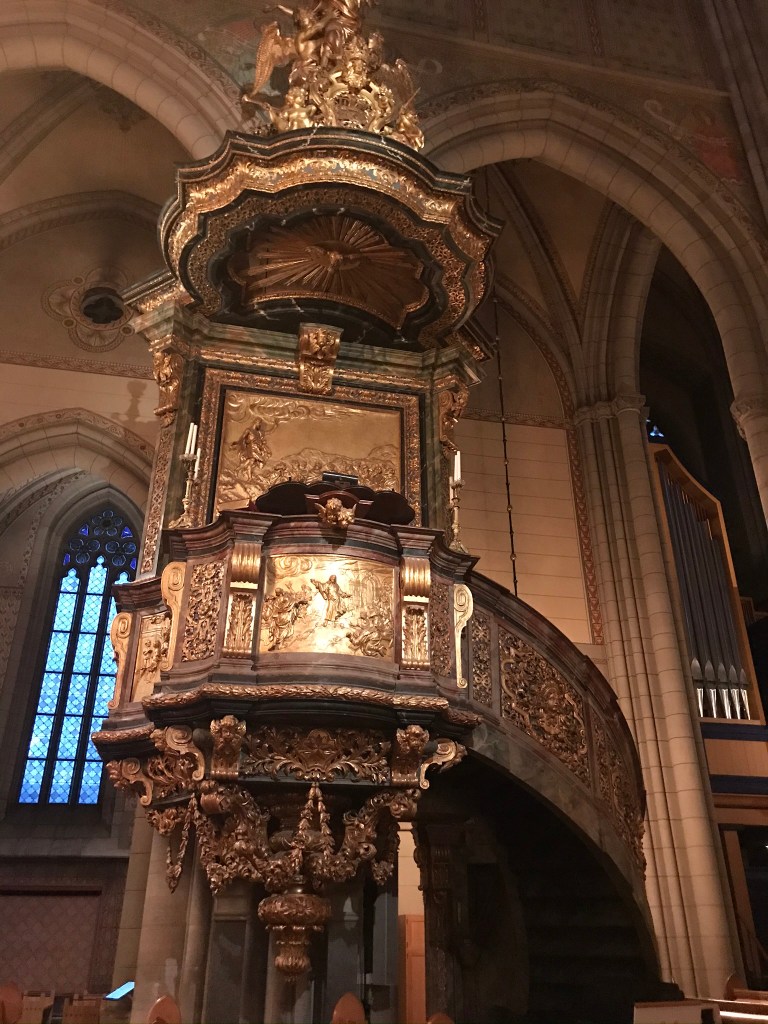
The pulpit was a gift from Queen Mother Hedvig Eleonora 1710, made by Burchardt Precht (1651-1738) and designed by Nikodemus Tessin the younger (1654-1728). It is made in Baroque-style, of small-leaved lime (lind) and of pinewood (furu), with gold inlays.
9. The chancel / Korsmitten
10. The Sanctuary / Högkoret
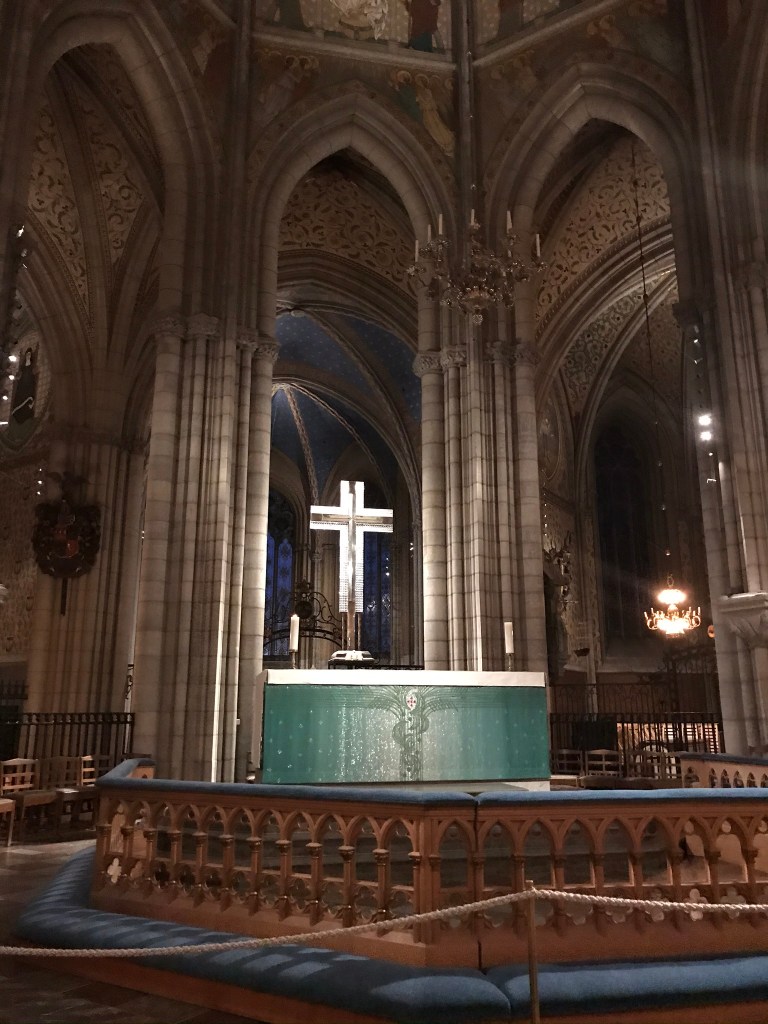
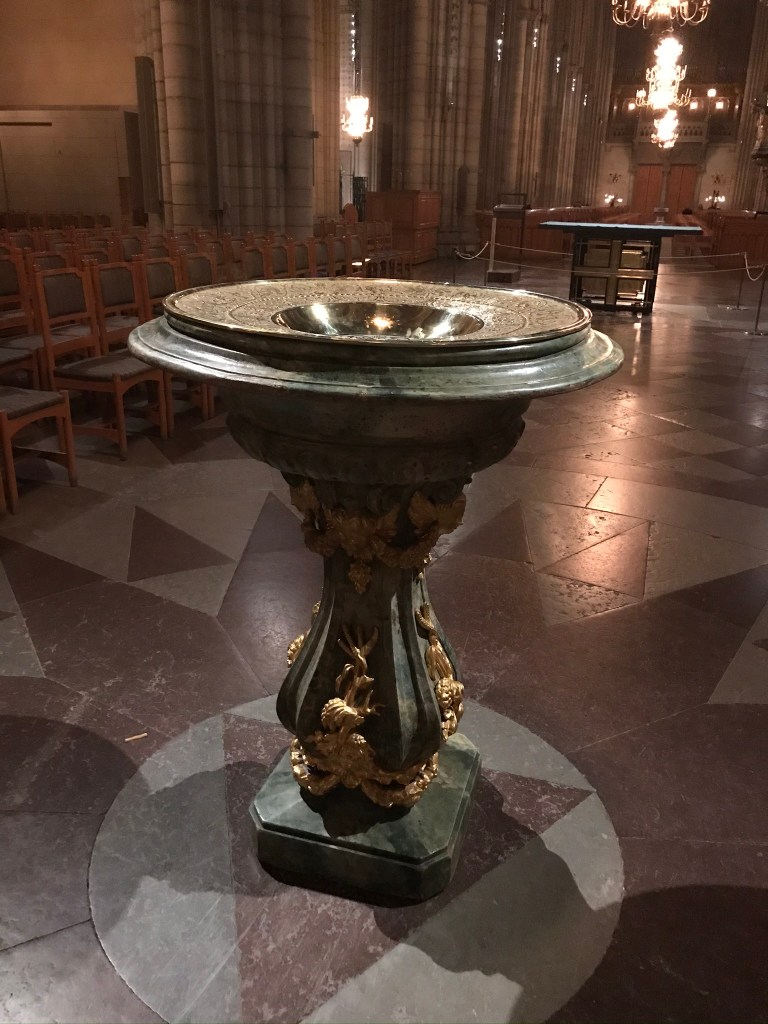
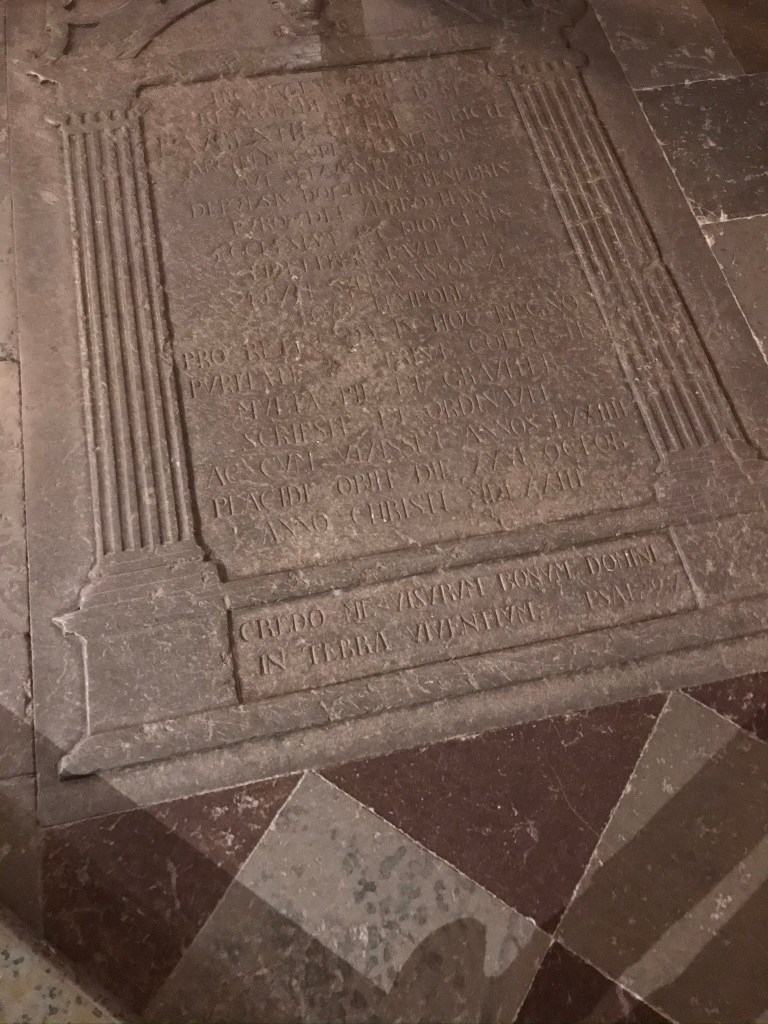
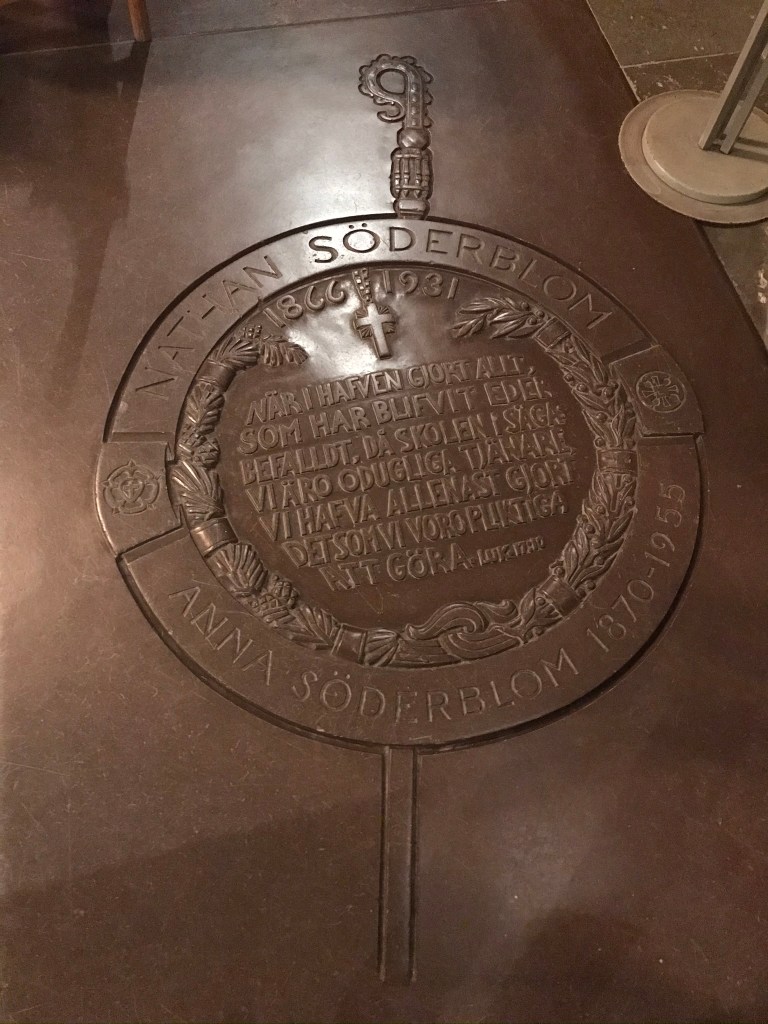
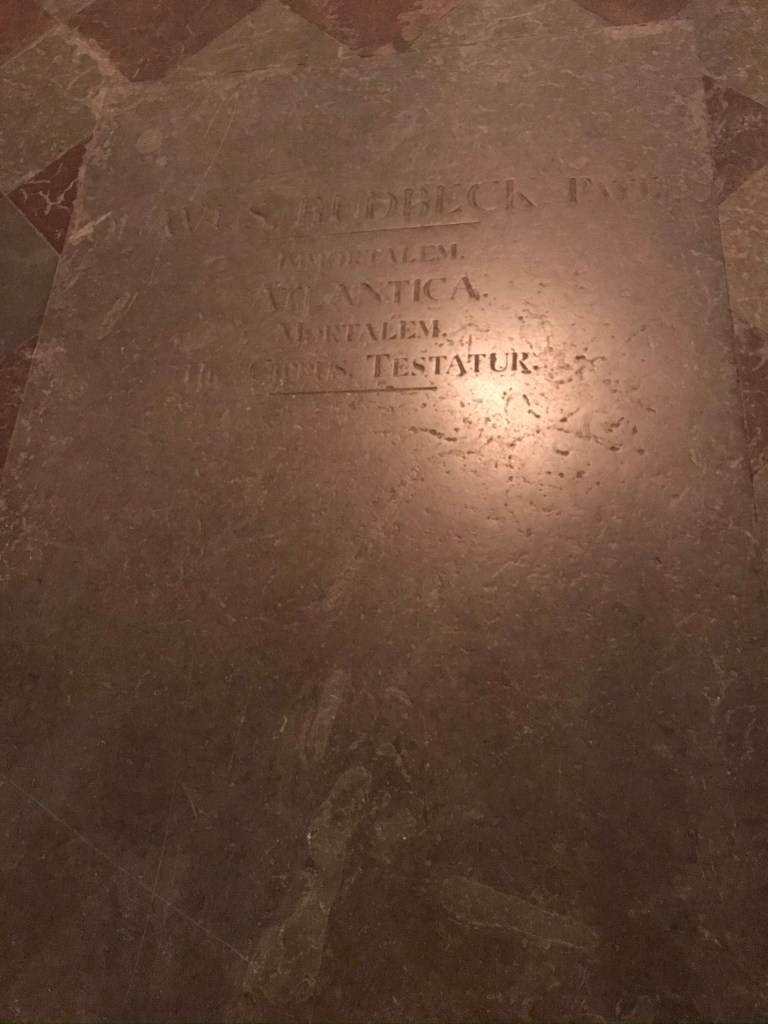
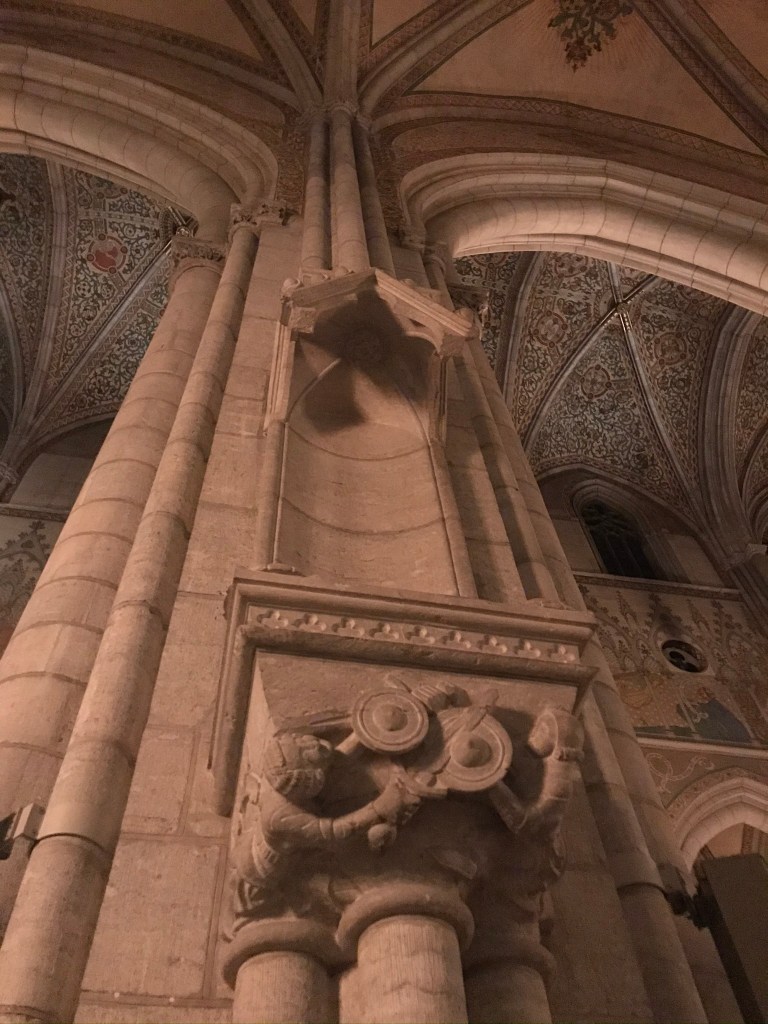
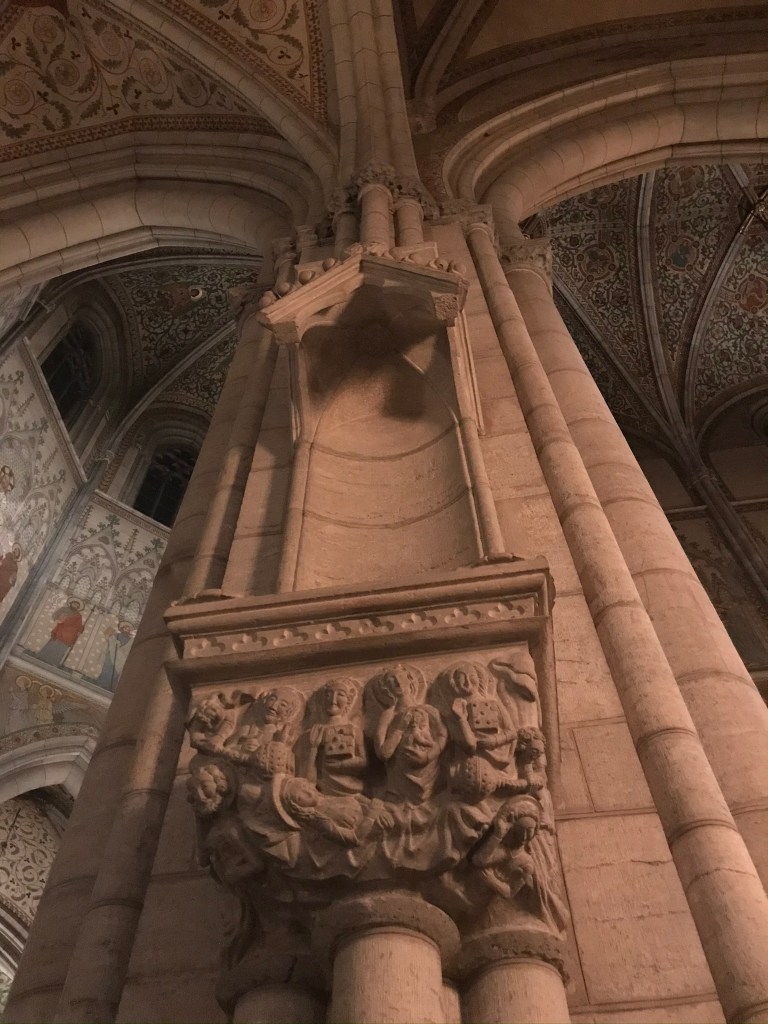
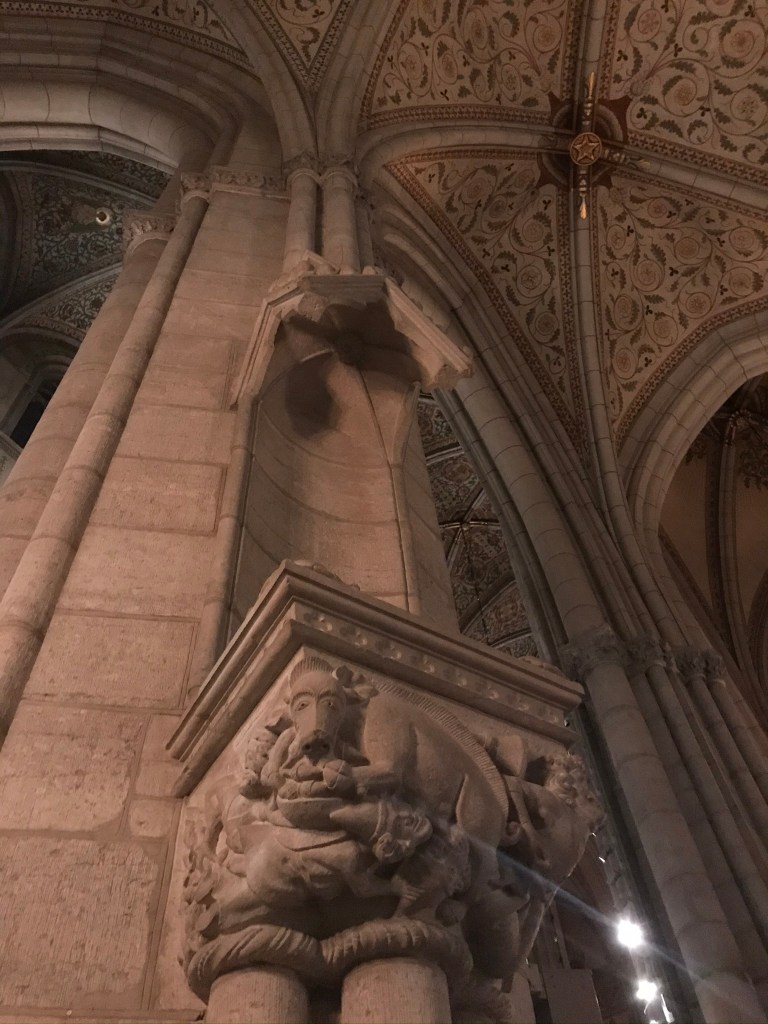
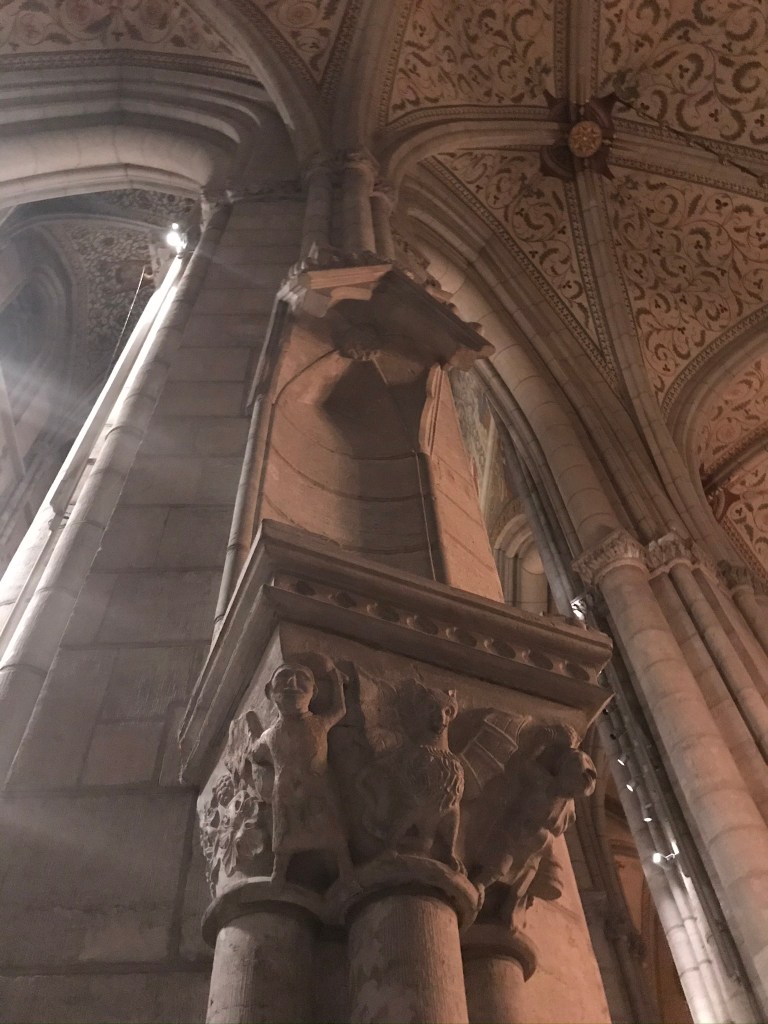
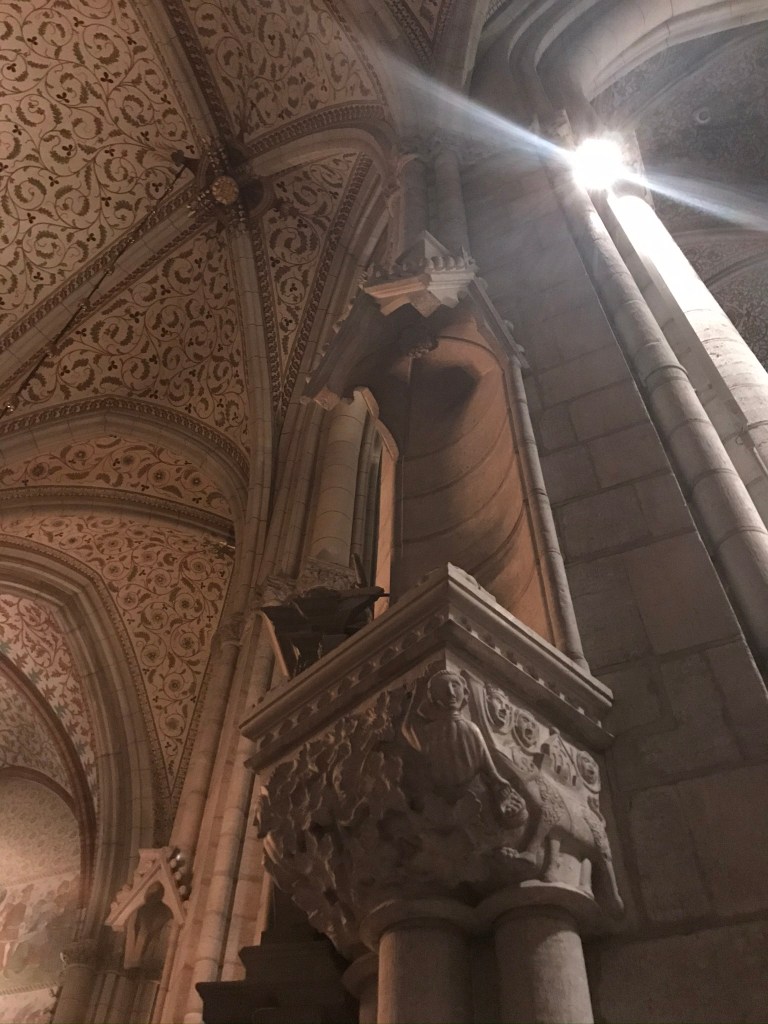
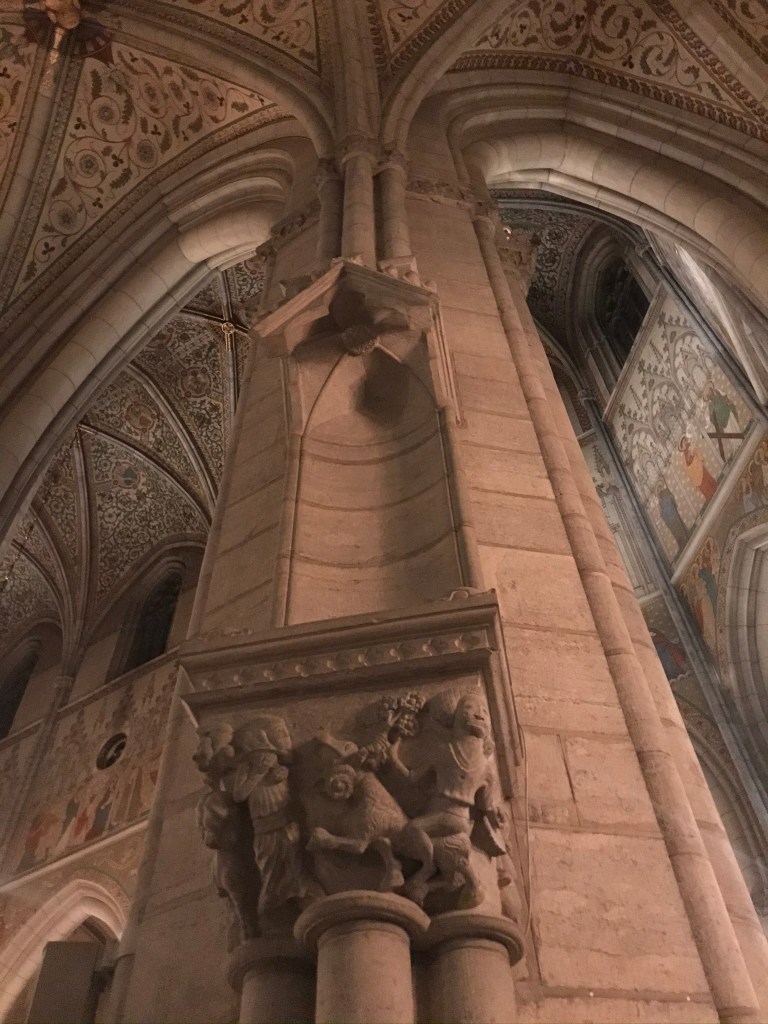
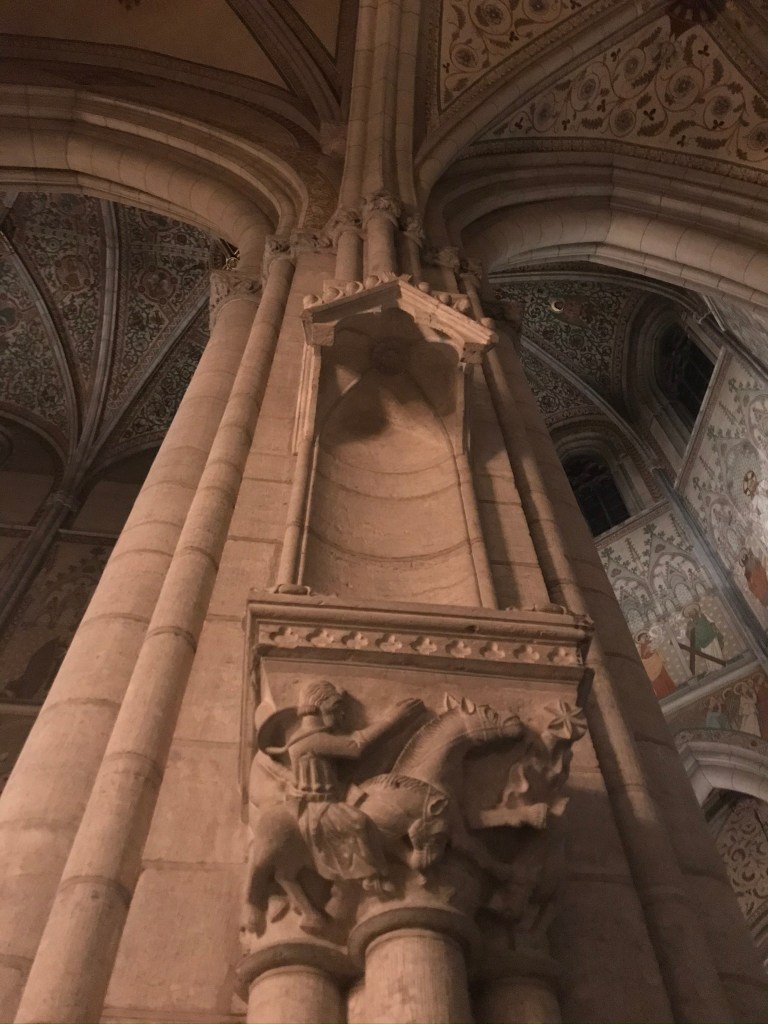
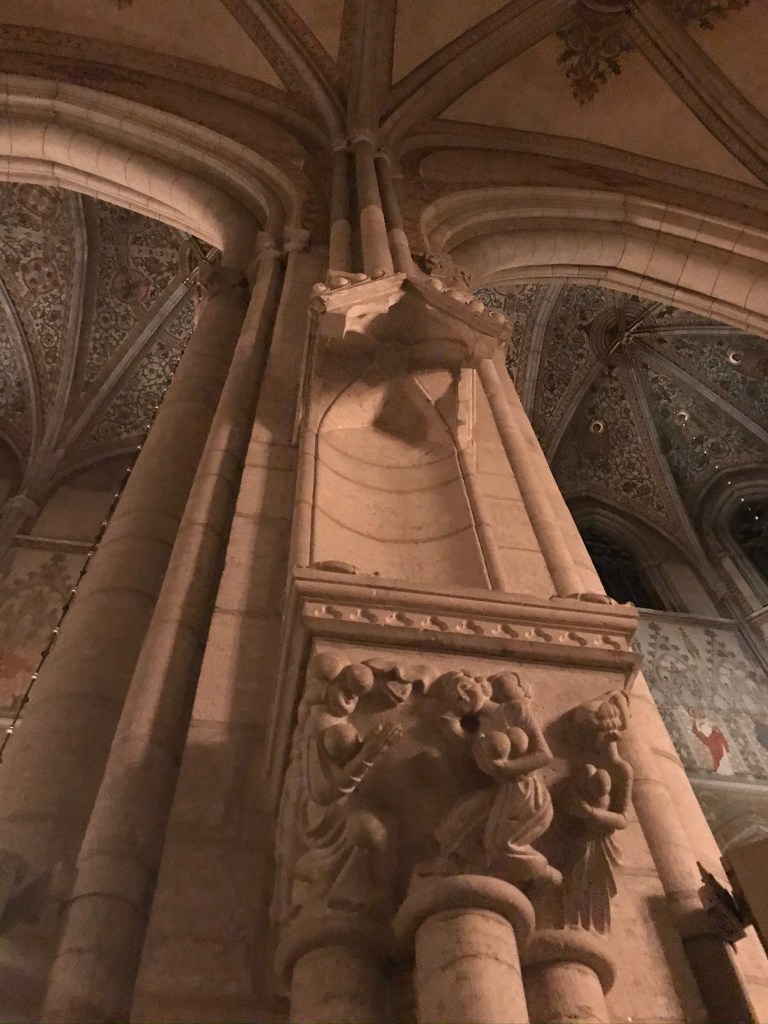
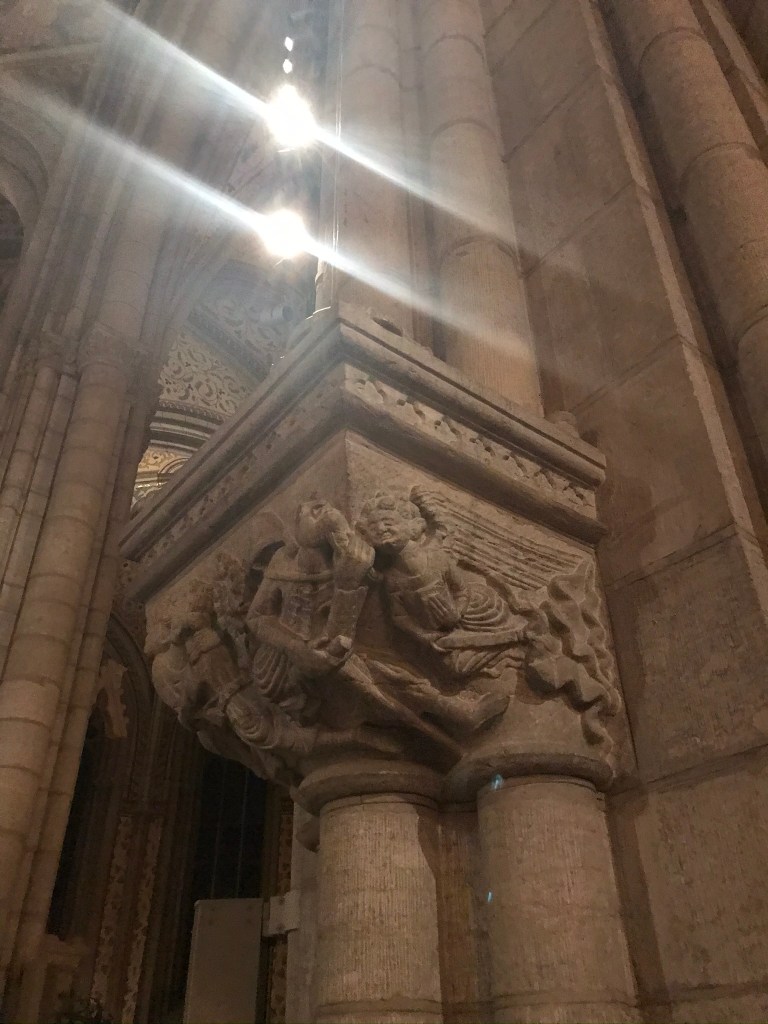
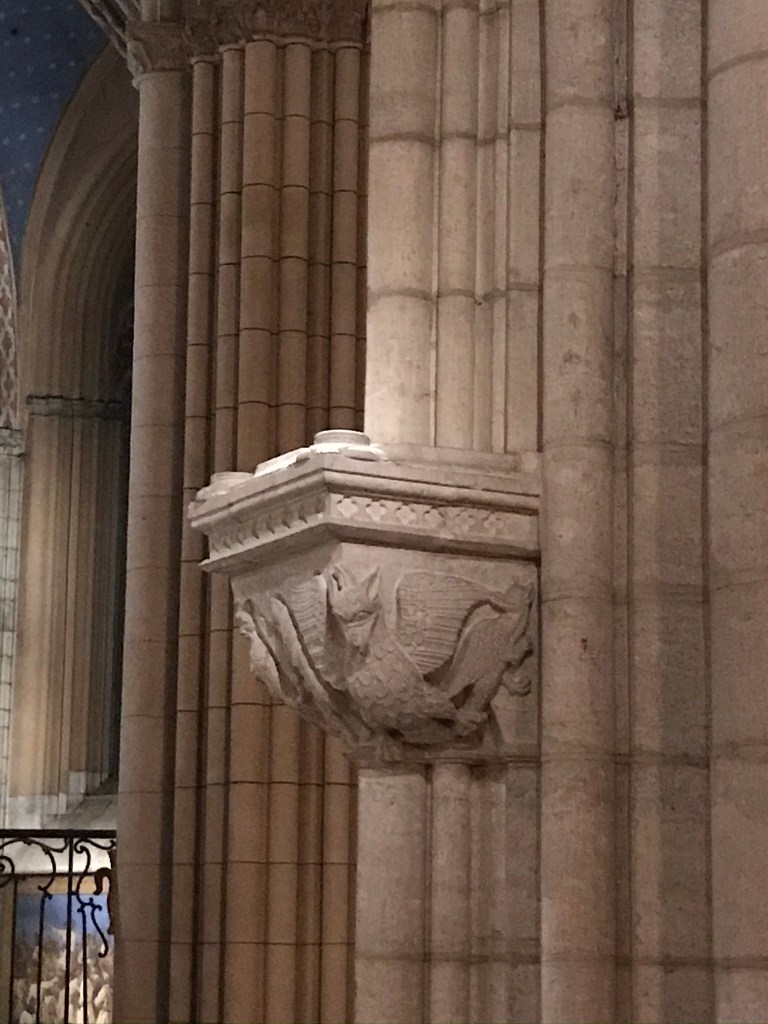
The Sanctuary preserves its medieval character, but the cross-monument is from 1976 and made by Bertil Berggren-Askenström (1917-2006) of silver and cristal glas. It is almost 3 m high. The baptismal font (dopfunten) is from 1757 and made by Magnus Granlund (d. 1779) of wood. The grave of Archbishop Laurentius Petri Nericius (1499-1573), the first Archbishop of the reformed Sweden.The grave of Archbishop Nathan Söderblom (1866-1931) and his wife Anna. Söderblöm got the Nobel prize for peace in 1930 for all the ecumenical work he had done before. The grave of Olof/Olaus Rudbeck (1630-1702), scientist and professor, writer of ”Atlantica”. On the grave, it is written: ”Of his immortality witnesses Atlantica / Of his mortality, this grave”. Corbel 1: dying in battle without taking the communion, a sudden, evil death.Corbel 2: Virgin Mary’s death, a good death.Corbel 3: ”Jews’ sow”/judesuggan, an anti-Jewish symbol or a symbol for the old religion Judaism. Corbel 4: a pagan sacrificial rite, the creature symbolizing unbelief.Corbel 5: the Christian faith is symbolized by the communion.Corbel 6: Un-Christian living, with symbols for pleasure, recklesness, fornication and unchastity. Corbel 7: saddler Staffan symbolizing the Christmas miracle or the Apostle Paul being converted.Corbel 8: the death of martyr Stefan, the stones symbolizing holding to one’s faith.Corbel 9: the female pelican feeding its chicks is a symbol for Christ’s salvation and resurrection.Corbel 10: the relics of Saint Erik are moved to Uppsala. Corbel 11: Jacob is wrestling with God and Joshua as Moses’ successorCorbel 12: the eagle’s defeat of the dragon symbolizes Christ’s victory over evil.
11. Jagello’s vault / Jagellonska gravkoret
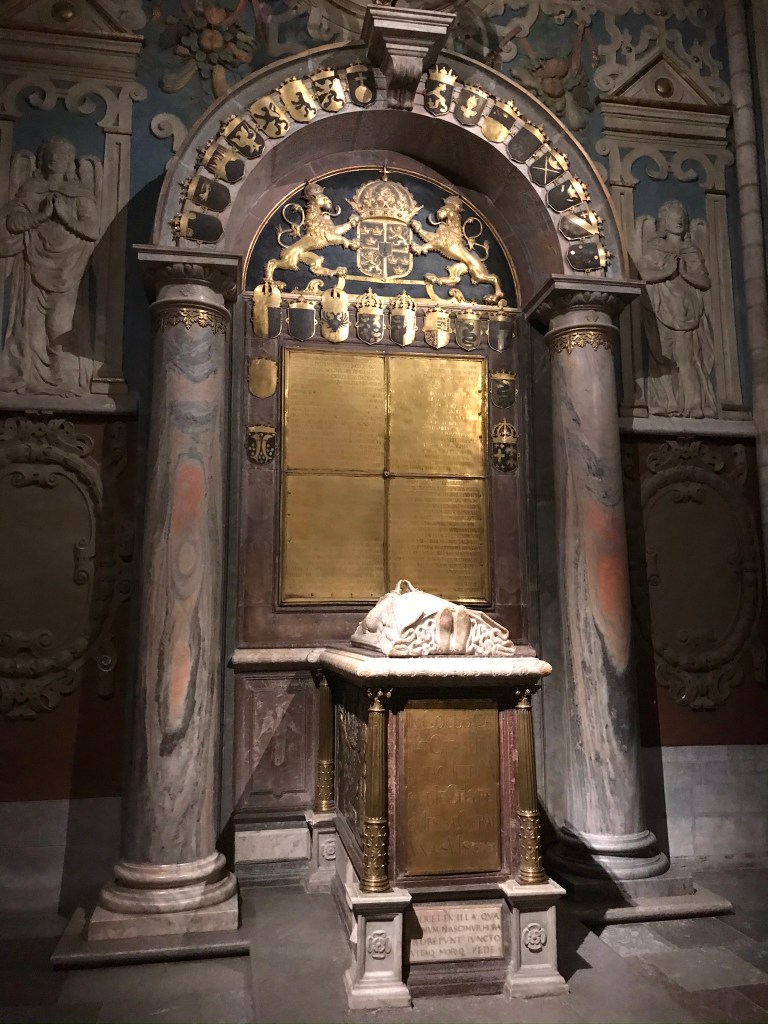
Monument over Queen Katarina Jagellonica (1526-1583), wife of King Johan III, made by Willem Boy (ca 1520-1592). The Queen is buried in the chapel.Monument over King Johan III (1537-1592), made by Willem von dem Block (d. 1628). The story behind the monument is very interesting: Block never got paid for his job because nobody wanted to pay for it after his son’s, Sigismund’s, deposition in 1599. Gustav III paid for the monument was delivered in 1783. However, it was installed in 1818 and in Johan’s wife’s chapel, not in the Vasa chapel, where Johan actually is buried.
12. Sture’s chapel / Sturekoret
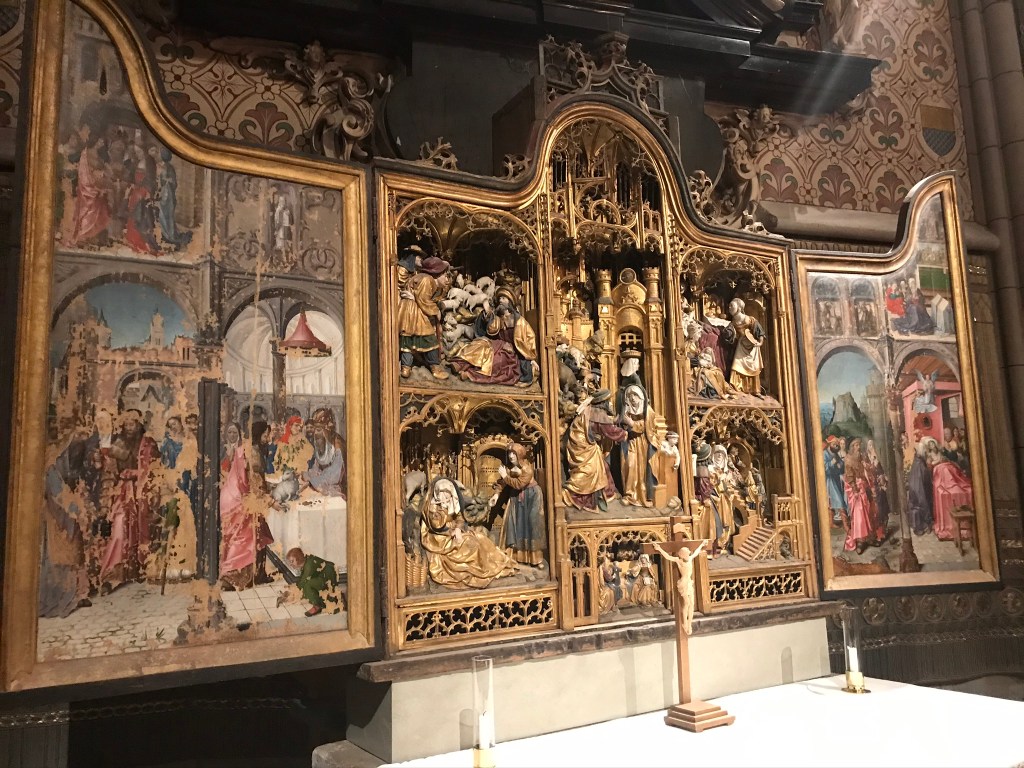
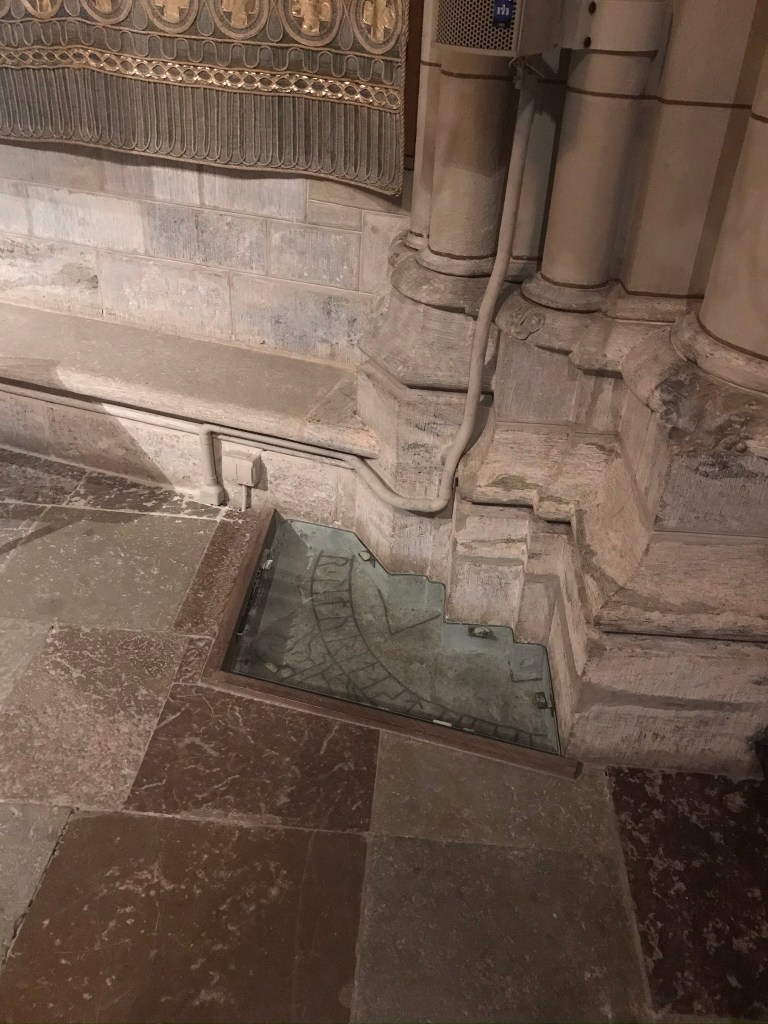
Monument over Svante Stensson Sture (1517-1567), who was murdered together with his two sons, Nils and Erik, by King Erik XIV in 1567 in Uppsala Castle, and who are buried in the chapel. Their clothes are preserved in the Treasury museum.The triptych is made in Bruxelles in the beginning of the 16th century and bought from Skånela church in Uppland in 1912. It describes the life of Virgin Mary’s parents Joakim and Anna. Runestone
13. Finsta chapel / Finstakoret
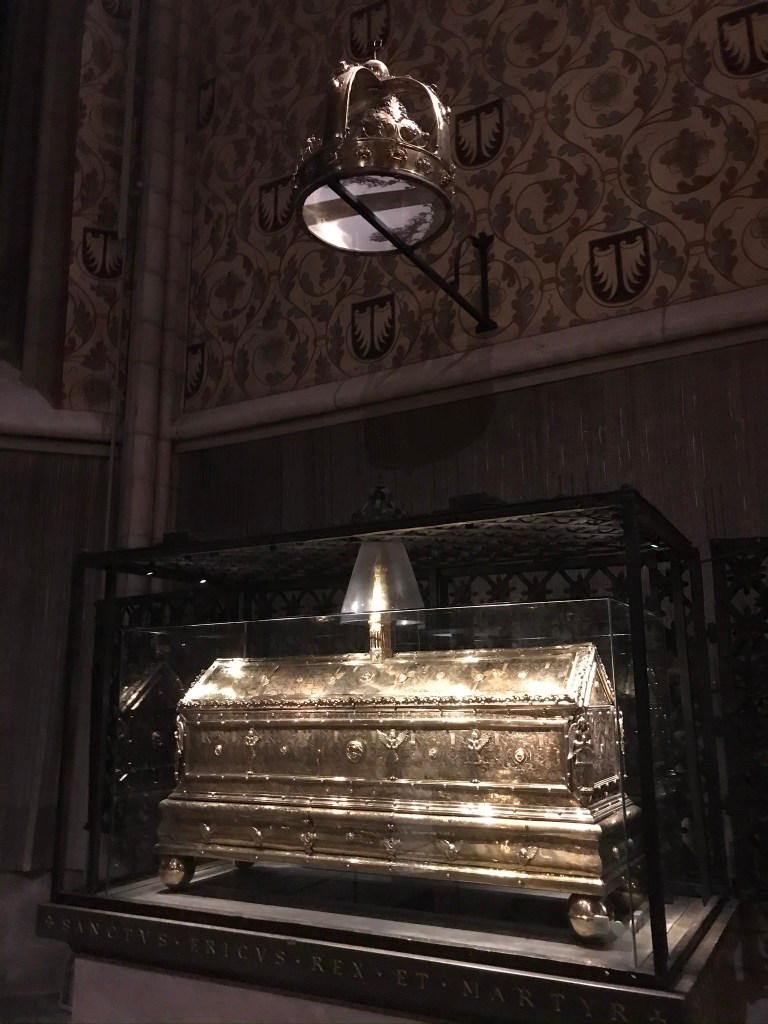
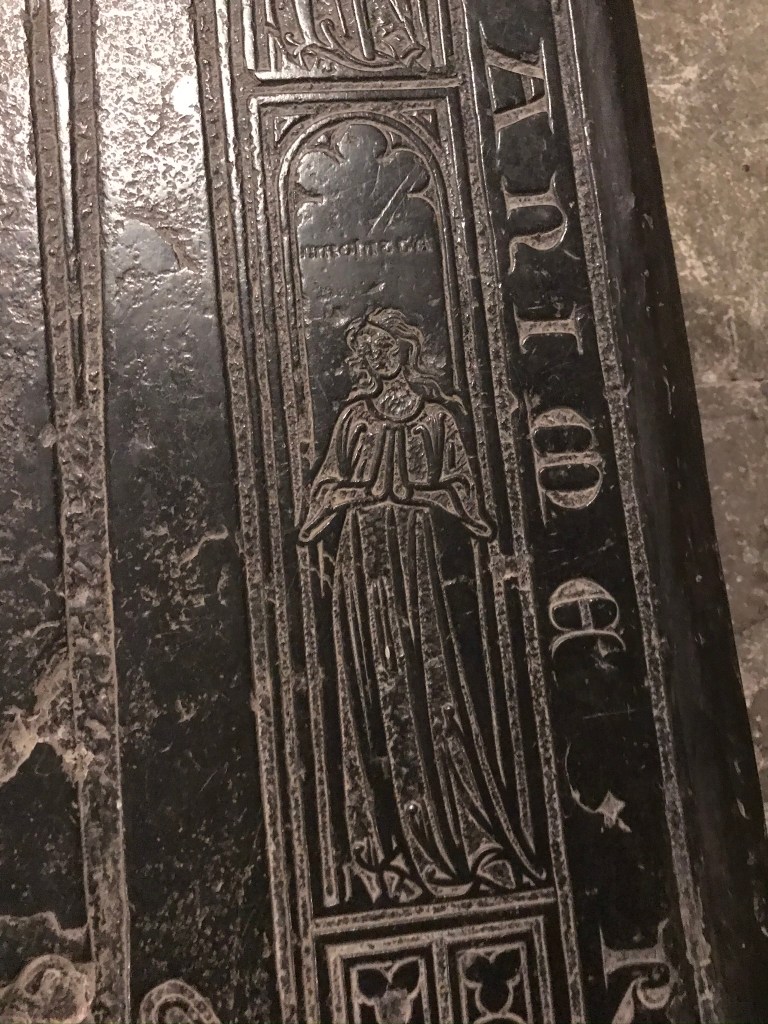
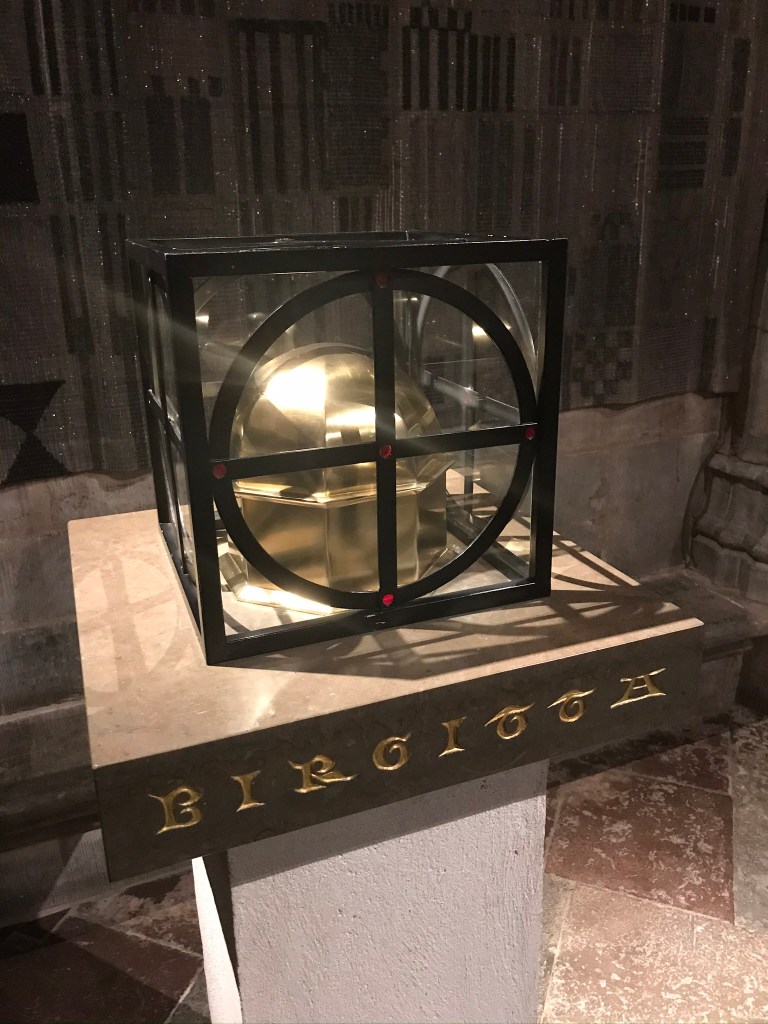
The shrine of King Erik Jedvardsson the Holy (d. 1160). The king’s remains were moved to Uppsala from Old Uppsala in 1273. The coffer is from 1579 and made by Hans Rosenfeldt and Gillis Coyet of 34,16 kg silver, 0,64 kg gold and 1,6 kg copper. The crown is from 1584, from the funerals of Queen Katarina Jagellonica. King Erik’s crown is also placed in the coffer. The grave of Birger Persson of Finsta (d. 1327) and his wife Ingeborg Bengtsdotter of the dynasty Folkunga (d. 1314), the parents of Saint Birgitta (1303-1373). The oldest picture of Saint Birgitta is that of a young girl on her parent’s gravestone. A relic from St Birgitta, donated by the sisters in Rome in 1986. The coffer is made by Olof Sundqvist (b. 1962) and the glass cover by Bengt Olof Kälde (1936-2014).The grave of Duchess Elisabet of Mecklenburg Vasa (1549-1597), dotter of Gustav Vasa and Margareta Leijonhufvud.








 Discover Sweden with Alex