Sand, windmills, dumplings, birds, limestone, brown beans, Eketorp, Borgholm castle ruins
Öland is located in Götaland (southeastern Sweden), being with its ca 1 350 km² (0,3% of the whole country) the smallest province of all 25. The province includes only 1 county and it belongs to the diocese of Växjö. It has a population of ca 26 090 inhabitants (24th place of 25), thus having a density of ca 20 inhabitants/km².
The highest point is Höghäll in Borgholm kommun (central Öland) with 55 m. The biggest lake is Hornsjön (ca 2,5 km², altitude of 10 m), located in the north of the province. The plant symbol of the province is the hoary rockrose (Ölandssolvändan) and the animal and bird symbol is the thrush nightingale (näktergalen). Other symbols: the European flounder fish (skrubbskädda), the grasshopper insect (rosenvingad gräshoppa), the apple sort Öland’s king’s apple (Ölands kungsäpple), St. George’s mushroom (vårmusseron), the Encalypta moss (slät klockmossa), the rock type Ortoceratite limestone (ortoceratitkalksten) and the element of iodine (jod/I).
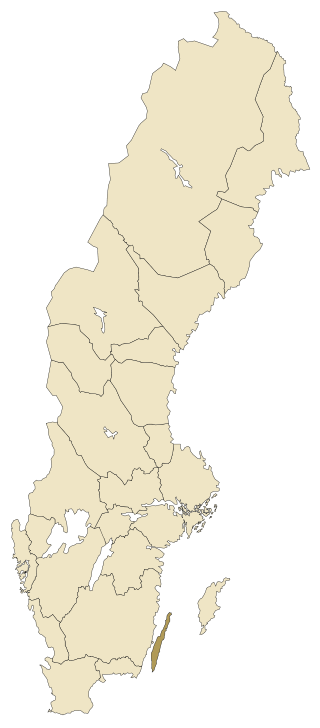
Source: https://upload.wikimedia.org/wikipedia/commons/e/e6/Sverigekarta-Landskap_%C3%96land.svg

Source: https://upload.wikimedia.org/wikipedia/commons/1/11/%C3%96land_landskapsvapen_-_Riksarkivet_Sverige.png
Öland consists of only 1 county (län), Kalmar. Öland has 2 municipalities, X registration districts and X urban areas. The biggest city on Öland is Färjestaden with ca 5 970 inhabitants. The province has even its own provincial song called Ölandssången or Här är fagra sommarlandet, written by Sven Erik Sjöholm (1889-1970) and composed by Gunnar Norlén (1884-1966).
Here you can find information from both municipalities on Öland. Click on the name in order to go further and read more about places to visit and things to do on Öland.
Följ min blogg
Få nytt innehåll direkt till din inkorg.
 Discover Sweden with Alex

