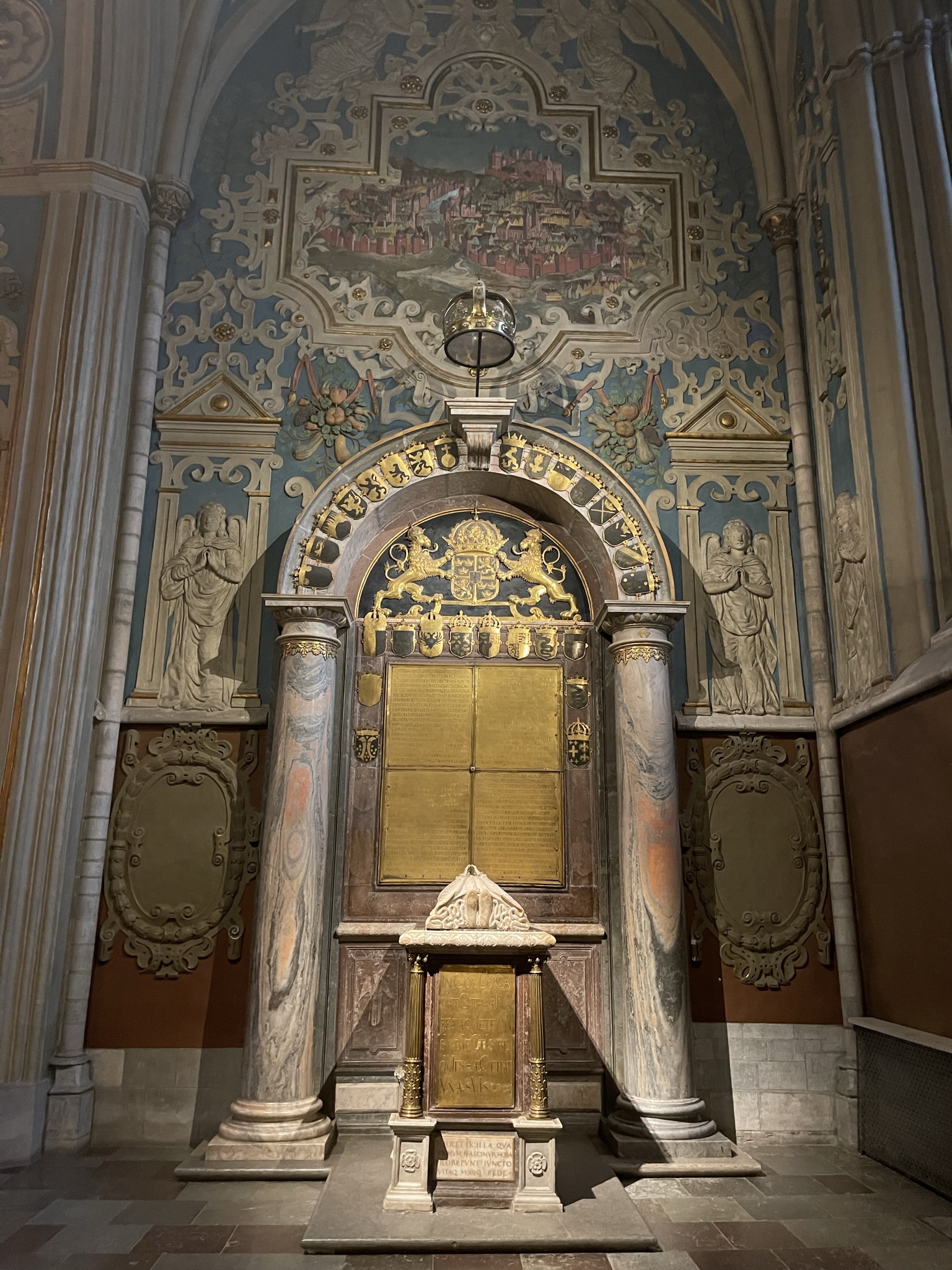
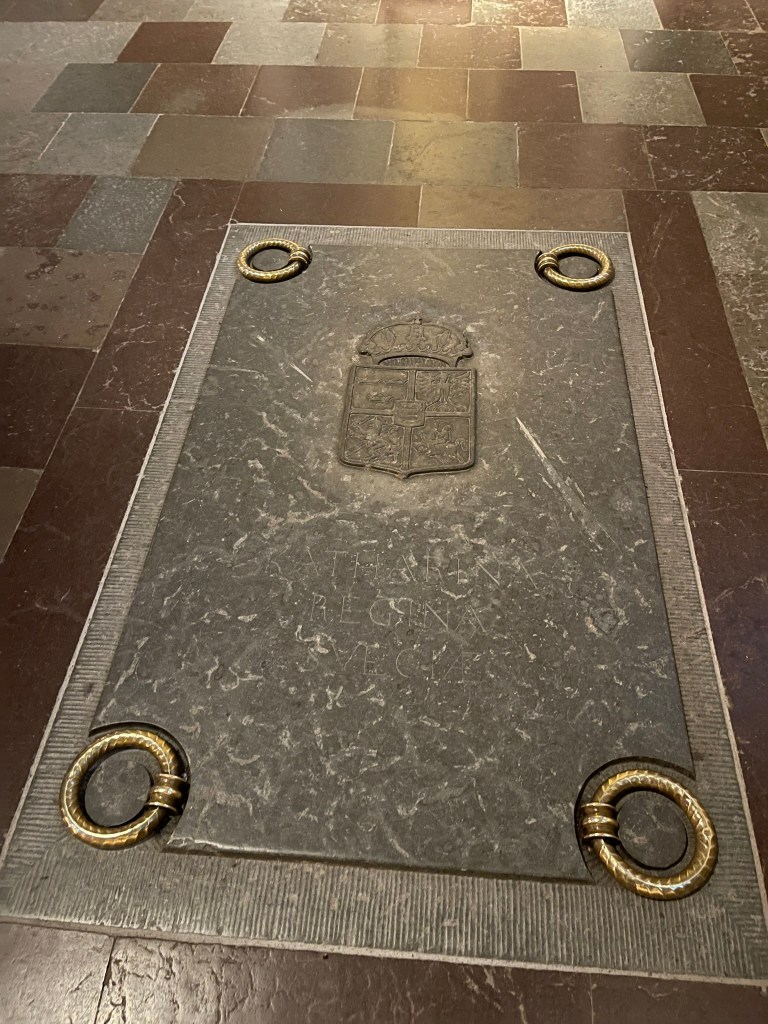
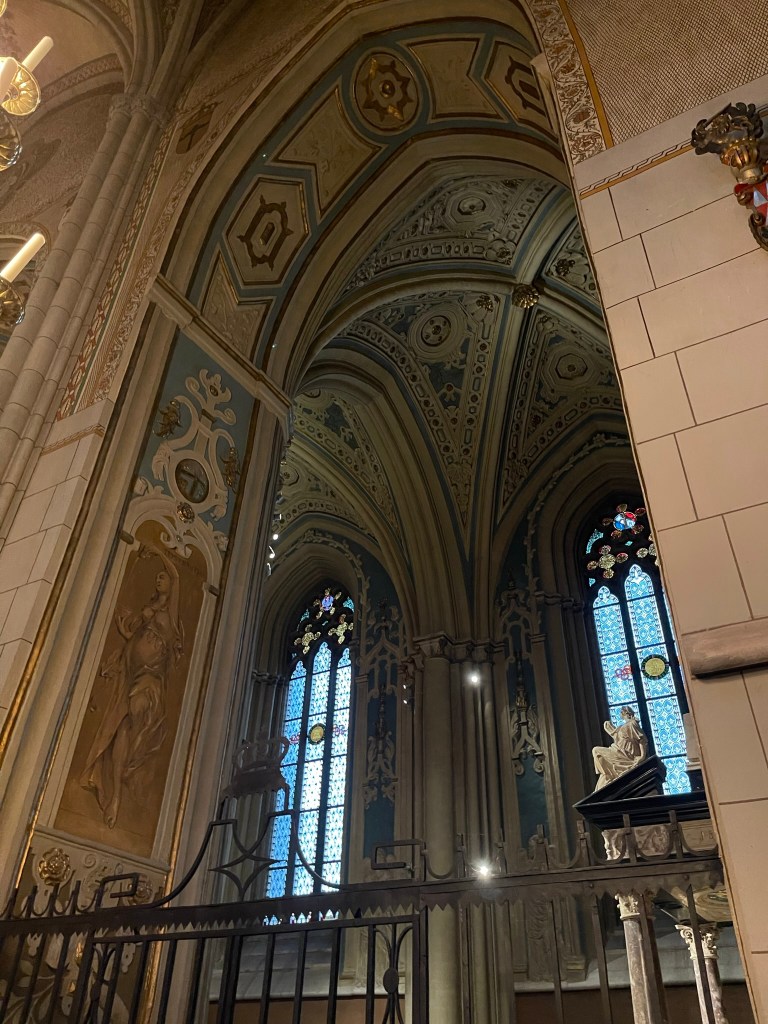
Gravkoret tillhör domkyrkans äldsta. Här fanns från början slutna rum – kapitelsalen (där präster och beslutsfattare sammanträdde) och sakristian. Rummen byggdes om på initiativ av kung John III till ett gravkor för sin älskade polsk-litauiska hustru, drottning Katarina Jagllonica (1526-1583). Monumentet är gjort av marmor, kalksten och alabaster av hovmålaren och bildhuggaren Willem Boy (ca. 1520-1592) och medhjälparen Arent Paladin.
The grave choir is one of the cathedral's oldest. From the beginning, there were closed rooms here - the chapter hall (where priests and decision-makers met) and the sacristy. The rooms were rebuilt on the initiative of King John III into a burial ground for his beloved Polish-Lithuanian wife, Queen Katarina Jagllonica (1526-1583). The monument is made of marble, limestone and alabaster by the court painter and sculptor Willem Boy (ca. 1520-1592) and his assistant Arent Paladin.
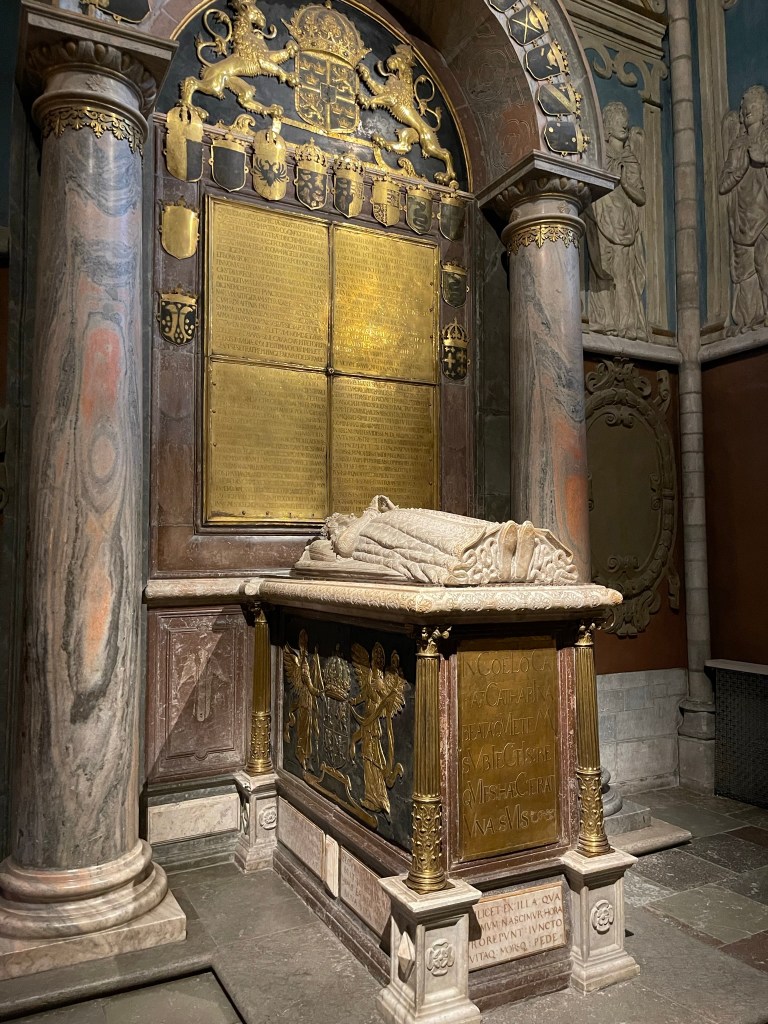
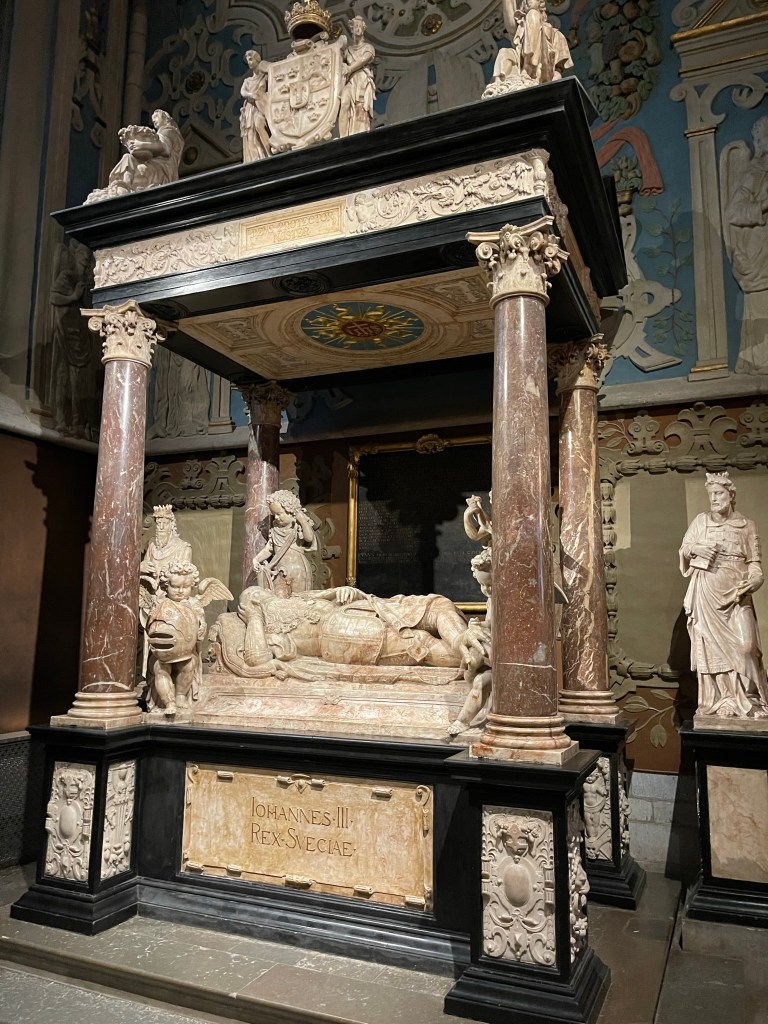
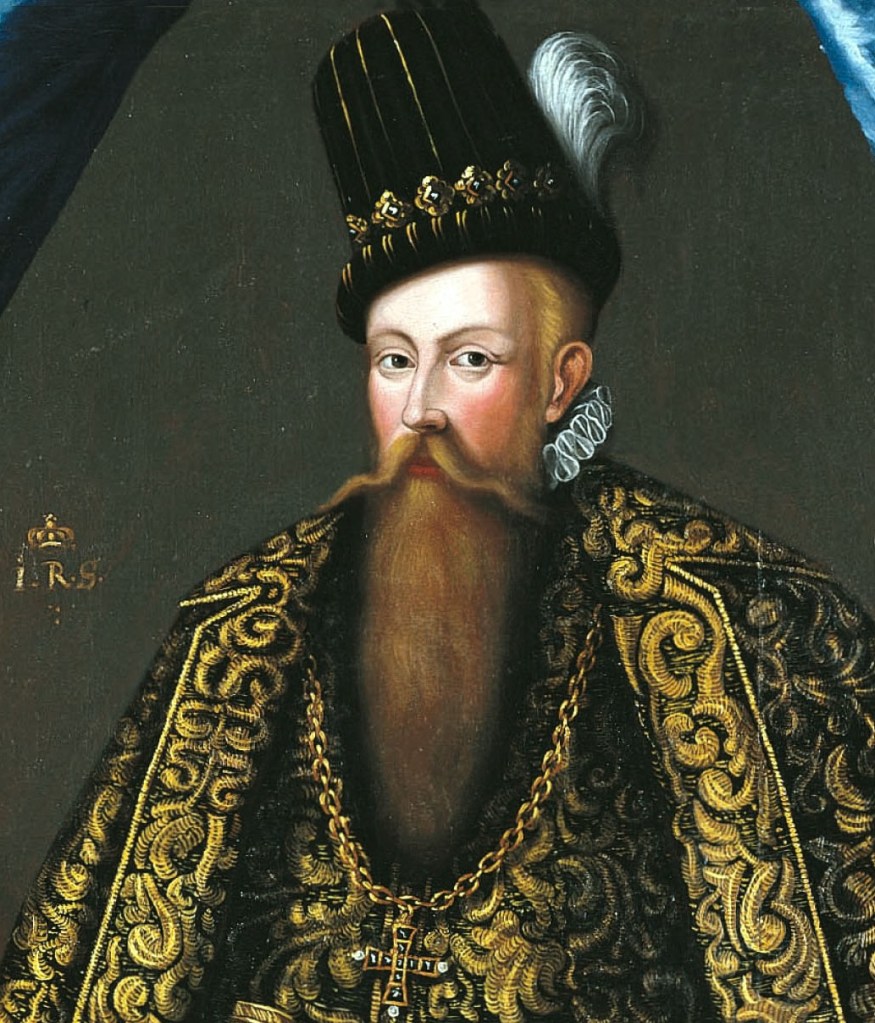
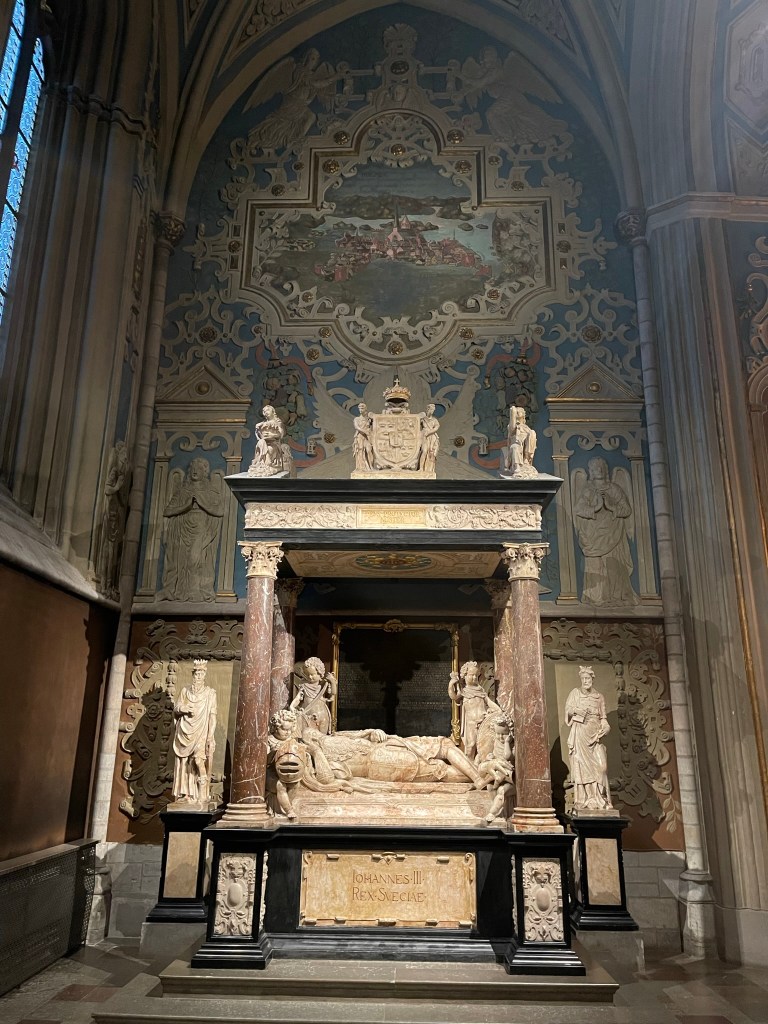
Kung Johan III (1537-1592) är gravsatt i kryptan under Vasakoret tillsammans med sin far Gustav Vasa. Detta gravmonument i Jagellonska gravkoret är av samma stenslag som drottningens och beställdes från skulptören Willem von dem Block (d. 1628) i Danzig/Gdansk. Monumentet blev dock klart under Johans bror Karl IX och ingen var längre villig att betala för det. Det var först Gustav III, 200 år senare, som betalade för det och monumentet kom till domkyrkan år 1783, men sattes först upp 1818 och då i detta gravkor.
King Johan III (1537-1592) is buried in the crypt under the Vasa Choir together with his father Gustav Vasa. This tomb monument in the Jagiellonian Tomb Choir is of the same type of stone as the Queen's and was commissioned from the sculptor Willem von dem Block (d. 1628) in Danzig / Gdansk. However, the monument was completed under Johan's brother Charles IX and no one was willing to pay for it anymore. It was not until Gustav III, 200 years later, who paid for it and the monument came to the cathedral in 1783, but was first erected in 1818 and then in this burial choir.

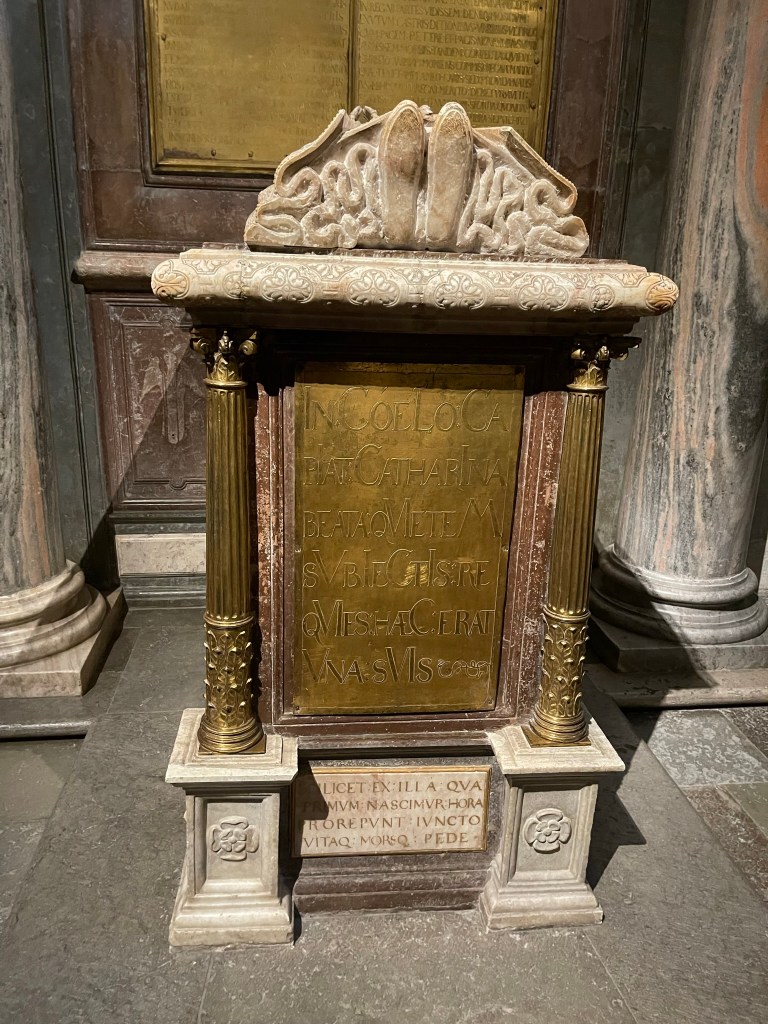
KURIOSA – Har Johan III två vänsterben?
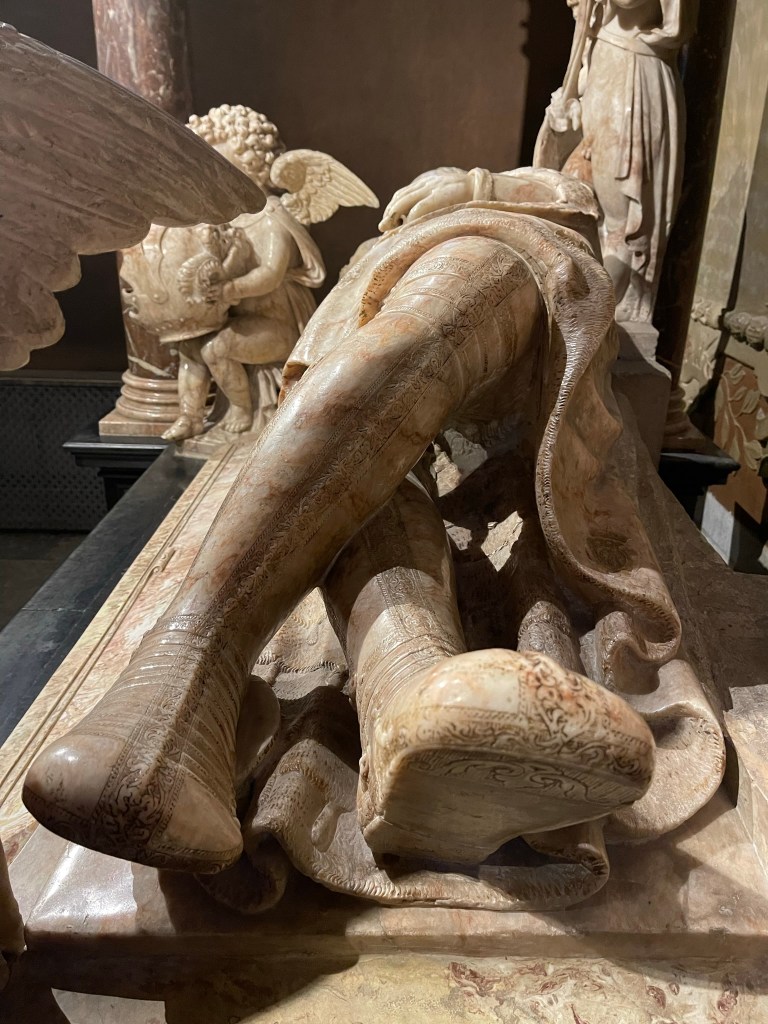
Som jag skrev ovan, ville inte den nya svenska regeringen efter Johans död och hans son Sigismunds utvisning betala för monumentet och det blev kvar i Danzig tills Gustav III betalade för det. Men konstnären, Willem van der Blocke, lär ha hämnats genom att avbilda Johan med två vänsterben. Stämmer detta? Se själv!
As I wrote above, after Johan's death and his son Sigismund's deportation, the new Swedish government did not want to pay for the monument and it remained in Danzig until Gustav III paid for it. But the artist, Willem van der Blocke, is said to have taken revenge by depicting Johan with two left legs. Is this correct? See for yourself!
 Discover Sweden with Alex