Anledningen till att jag valt att skriva om kragstenarna är att de är fascinerande inblick i medeltidens mentalitet samt arkitektur och bildkonst. Inlägget bygger till stora delar på Annika Franzons guidebok om domkyrkan.
The reason why I chose to write about the corbels is that they are fascinating insights into the medieval mentality as well as architecture and visual art. The post is largely based on Annika Franzon's guidebook on the cathedral.
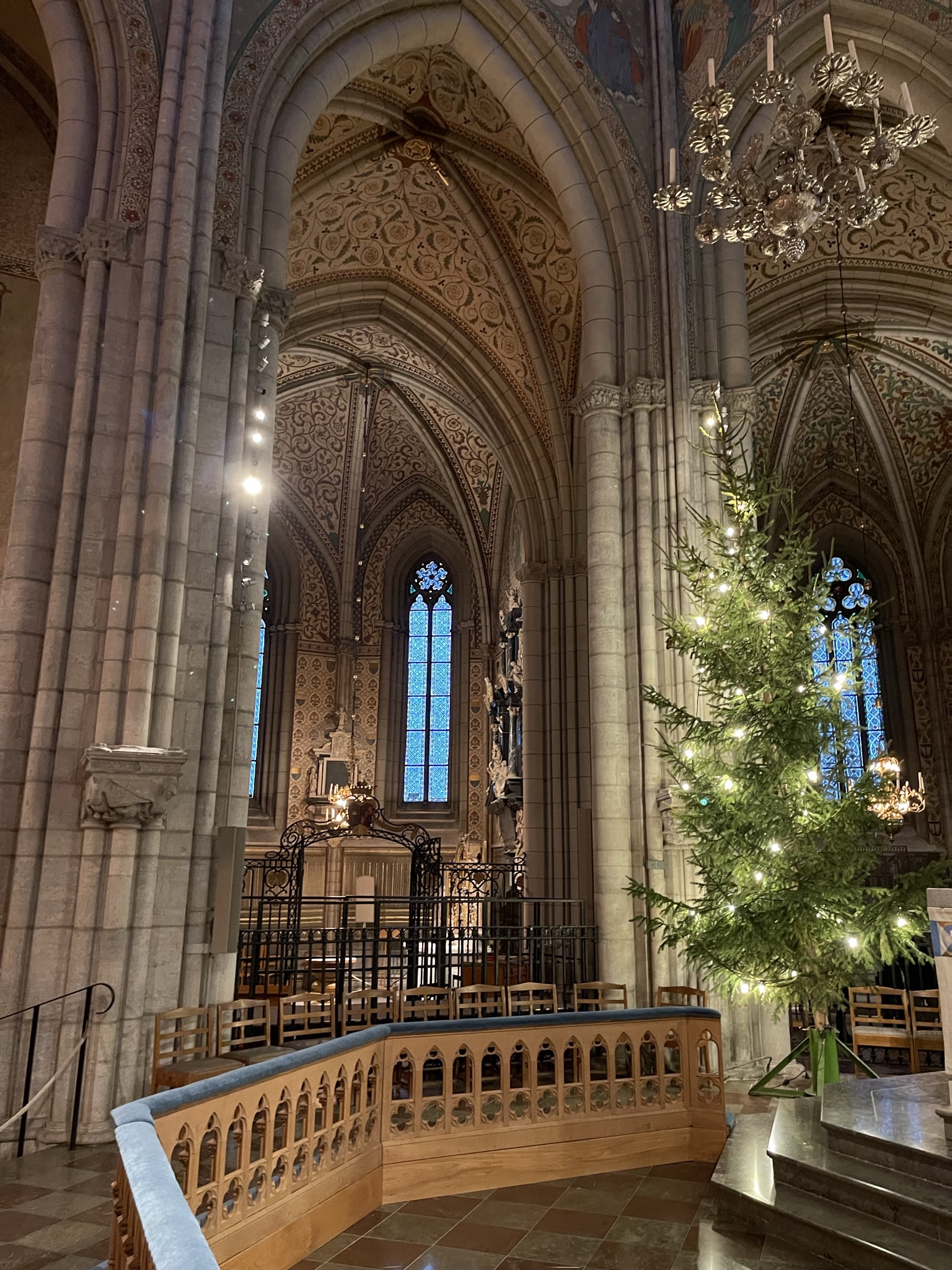
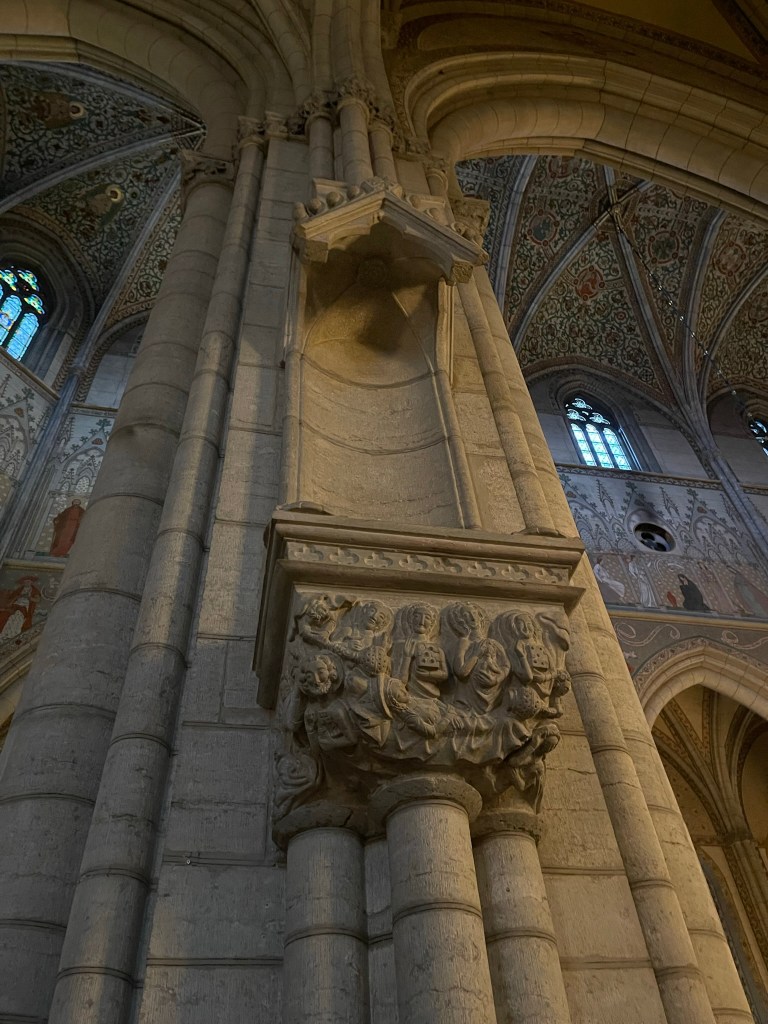
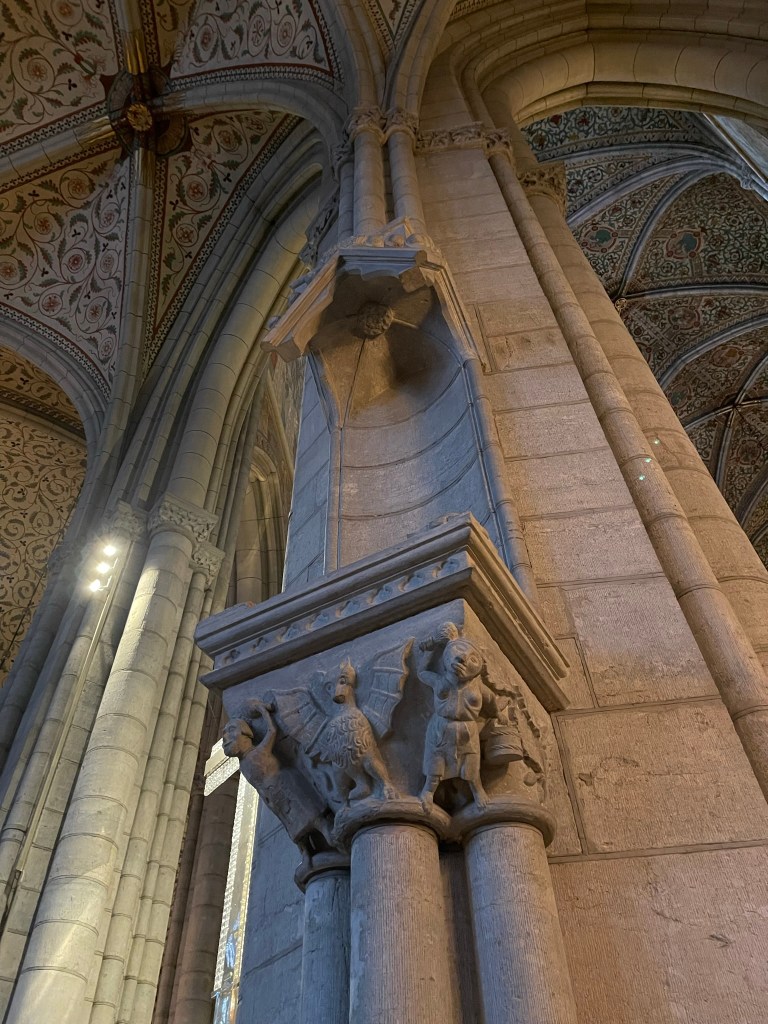
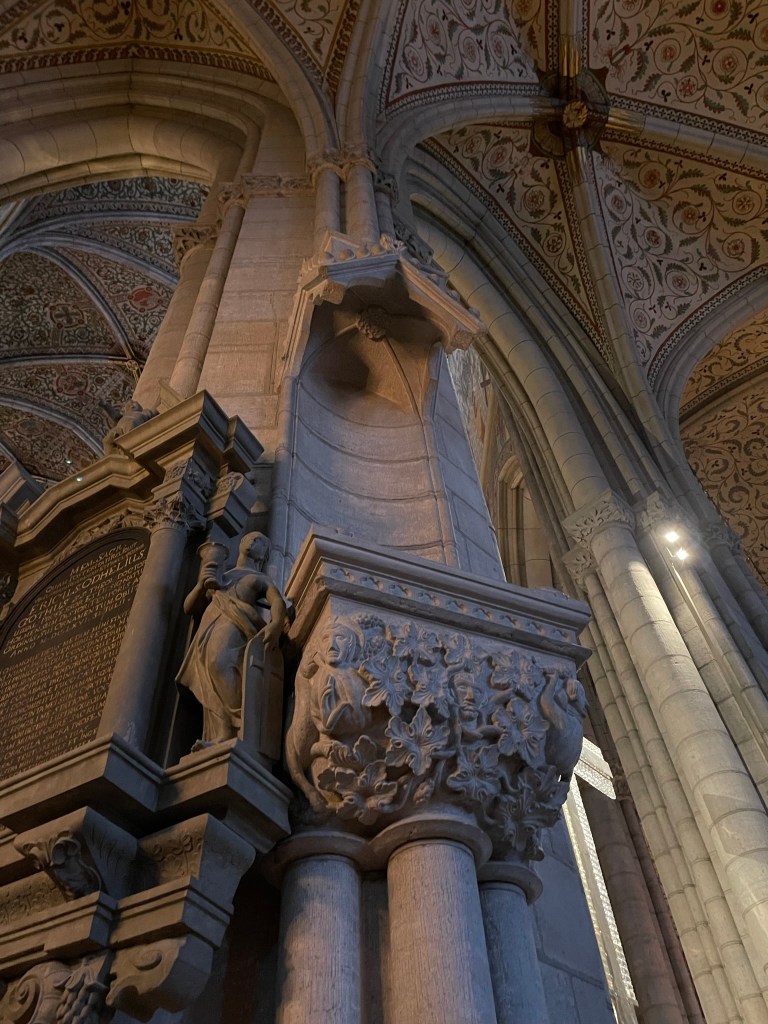
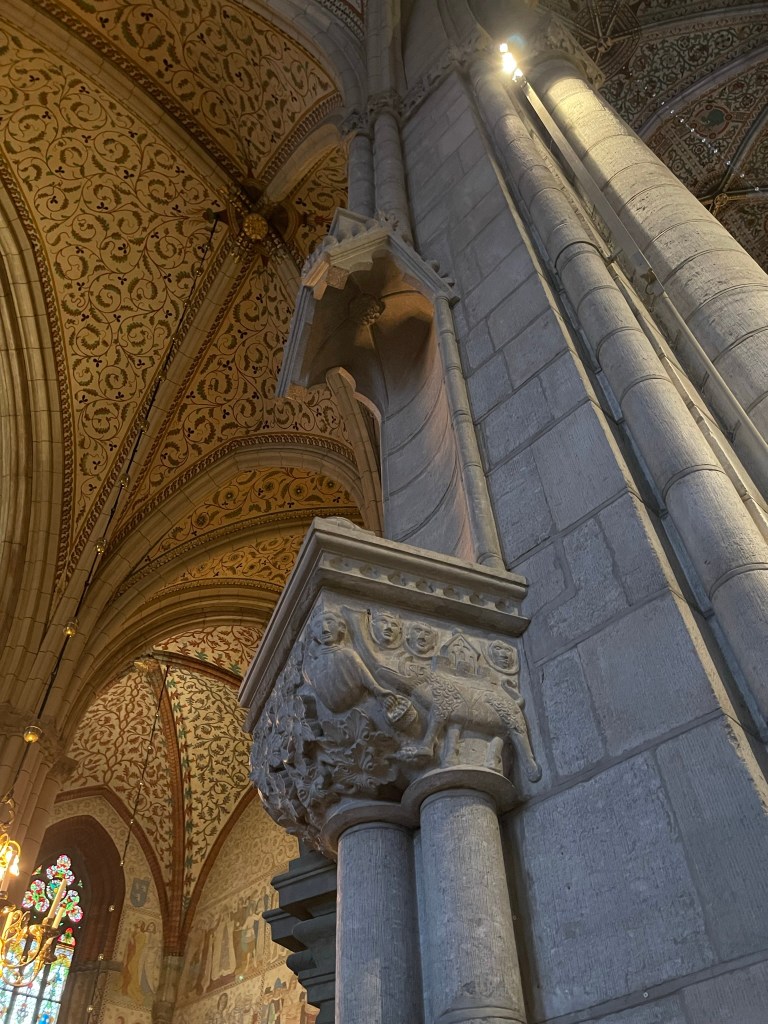
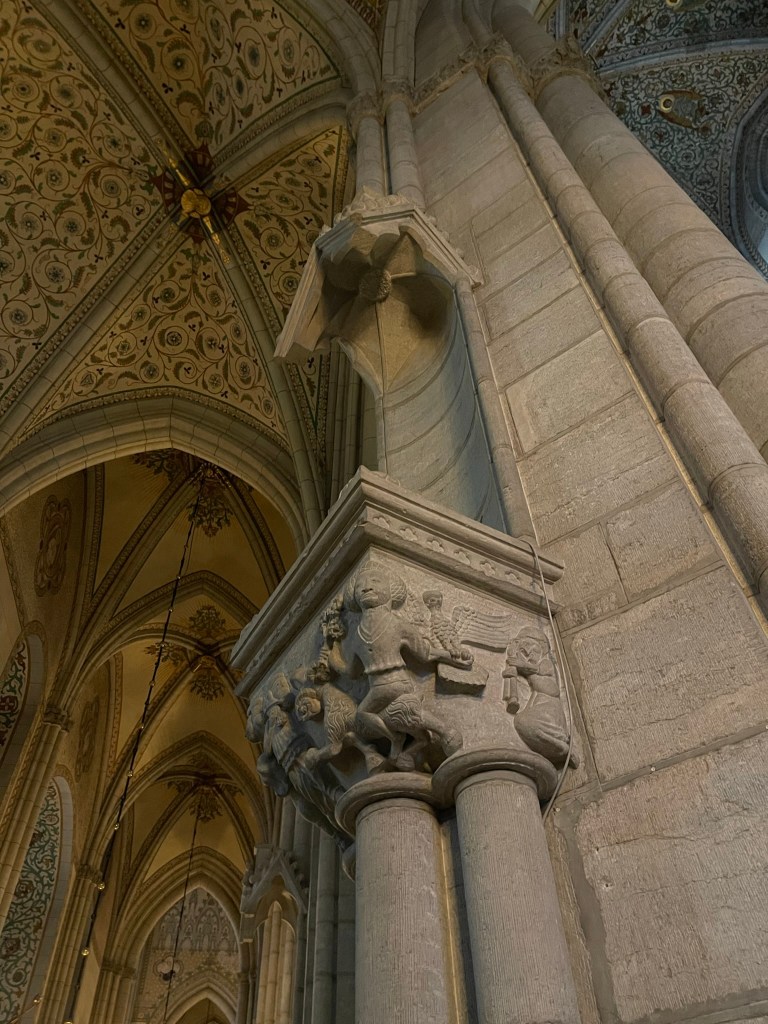
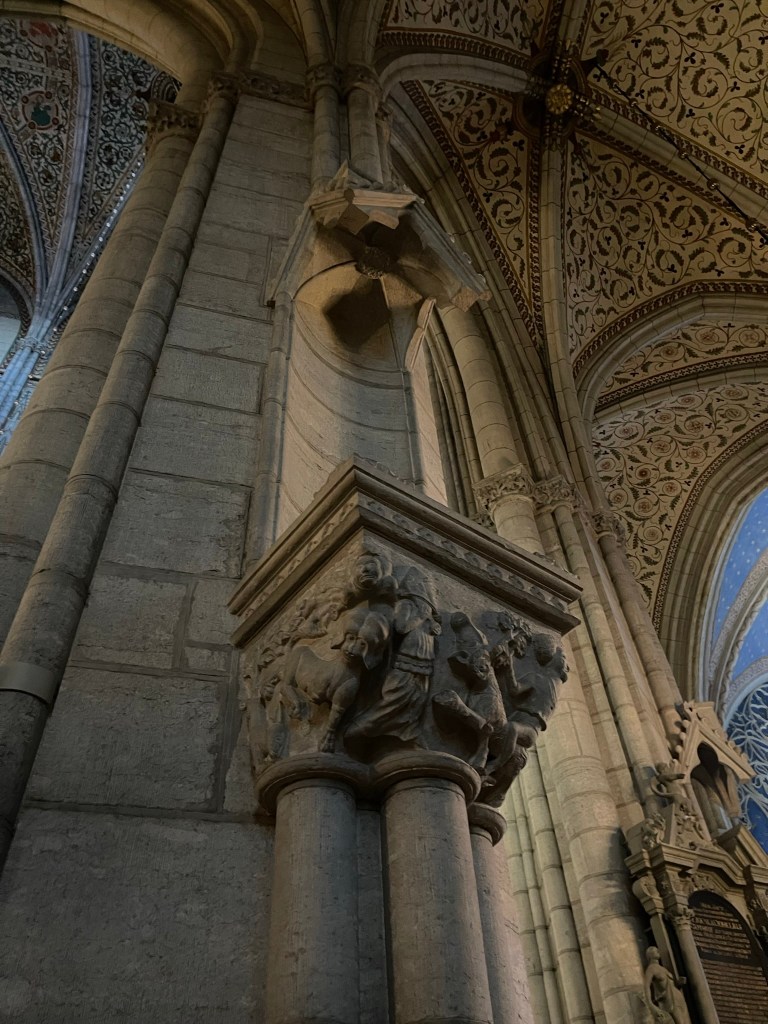
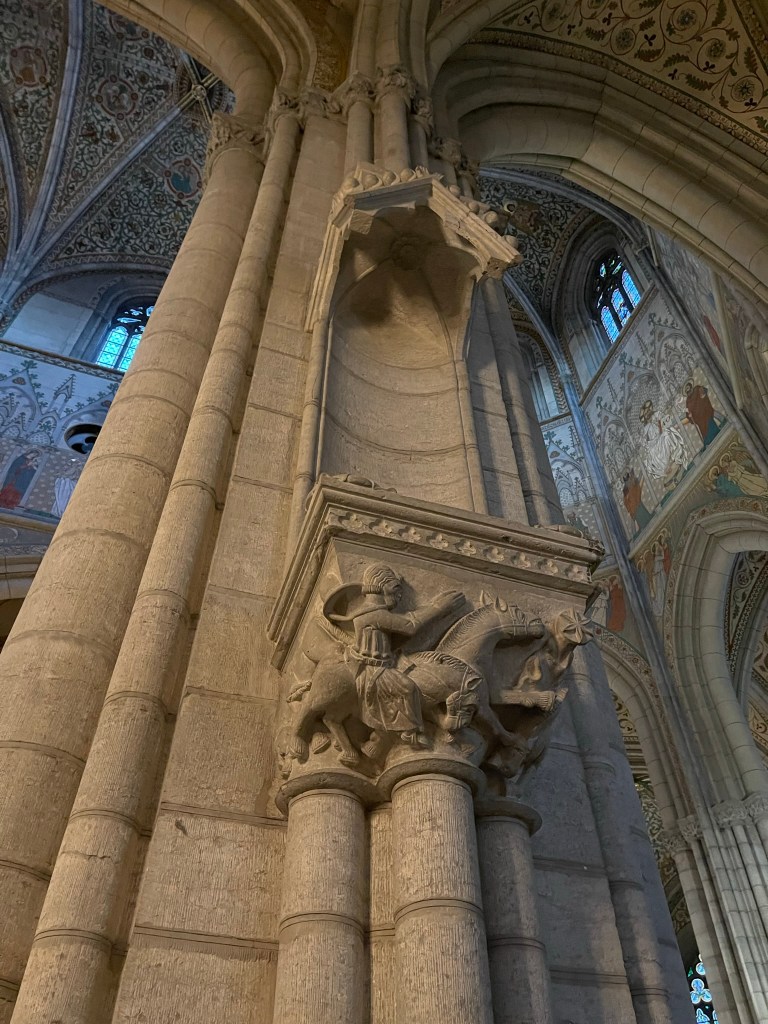
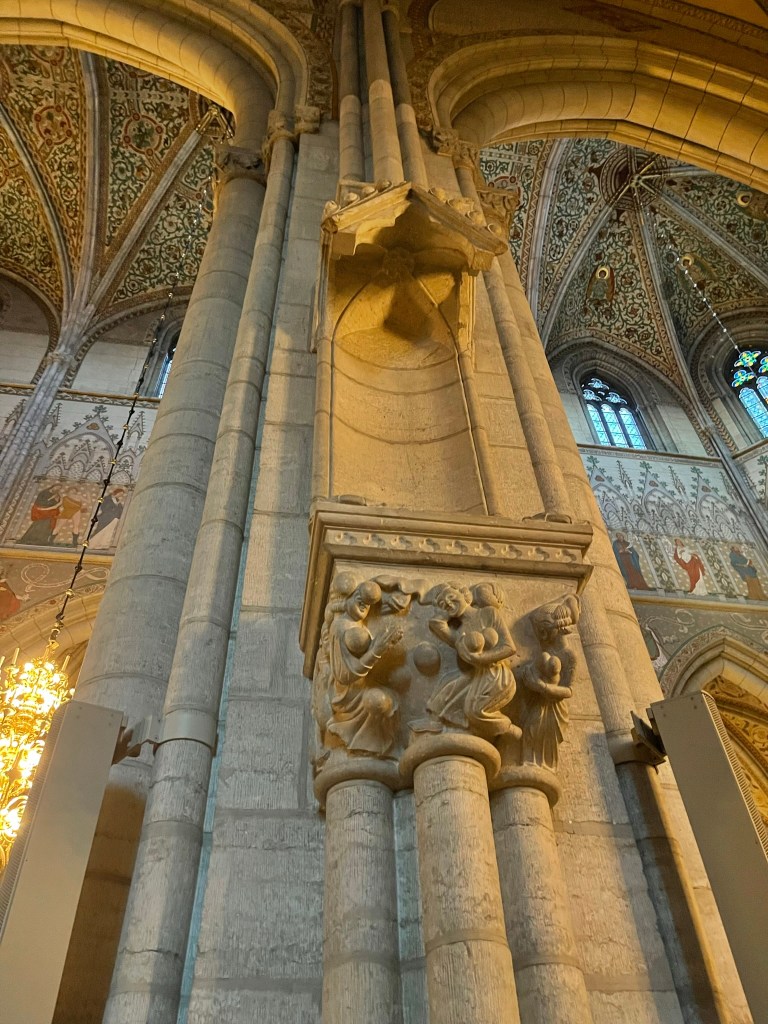
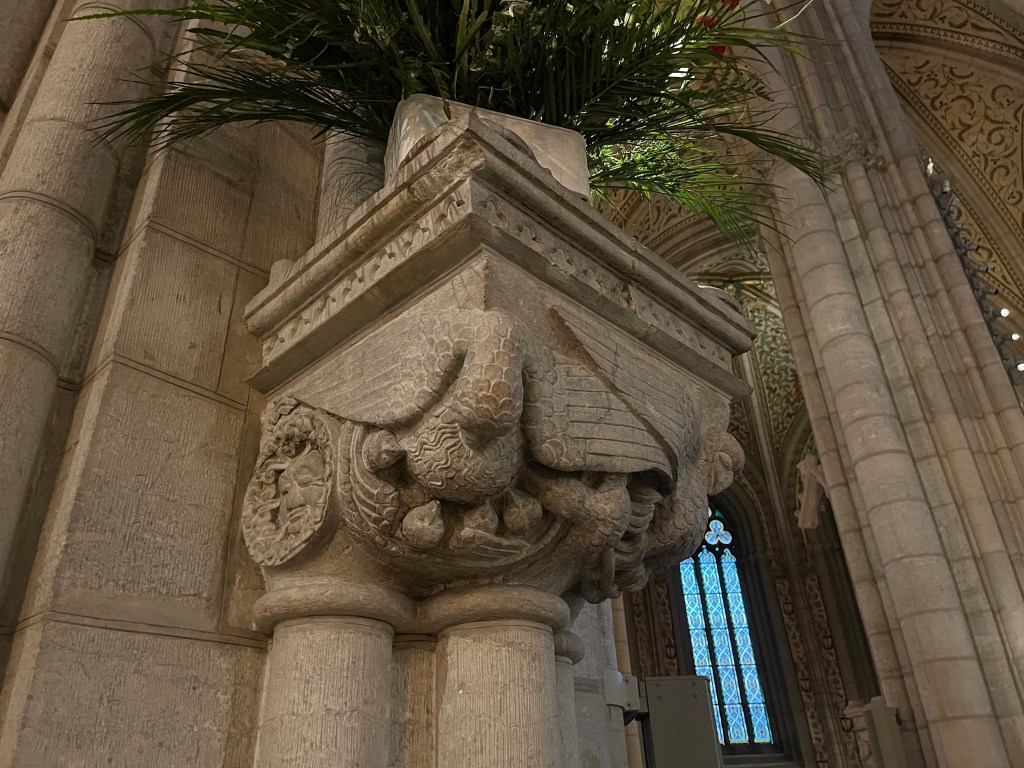
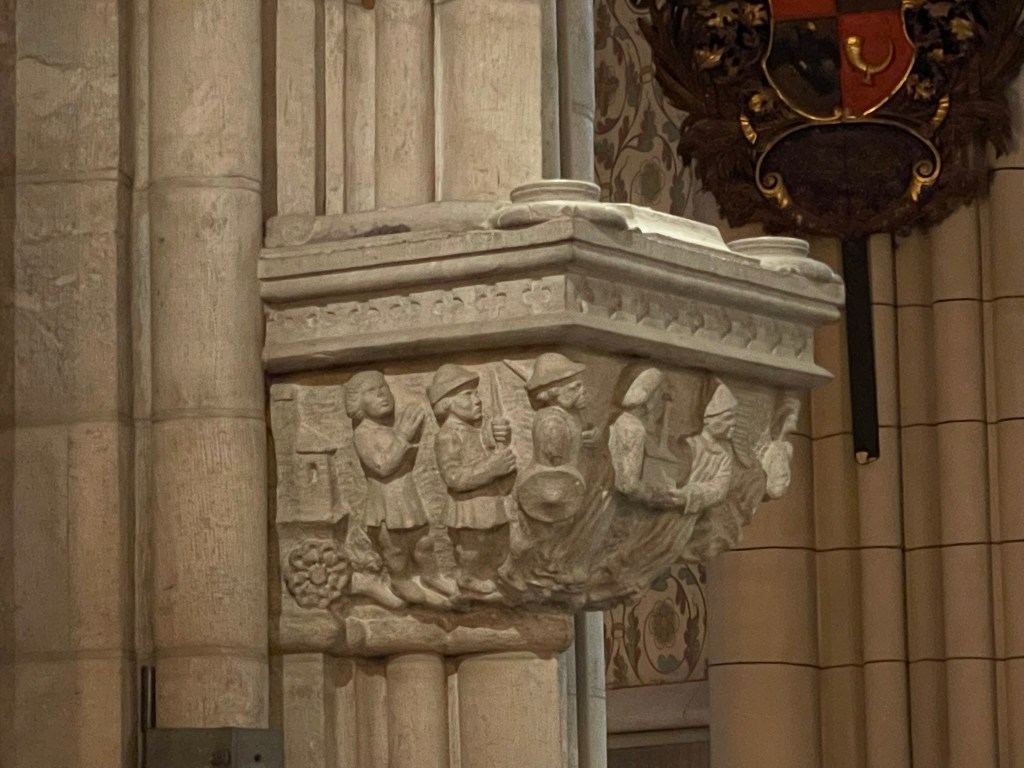
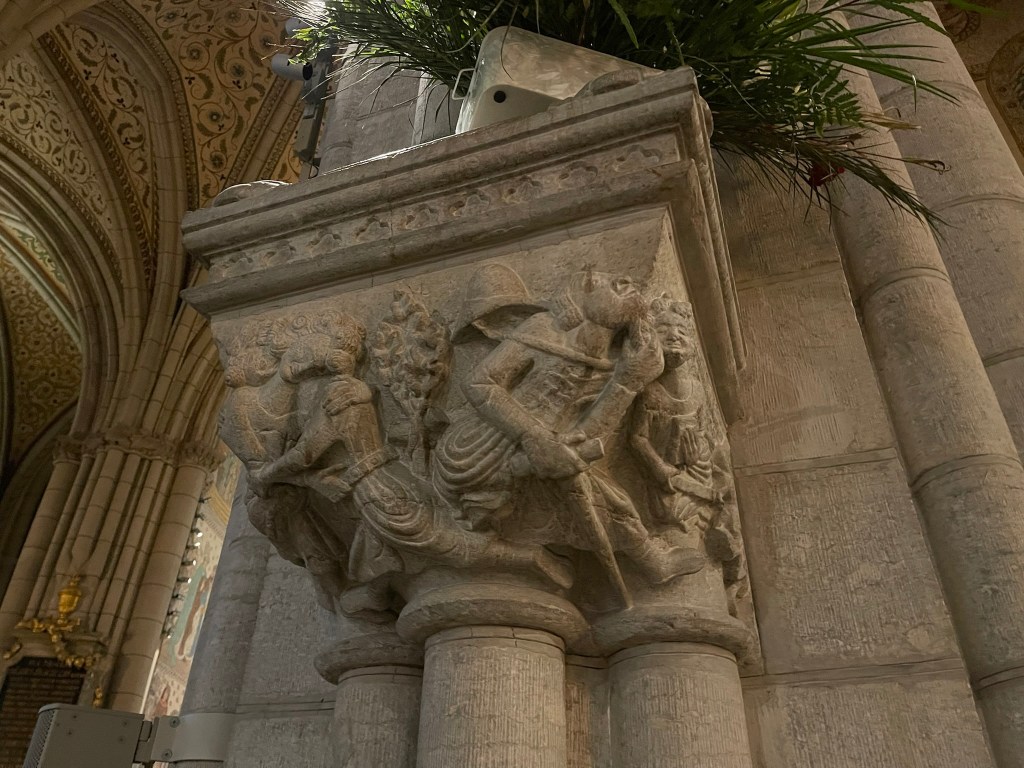
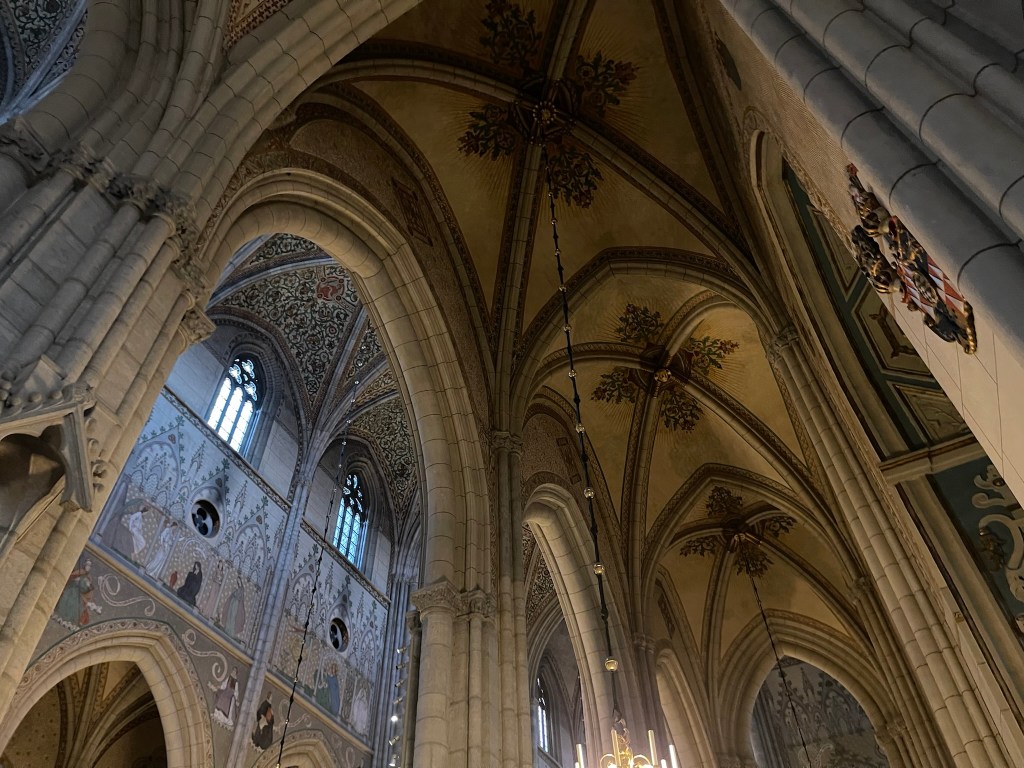
Kragstenarna är avsatser tänkta för statyer och finns tre meter upp på kalkstenspelarna runt högkoret vilka var ett vanligt motiv i medeltida kyrkor. Dessa kragstenar har i Uppsala domkyrka mycket vackra stenhuggeriarbeten, små konstverk från slutet av 1200-talet och början av 1300-talet som hör till de äldsta inredningsdetaljerna i domkyrkan. De är troligen utförda under den franske stenmästaren Estienne de Bonneuill. Motiven på kragstenarna berättar om nattvardens betydelse för frälsning och för ett himmelskt liv efter döden. De kragstenar som är vända in mot högaltaret lyfter fram att Guds nåd kan rädda alla och de mot koromgången lyfter fram vägen till evig salighet. I motiven blandas bibelberättelser, legender och antik mytologi och de var under medeltiden färglagda och även delvis förgyllda. Kragstenarna i Uppsala domkyrka har aldrig haft statyer stående på dem och idag används dem som hyllor för blomsterutsmyckning vid olika högtidliga tillfällen.
The corbels are ledges intended for statues and are found three meters up on the limestone pillars around the chancel which were a common motif in medieval churches. These corbels in Uppsala Cathedral have very beautiful stone carvings, small works of art from the end of the 13th century and the beginning of the 14th century that are among the oldest interior details in the cathedral. They were probably made under the French stonemason Estienne de Bonneuill. The motifs on the corbels tell of the importance of the sacrament for salvation and for a heavenly life after death. The corbels facing the high altar highlight that God's grace can save all, and those toward the choir aisle highlight the path to eternal bliss. The motifs mix biblical stories, legends and ancient mythology and during the Middle Ages they were colored and even partially gilded. The pebbles in Uppsala Cathedral have never had statues standing on them and today they are used as shelves for flower decoration on various solemn occasions.
Bild 1: Ond, bråd död – Två stridande män varav den yngre, mindre rustade får ett dödligt hugg. Att dö på detta sätt, utan tillfälle att bekänna sina synder och ta emot nattvarden och sista smörjelsen, var något den medeltida människan fruktade. // Picture 1: Evil, sudden death – Two warring men, of whom the younger, less equipped one receives a fatal blow. To die in this way, without the opportunity to confess one’s sins and receive communion and final anointing, was something the medieval man feared. Bild 2: God död – Den åldrade Marias död. Maria är omgiven av lärjungarna och änglar sprider väldoftande rökelse över henne. Marias själ som Kristus lyfter till himlen symboliseras av en miniatyrbild av henne i hans famn. // Picture 2: Good death – The death of the aged Mary. Mary is surrounded by the disciples and angels spread fragrant incense over her. Mary’s soul that Christ lifts to heaven is symbolized by a thumbnail of her in his arms.
KURIOSA
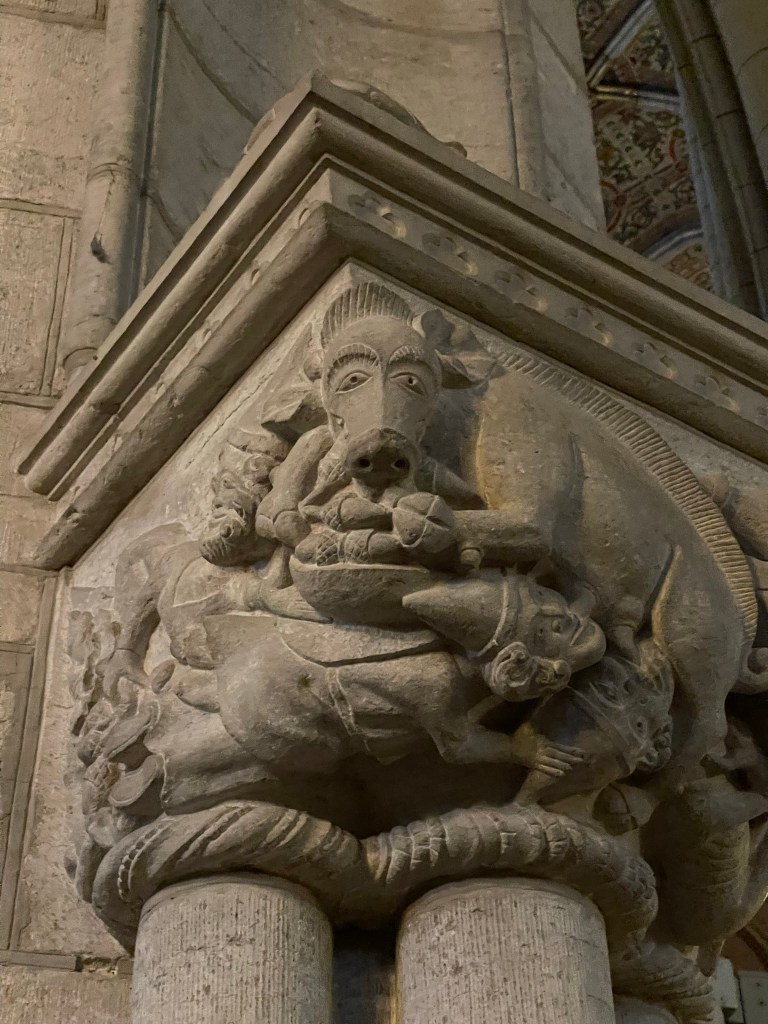
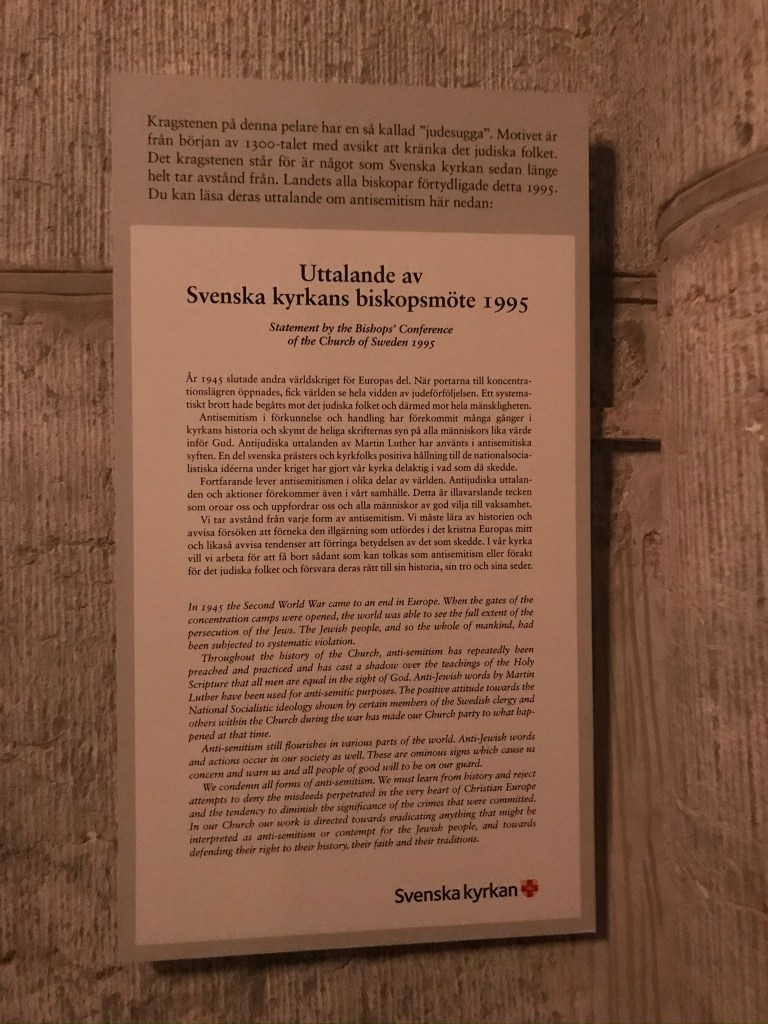
Framsidan av sten 3 upptas av en stor sugga med mycket framträdande tryne och vars kropp är täckt av hår eller en styv kam av borst. Fötterna har utmejslade klövar. En man med toppig hatt och korkskruvslockar vid tinningen (en judes kännetecken) matar suggan med ekollon. Under suggan finns det två andra judar som diar henne, varav den ene är naken. En fjärde jude kommer flygande och har precis tappat sin hatt (med en extra ring kring toppen). Hans ansikte är mycket större, med kroknäsa och kraftiga läppar (en rabbin?), och han lyfter upp suggans svans. Judesuggan var ett mycket vanligt medeltida motiv i antisemitiska bildmotiv. I kristen kontext tolkas den som en skymf mot judarna då dessa bildmotiv visar dem med vad som för dem var höjden av orenhet. Judesuggan i Uppsala domkyrka har väckt olika reaktioner och många menar att den ska tas bort och andra att det är ohistoriskt att undertrycka budskap bara för att de idag anses kränkande. Enligt Svenska kyrkans uttalande (se nedan) så är det viktigt att man begrundar dess roll i den kristna kyrkans historia som uppvisat intolerans mot judarna och lär av den.
The front of stone 3 is occupied by a large sow with a very prominent snout and whose body is covered with hair or a stiff comb of bristles. The feet have chiseled hooves. A man with a top hat and corkscrew caps at the temple (a Jew's characteristic) feeds the sow with acorns. Under the sow, there are two other Jews suckling her, one of whom is naked. A fourth Jew comes flying and has just dropped his hat (with an extra ring around the top). His face is much larger, with a crooked nose and strong lips (a rabbi?), and he lifts the sow's tail. The Jewish sow was a very common medieval motif in anti-Semitic imagery. In the Christian context, it is interpreted as an insult to the Jews as these image motifs show them with what for them was the height of impurity. Judesuggan in Uppsala Cathedral has provoked different reactions and many believe that it should be removed and others that it is unhistorical to suppress messages just because they are today considered offensive. According to the Church of Sweden's statement (see below), it is important to consider its role in the history of the Christian Church, which has shown intolerance towards the Jews and learn from it.
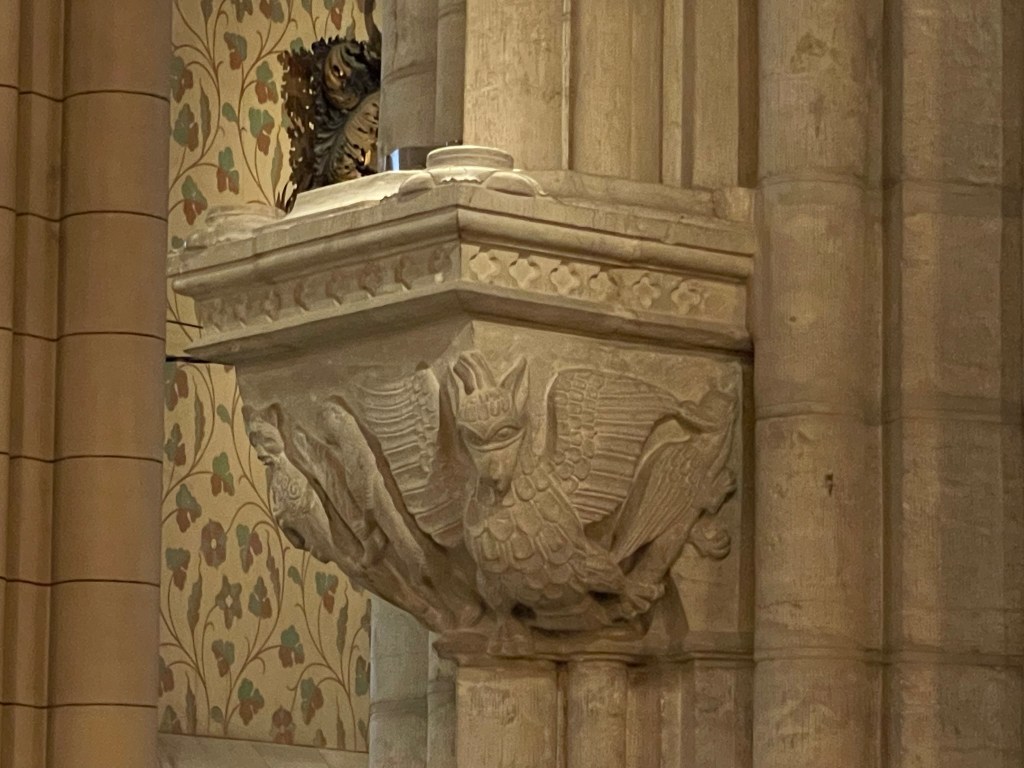
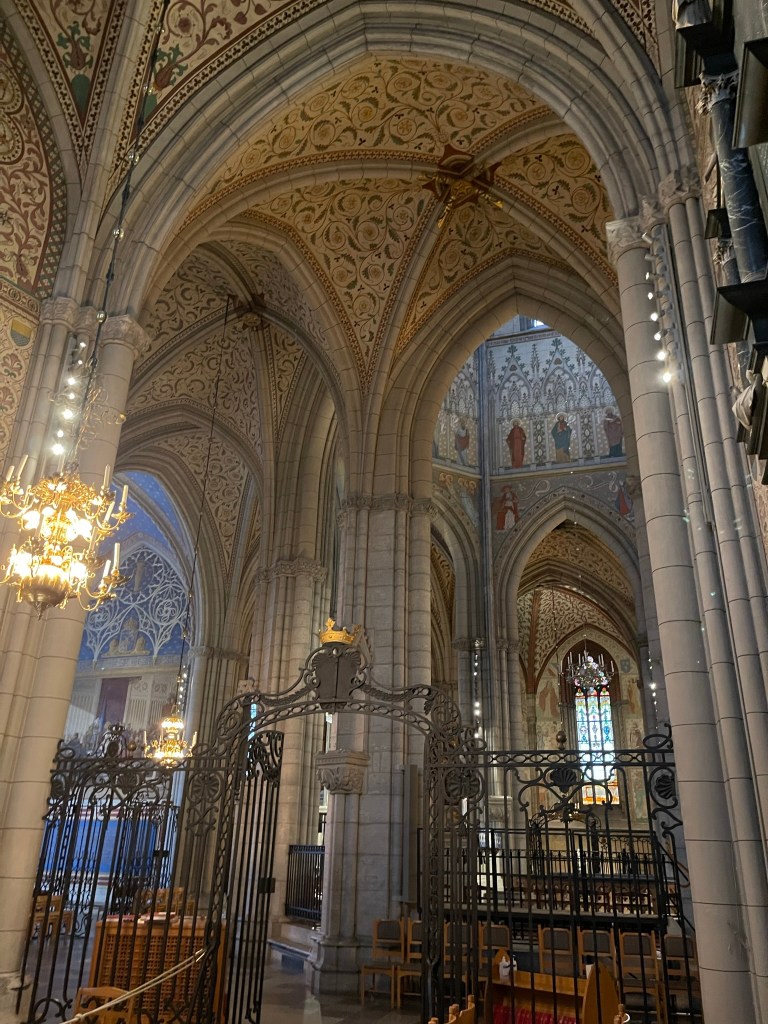
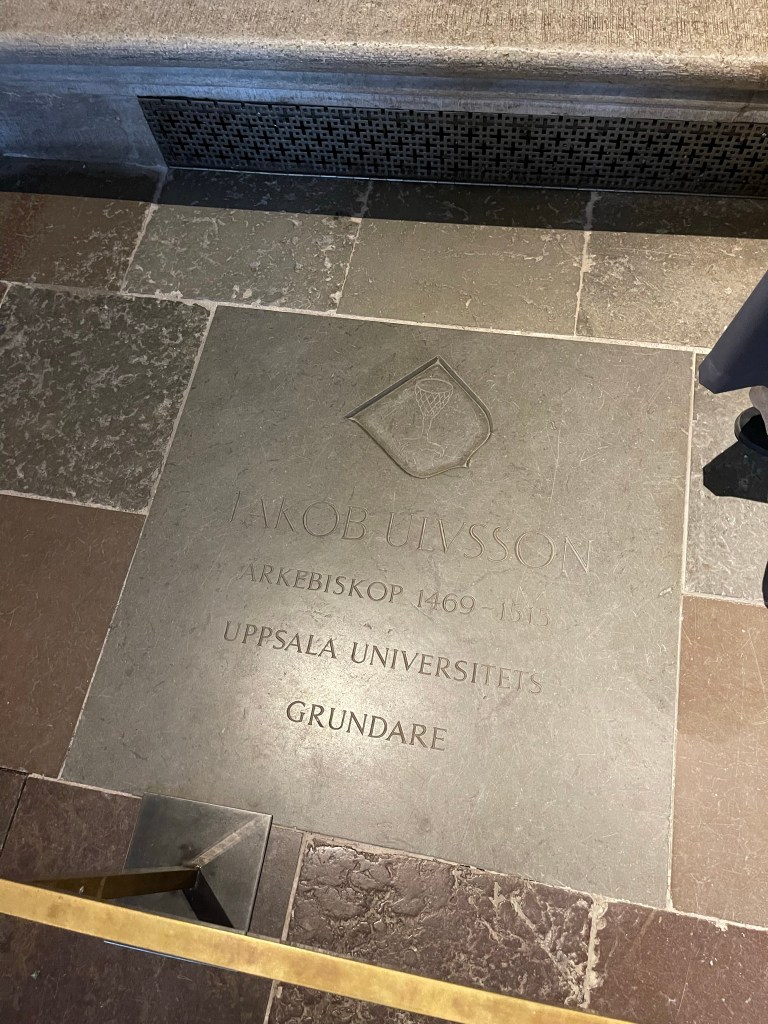
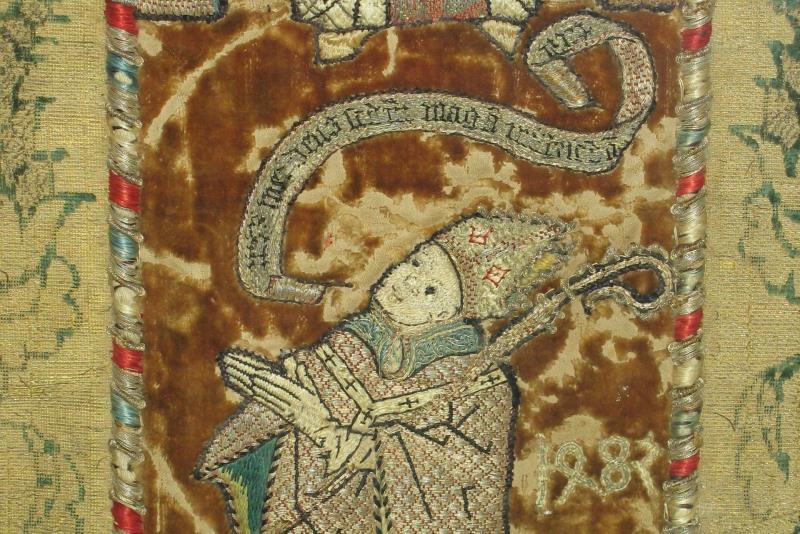
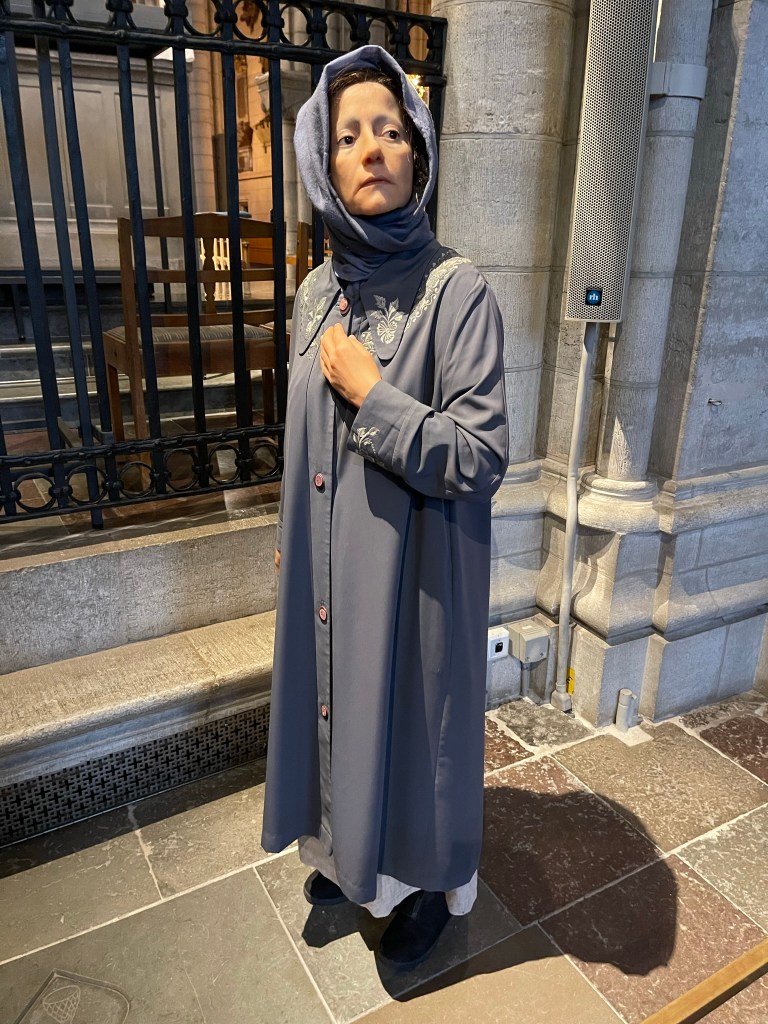
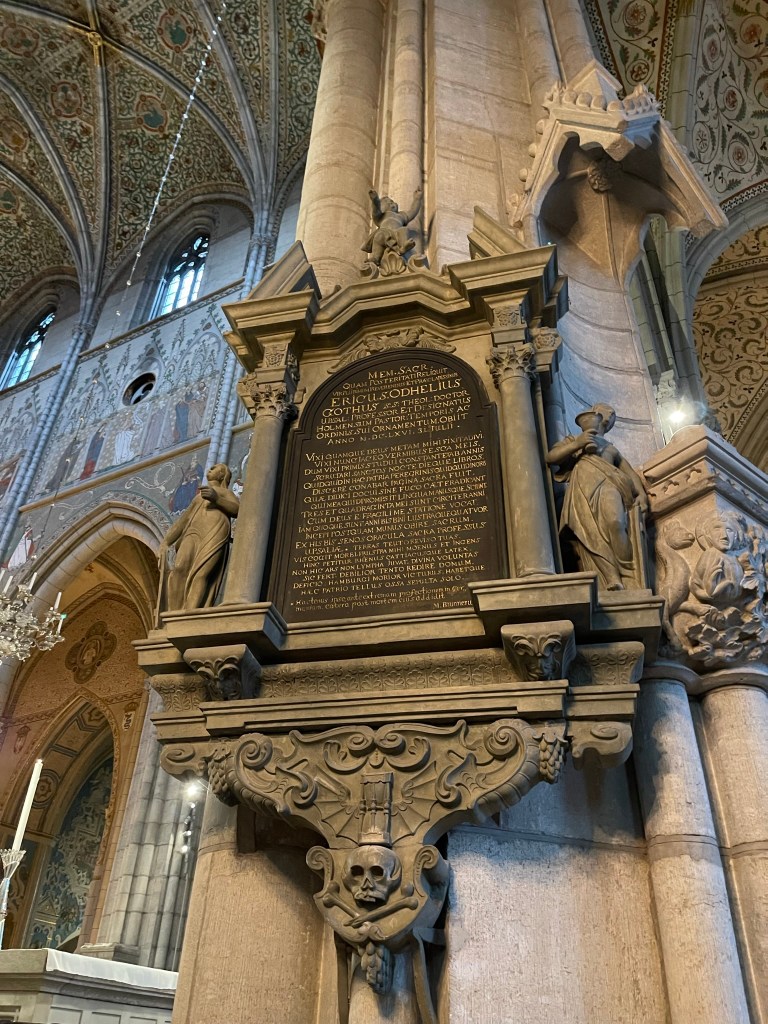
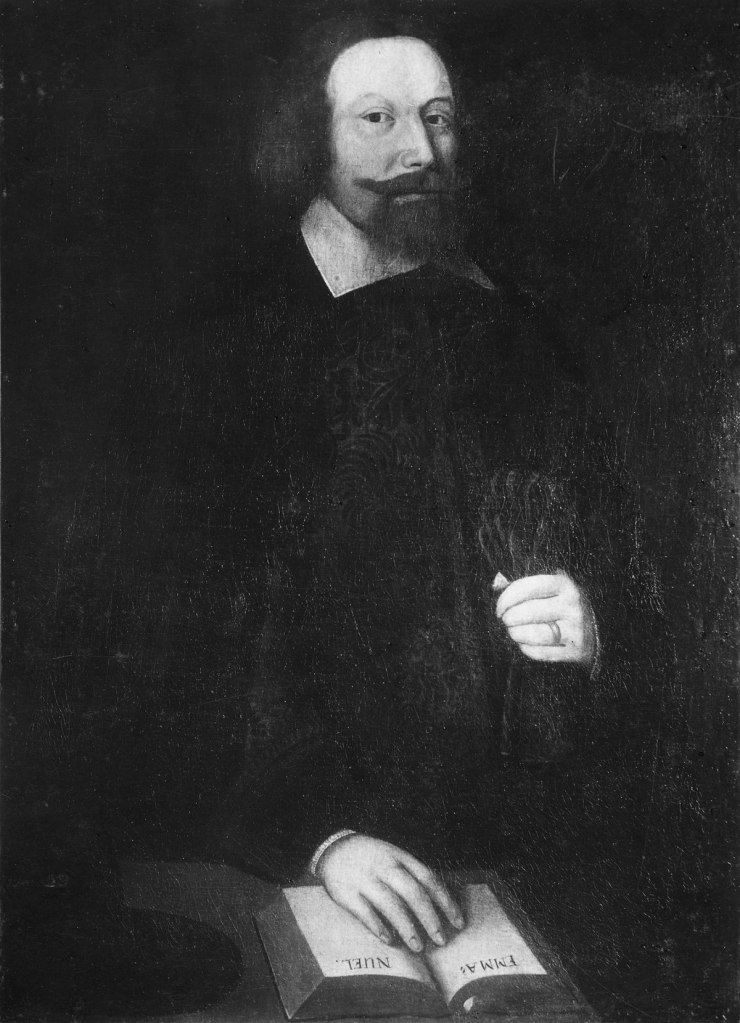
Bild 3: Judendomen – En grupp judiska män diande en sugga. Judesuggor var en antijudisk symbol i det medeltida Europa. // Picture 3: Judaism – A group of Jewish men breastfeeding a sow. Jewish sows were an anti-Jewish symbol in medieval Europe.Bild 4: Hedendom och otro – En skildring av hednisk oferrit. I mitten står en varelse med drag av fladdermus, rovfågel och drake (djävulen eller en avgud). Kvinnan till höger håller i en kvast eller en spann (offerblodsstänkning). Figuren till vänster kom till i mitten av 1800-talet. // Picture 4: Paganism and unbelief – A depiction of pagan inferiority. In the middle is a creature with the features of a bat, bird of prey and dragon (the devil or an idol). The woman on the right is holding a broom or a bucket (sacrificial blood splattering). The figure on the left was created in the middle of the 19th century.Bild 5: Kristen tro – Nattvarden. Mansansiktet i mitten är vinträdet personifierat. De tolv bladen symboliserar lärjungarna. Till vänster ser vi Jesus hållande handen upp och till vänster om honom en kamel, som kan ha både ett positivt eller ett negativt symbolvärde 🙂 // Picture 5: Christian faith – The Lord’s Supper. The male face in the middle is the vine personified. The twelve leaves symbolize the disciples. To the left we see Jesus holding his hand up and to the left of him a camel, which can have both a positive or a negative symbolic value 🙂Bild 5 fortsättning: Mannen till höger är vinodlaren med en druvklase i handen, symbol för nattvarden. Till höger om mannen ser vi en elefant, som liksom kamelen kan ha ett både positivt och negativt symbolvärde. // Picture 5 continued: The man on the right is the winegrower with a bunch of grapes in his hand, a symbol of the Lord’s Supper. To the right of the man we see an elephant, which like the camel can have both a positive and negative symbolic value. Bild 6: Okristligt leverne. Den ridande kvinnan i mitten tolkas som Luxuria, symbolen för dödssynden vällust. Djuret är en vädur eller bock. Till vänster om henne en musiker, bild för lättsinne. // Picture 6: Unchristian living. The riding woman in the middle is interpreted as Luxuria, the symbol of the deadly sin of lust. The animal is a ram or buck. To her left a musician, picture for frivolity.Bild 6 fortsättning: Till höger om Luxuria en annan musiker, bild för lättsinne. // Picture 6 continued: To the right of Luxuria another musician, picture for frivolity.Bild 6 fortsättning: Till vänster om musikern en narr, också den bild för lättsinne. Haren och hunden är symboler för otukt och okyskhet. // Picture 6 continued: To the left of the musician a fool, also the picture for frivolity. The hare and the dog are symbols of fornication and chastity. Bild 7: Julnattens under. Staffan och fyra hästar samt i övre högra hörnet stjärnan lysande över Betlehem. Vissa tolkar bilden som aposteln Paulus omvändelse. // Picture 7: The wonder of Christmas night. Staffan and four horses and in the upper right corner the star shining over Bethlehem. Some interpret the image as the conversion of the apostle Paul.Bild 8: Hålla fast vid tron – Martyren Stefanus död. Bödlarna stenar honom till döds. Han har knäppt sina händer till bön och Guds hand sträcker sig mot honom genom molnen. // Picture 8: Holding on to the faith – The death of the martyr Stephen. The executioners stone him to death. He has clasped his hands for prayer and God’s hand reaches out to him through the clouds.Bild 9: Kristi frälsargärning – Jesu död. Pelikanhonan till vänster hackar på sitt bröst tills de hungriga fågelungarna kan dricka hennes blod. Till höger fågeln Fenix som symbol för Kristi uppståndelse. // Picture 9: The work of Christ’s salvation – Jesus’ death. The female pelican on the left chops on her breast until the hungry chicks can drink her blood. To the right the phoenix as a symbol of Christ’s resurrection.Bild 10: Vägen till evigt fördärv – Denna kragsten höggs bort på 1700-talet och en ny bild sattes upp i slutet av 1800-talet. Bilden visar hur Sankt Eriks relikskrin bärs från den gamla domkyrkan i (Gamla) Uppsala till den nya (nuvarande) domkyrkan. // Picture 10: The road to eternal ruin – This collar stone was cut away in the 18th century and a new picture was erected at the end of the 19th century. The picture shows how St. Erik’s shrine is carried from the old cathedral in (Old) Uppsala to the new (current) cathedral.Bild 11: Nåderika förbund med Gud. Till vänster brottas Gud i en okänd mans skepnad med Jakob. Till höger Josua, Moses efterträdare. // Figure 11: Graceful covenants with God. On the left, God wrestles with Jacob in the form of an unknown man. To the right Joshua, Moses’ successor.Bild 12: Kristi seger. Till vänster fabeln om räven och lejonet. Till höger örnen som besegrar en drake symboliserar Kristi seger över djävulen. // Picture 12: Christ’s victory. To the left the fable of the fox and the lion. To the right the eagle that defeats a dragon symbolizes Christ’s victory over the devil.Den medeltida koromgången // The Medieval ambulatoryEn del av koromgången tak // A part of the ceiling of the ambulatoryMellan Vasakoret och högkoret finns en gravhäll med namnet Jakob Ulvsson Örnfot (d. 1521), ärkebiskop och Uppsala universitets grundare 1477. // Between the Vasa Choir and the high choir there is a tombstone with the name Jakob Ulvsson Örnfot (d. 1521), archbishop and founder of Uppsala University 1477.Jakob Ulvsson. Källa // Source: Svenska KyrkanBredvid ärkebiskopens gravhäll står konstverket Maria (Återkomsten) av konstnären Anders Widoff (f. 1953), en gåva från Huseliusfonden och invigd 2005. Skulpturen är i polyester och silikon och kläderna är sydda av ateljén Handarbetets Vänner. // Next to the archbishop’s tombstone is the artwork Maria (The Return) by the artist Anders Widoff (b. 1953), a gift from the Huselius Foundation and inaugurated in 2005. The sculpture is in polyester and silicone and the clothes are sewn by the studio Handarbetets Vänner. Widoff. Källa // Source: HV TextilMinnestavla över teologie professor Erik Odhelius (1620-66) // Plaque of theology Professor Erik Odhelius (1620-66) Odhelius. Källa // Source: Wikipedia


 Discover Sweden with Alex