
I norra tvärskeppet fanns förmodligen Johannes döparens altare under medeltiden och kanske också en dopfunt. Troligen var rummet också kultplats för Sankt Lars.
In the northern nave there was probably the altar of John the Baptist during the Middle Ages and perhaps also a baptismal font. The room was probably also a place of worship for Saint Lars.

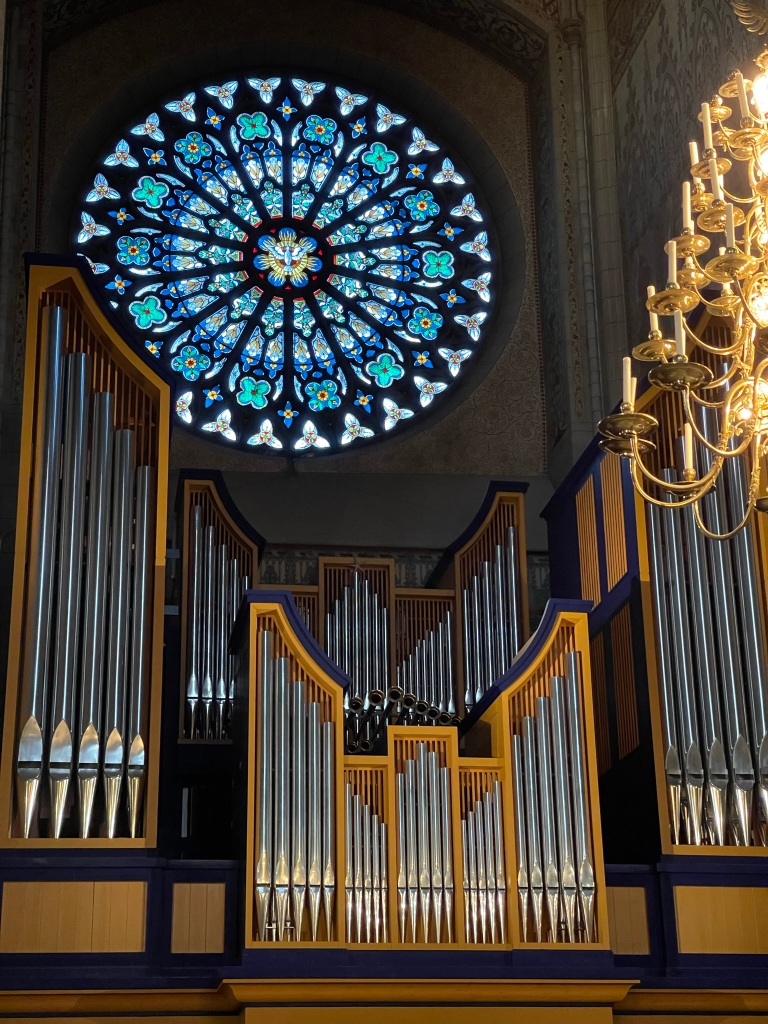
Över porten sitter ett av domkyrkans rosfönster, kallat även Andens eller livgiverskans fönster. Glasen till samtliga tre stora fönster skänktes av Carl Ekman, bankkassör i Uppsala, i samband med restaureringen i slutet av 1800-talet. Fönstren tillverkades av Svenska glasmåleriaktiebolaget i Göteborg. Detsamma gäller domkyrkans övriga glasmålningar med sju undantag (Vasakoret samt ett fönster vardera i Finstakoret och Horns gravkor). Uppsala domkyrka startade en glashytta 2013 för att rengöra och konservera fönstren. En tolkning är att fönstren över portarna skildrar den heliga treenigheten. Rosfönstret i norra tvärskeppet är det äldsta av de stora fönstren och i klassisk gotisk stil. Med stor sannolikhet tillverkades det av stenhuggarna från Frankrike. Fönstret är också mycket lika tvärskeppsrosorna i Notre Dame i Paris. Masverket eller spröjsen av kalksten måste bytas ut 1885-93, men har samma utformning som när fönstret byggdes i slutet av 1200-talet. Duvan och elden symboliserar Guds ande och finns med i sjupasset i fönstrets mitt.
Above the gate is one of the cathedral's rose windows, also called the Holy Spirit's or the giver of life's window. The glass for all three large windows was donated by Carl Ekman, bank treasurer in Uppsala, in connection with the restoration at the end of the 19th century. The windows were manufactured by the Swedish stained glass company in Gothenburg. The same applies to the cathedral's other stained glass windows with seven exceptions (Vasa Choir and one window each in Finsta Choir and Horn's grave choir). Uppsala Cathedral started a glass cabin in 2013 to clean and preserve the windows. One interpretation is that the windows over the gates depict the Holy Trinity. The rose window in the north transept is the oldest of the large windows and in classic Gothic style. In all probability it was made by the stonemasons from France. The window is also very similar to the transept roses in Notre Dame in Paris. The masonry or bar of limestone must be replaced in 1885-93, but has the same design as when the window was built at the end of the 13th century. The dove and the fire symbolize the Holy Spirit of God and are included in the seven passages in the middle of the window.
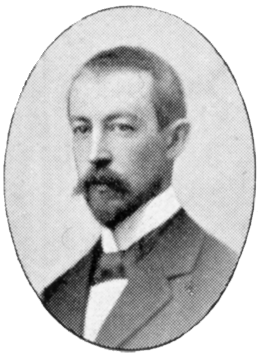
Under restaureringen 1885-93 utförde konstnären Caleb Althin en stor väggmålning i norra tvärskeppet. Den är idag skymd av orgeln men berättar om missionären Ansgars (801-865) möte med kung Björn.
During the restoration in 1885-93, the artist Caleb Althin made a large mural in the northern transept. It is today obscured by the organ but tells of the missionary Ansgar's (801-865) meeting with King Björn.
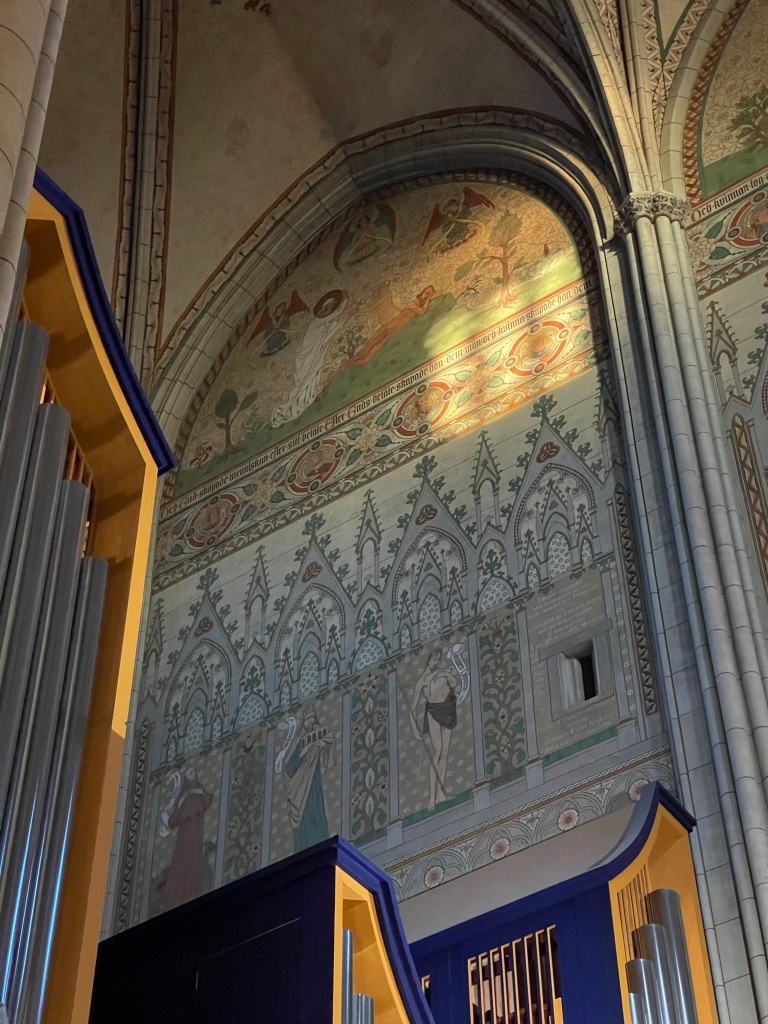
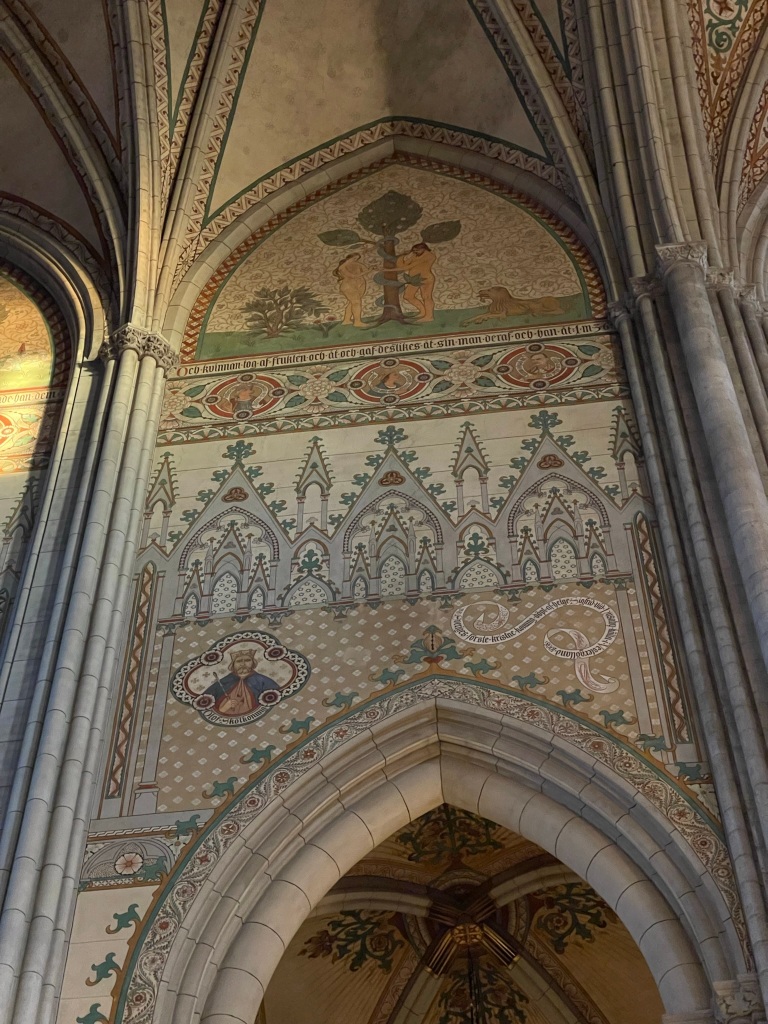
Tvärskeppets övriga väggmålningar är på så hög höjd att de är svåra att se från golvet. På västra väggen är fredsängeln målad med en hänvisning till Jesaja 52:7 i bibeln: ”Huru ljufliga äro på bergen budbärarens fötter, som förkunnar frid, som bådar fröjd”. Bilden bredvid ängeln illustrerar hur Gud skapar himmel och jord. På östra väggen fortsätter berättelsen om människans skapelse och om hur Adam och Eva faller för frestelsen att smaka på frukten som Gud sagt åt dem att låta bli. Mindre och delvis skymda bilder föreställer profeterna Jesaja, Jeremia, Hesekiel, Daniel, Jona, Sakarias och Johannes döparen. Två av Sveriges första kristna kungar har fått sina porträtt i medaljonger, Olof Skötkonung och Erik den helige.
The transept's murals are at such a high height that they are difficult to see from the floor. On the west wall, the angel of peace is painted with a reference to Isaiah 52:7 in the Bible: 'How lovely are the feet of the messenger in the mountains, who proclaim peace, who proclaim joy.' The image next to the angel illustrates how God creates heaven and earth. On the eastern wall, the story of human creation and how Adam and Eve fall for the temptation to taste the fruit that God told them not to. Smaller and partially obscured images represent the prophets Isaiah, Jeremiah, Ezekiel, Daniel, Jonah, Zechariah, and John the Baptist. Two of Sweden's first Christian kings have received their portraits in medallions, Olof Skötkonung and Erik the Holy.
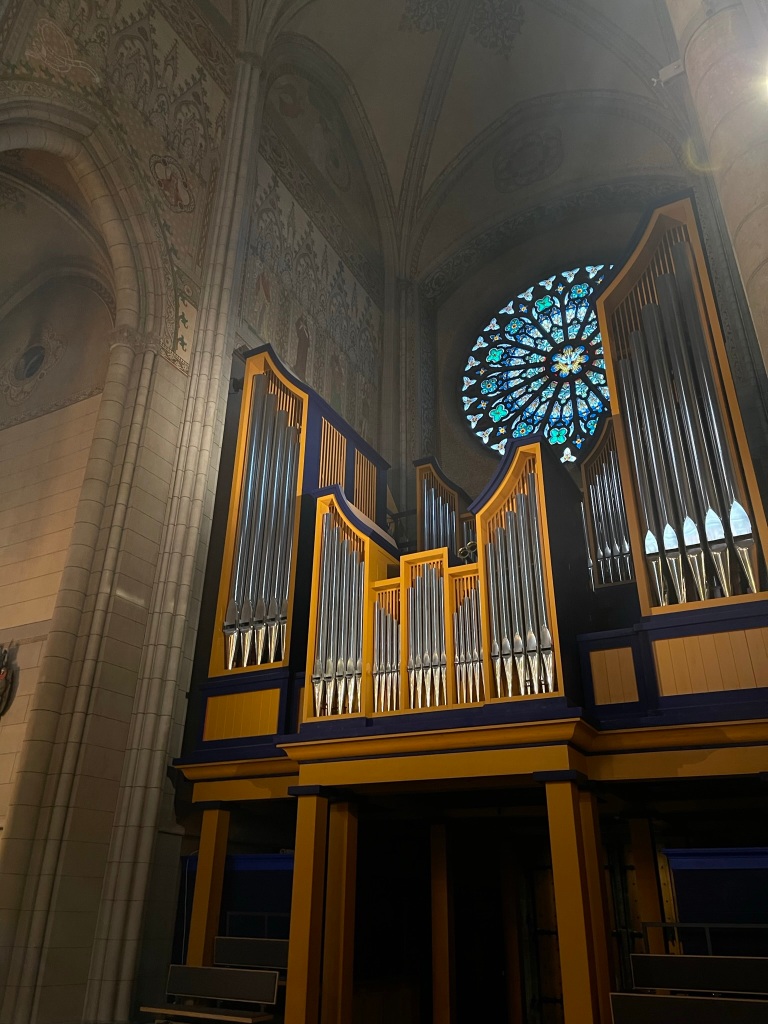
1925 invigdes ett Ansgarskapell i norra tvärskeppet som användes i några årtionden vid mindre gudstjänster och vigslar. Kapellet moderniserades under restaureringen 1971-76, men togs sedan bort på 1980-talet. I början av 2000-talet ändrades tvärskeppets utseende igen när domkyrkan fick en ny orgel. Den byggdes av Fratelli Ruffatti i Padova, Italien, och är placerad på en nybyggd läktare. Orgeln invigdes år 2009. Den har ett flyttbart spelbord och lämpar sig för musik från olika tidsepoker. Ruffattiorgeln har 69 stämmor, 4 manualer och en pedal, 4 065 pipor samt 37 klockor.
In 1925, an Ansgar Chapel was inaugurated in the northern transept, which was used for a few decades at smaller services and weddings. The chapel was modernized during the restoration in 1971-76, but was removed in the 1980s. In the early 2000s, the appearance of the transept changed again when the cathedral got a new organ. It was built by Fratelli Ruffatti in Padua, Italy, and is located on a newly built platform. The organ was inaugurated in 2009. It has a movable playing table and is suitable for music from different eras. The Ruffatti organ has 69 parts, 4 manuals and a pedal, 4,065 pipes and 37 bells.
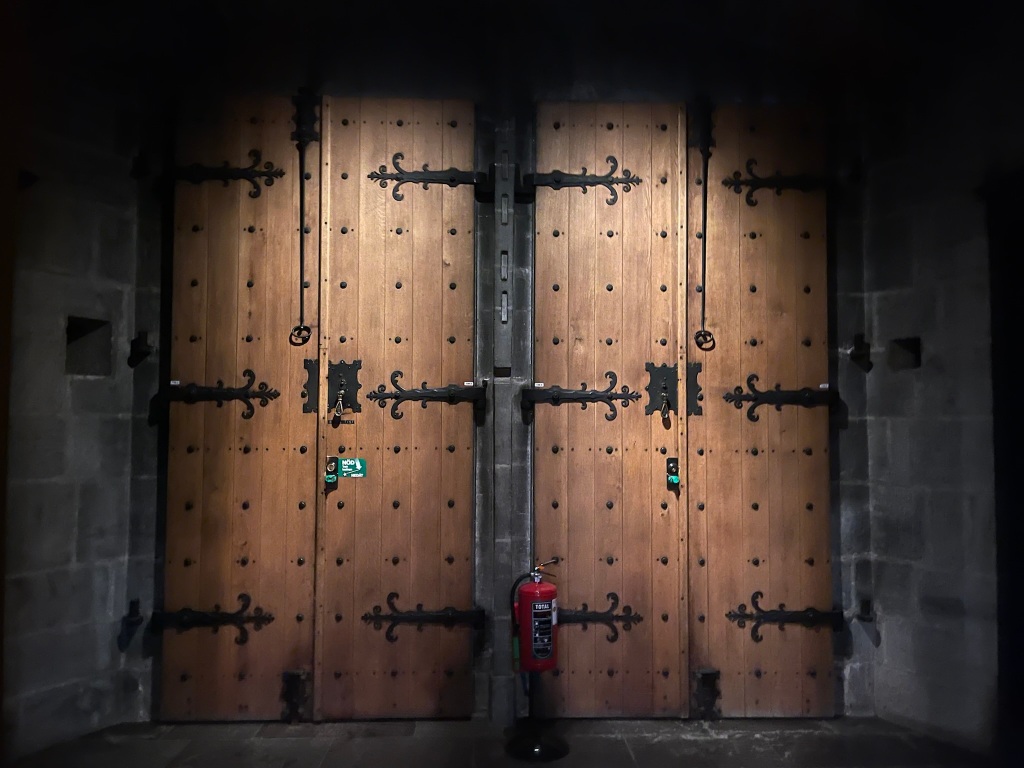
De kraftiga kyrkportarna av ek är från slutet av 1800-talet.
The strong oak church gates date from the end of the 19th century.
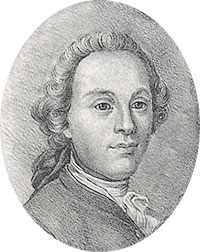
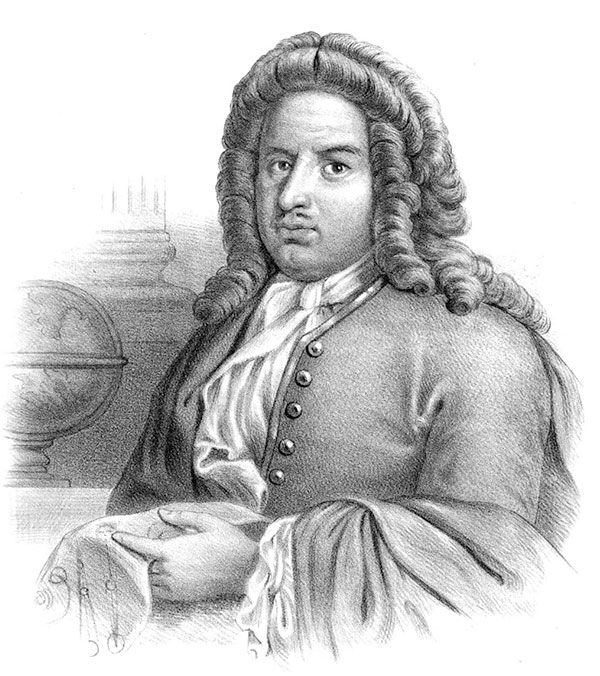
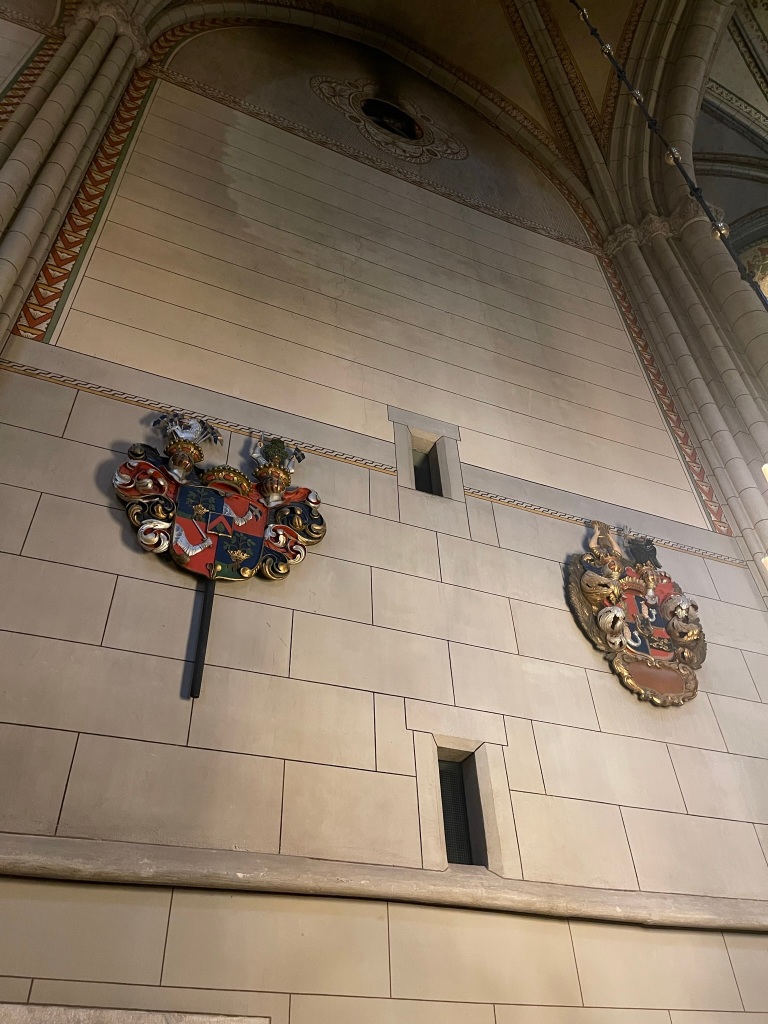
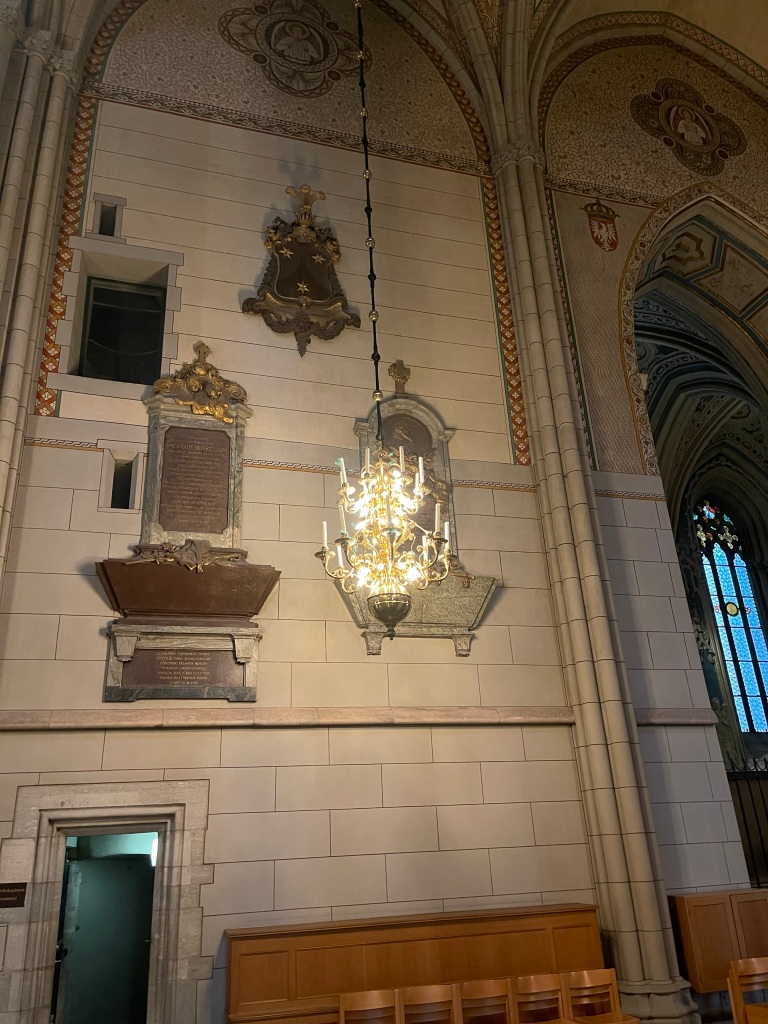
Minnestavlorna på tvärskeppets väggar är över tre astronomer: Petrus Elvius (1660-1718) och Martin Strömer på västra väggen, Andreas Spole (1630-1699) på den östra. De skyms idag av orgeln.
The plaques on the walls of the transept are over three astronomers: Petrus Elvius (1660-1718) and Martin Strömer on the west wall, Andreas Spole (1630-1699) on the east. They are obscured today by the organ.
På båda sidor av norra tvärskeppet finns några rum som inte är tillgängliga för allmänheten. Intill Gyllenborgska gravkoret ligger sakristian där präster och andra medverkande samlas inför gudstjänsten och där bl.a. gudstjänstföremål förvaras. Ovanför sakristian ligger ett arbetsrum för anställda. Intill Jagellonska gravkoret finns vaktmästarens expedition och ovanför den ett annat arbetsrum. Ovanför dessa två ligger librariet, biblioteket där man förvarar endast få saker idag.
On both sides of the northern transept there are some rooms that are not accessible to the public. Next to the Gyllenborg burial choir is the sacristy where priests and other participants gather before the service and where, among other things, objects of worship are kept. Above the sacristy is a workroom for employees. Next to the Jagellon grave choir is the caretaker's expedition and above it another study. Above these two is the library where only a few things are stored today.
 Discover Sweden with Alex