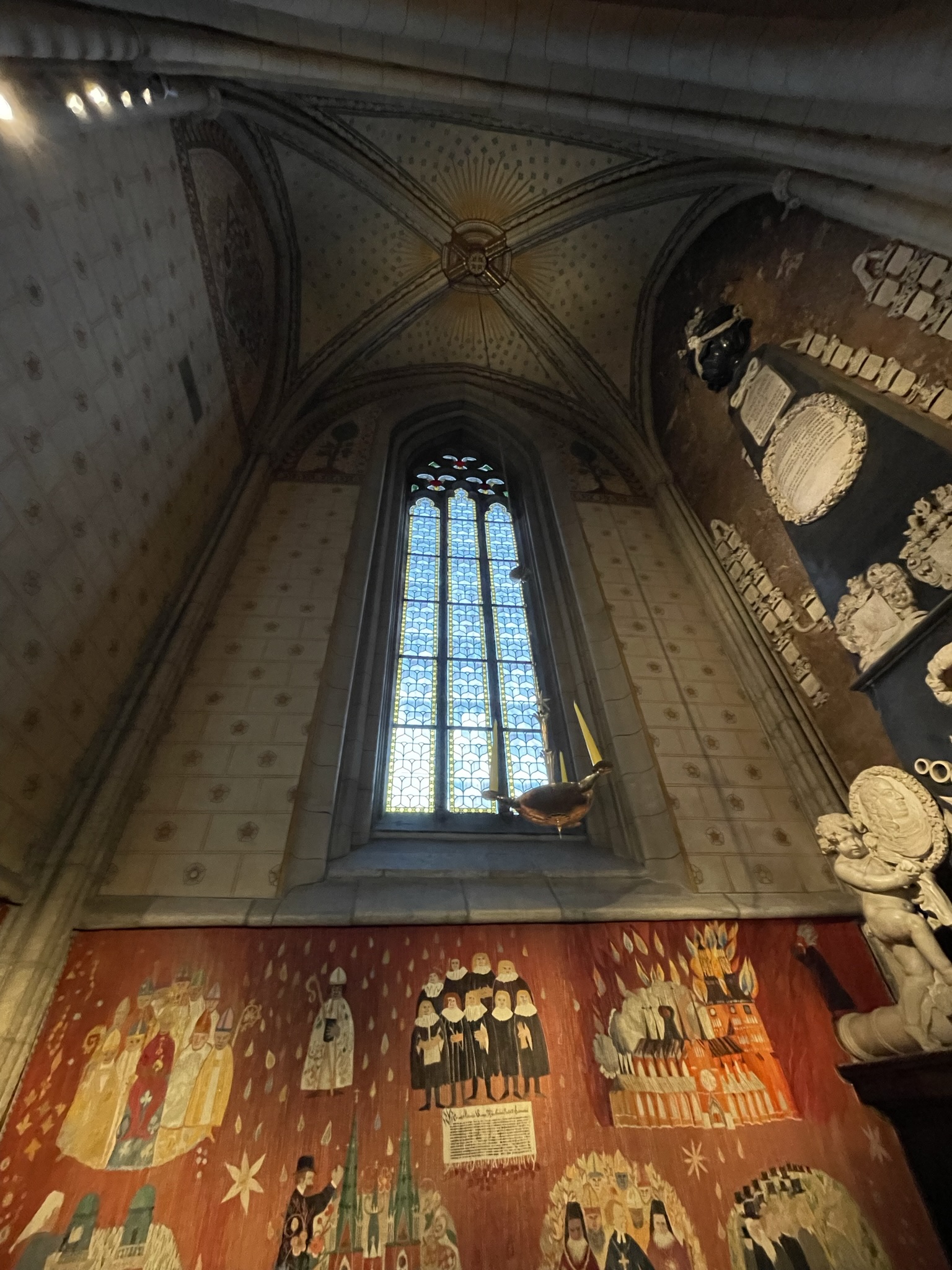
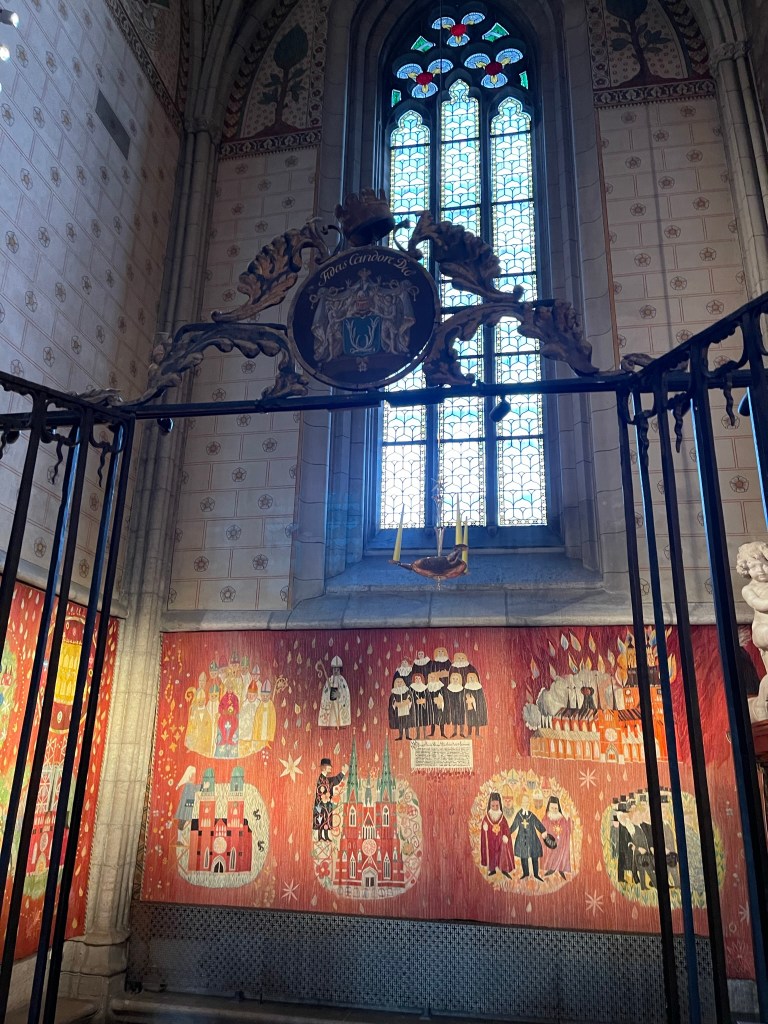
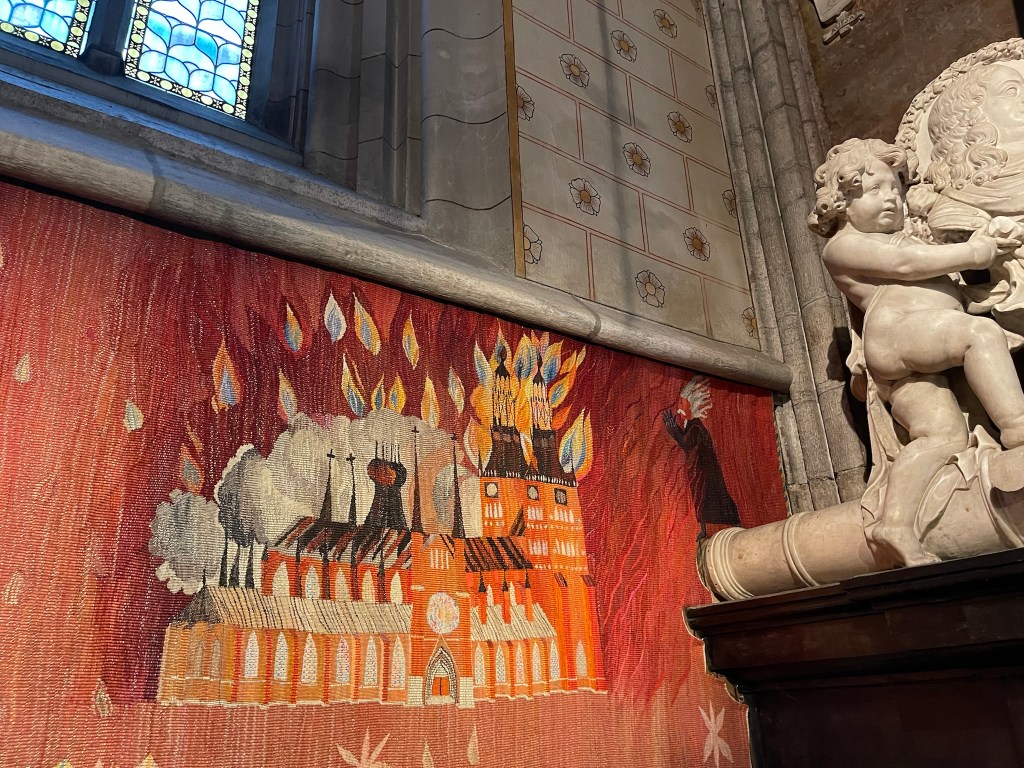
Först i raden av rum längs domkyrkan norra sida ligger Minneskoret eller von Dohnas gravkor. Vid restaureringen 1971-76 beställdes en tvådelad väggtextil till koret av konstnären Ann-Mari Forsberg (1916-1992). Textilen är utförd i gobelängteknik på liggande varp. Tretton bilder mot en smultronröd bakgrund berättar domkyrkans långa historia.
First in the row of rooms along the cathedral's north side is the Memorial Choir or von Dohna's tomb's Choir. During the restoration in 1971-76, a two-part wall textile was ordered for the choir by the artist Ann-Mari Forsberg (1916-1992). The textile is made in tapestry technique on a horizontal warp. Thirteen images against a strawberry red background tell the cathedral's long history.
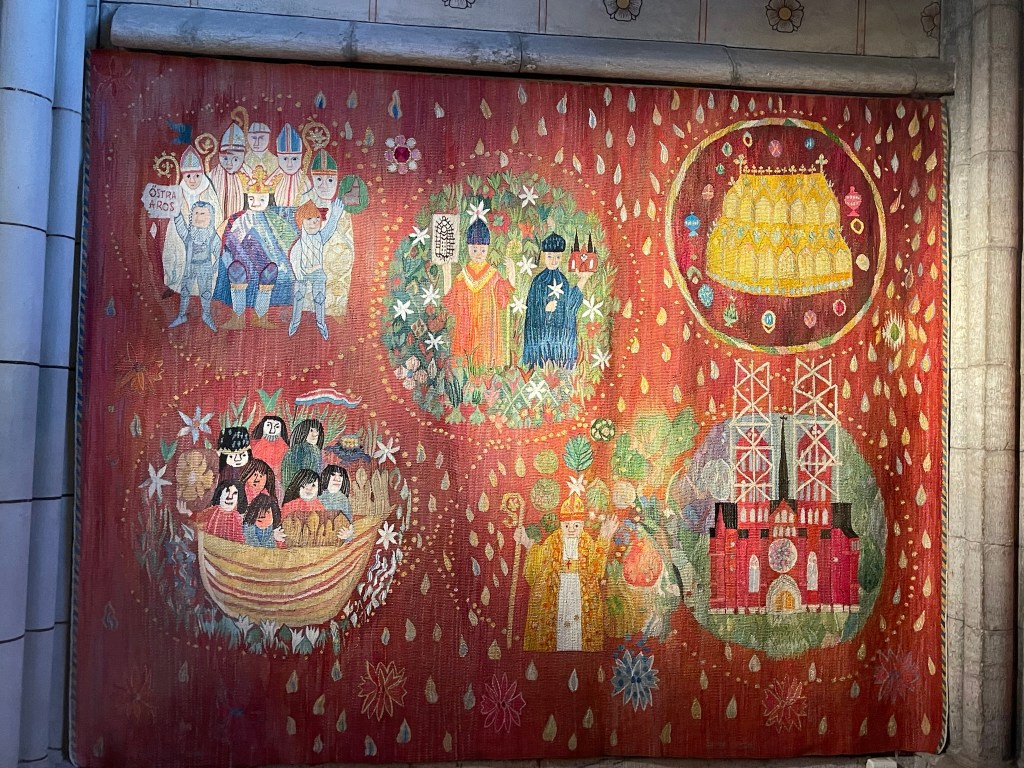
Bild 2: Ärkebiskop Folke Johansson Ängel (1274-77) och domprost Andreas And (1278-99), inflytelserika under byggets första tid // Picture 2: Archbishop Folke Johansson Ängel (1274-77) and Dean Andreas And (1278-99), influential during the first period of construction
Bild 3: Det gyllene relikskrinet med Sankt Eriks reliker, hitflyttat 1273 // Picture 3: The golden relic chest with St. Erik’s relics, moved here in 1273
Bild 4: Franske stenmästaren Estienne de Bonneuil och hans kunniga medarbetare kommer seglande till Uppsala // Picture 4: French stonemason Estienne de Bonneuil and his knowledgeable staff come sailing to Uppsala
Bild 5: Invigningen av domkyrkan den 7 juni 1435 av ärkebiskop Olof Larsson. Tornen är ännu inte färdigbyggda // Picture 5: The inauguration of the cathedral on June 7th, 1435 by Archbishop Olof Larsson. The towers are not yet complete.
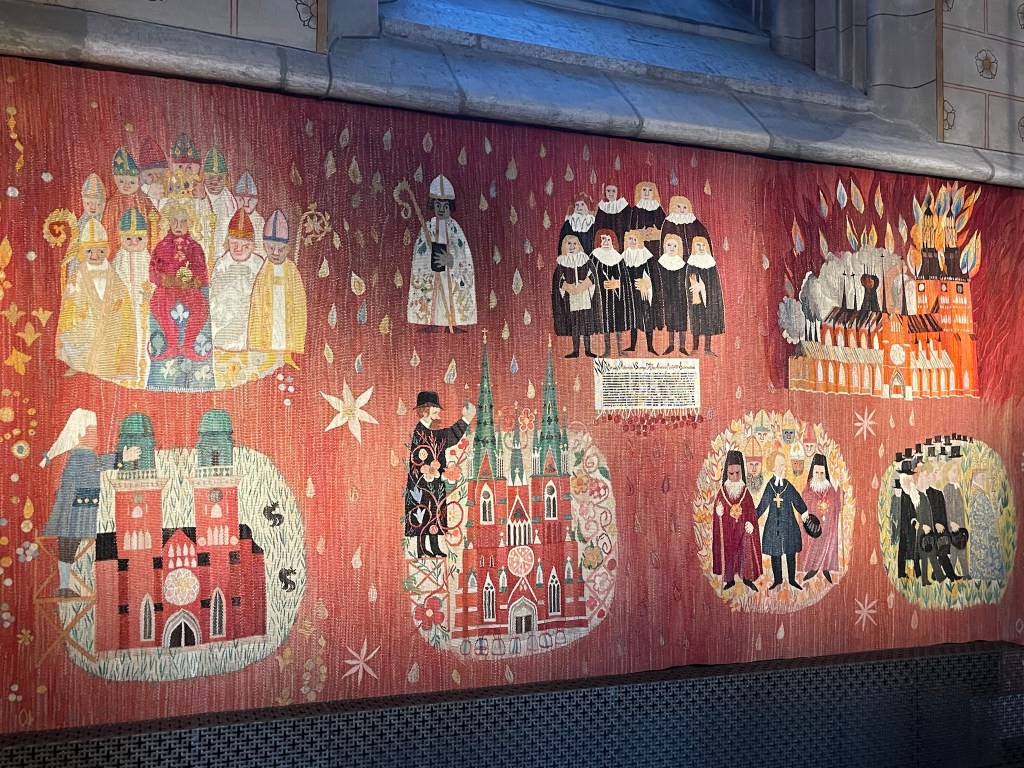
Bild 7: Landets första evangelisk-lutherska ärkebiskop, Laurentius Petri Nericius // Picture 7: The country’s first Evangelical-Lutheran Archbishop, Laurentius Petri Nericius
Bild 8: Mötet i Uppsala 1593 där den evangelisk-lutherska läran stadfästs som statsreligion // Picture 8: The meeting in Uppsala 1593 where the Evangelical Lutheran doctrine is confirmed as a state religion
Bild 9: se nedan // Picture 9: see below
Bild 10: Carl Hårleman och de nya, lägre barocktornen år 1745 // Picture 10: Carl Hårleman and the new, lower baroque towers in 1745
Bild 11: Helgo Zettervall med de nuvarande höga tornspirorna 1893 // Picture 11: Helgo Zettervall with the current high tower spiers 1893
Bild 12: Det ekumeniska kyrkomötet i Uppsala 1925, med ärkebiskop Nathan Söderblom i mitten år 1925 // Picture 12: The ecumenical church meeting in Uppsala 1925, with Archbishop Nathan Söderblom in the middle
Bild 13: 800-årsjubileet 1964 av att Sverige fått ärkebiskopsstol // Picture 13: The 800th anniversary in 1964 of Sweden receiving the archbishopric
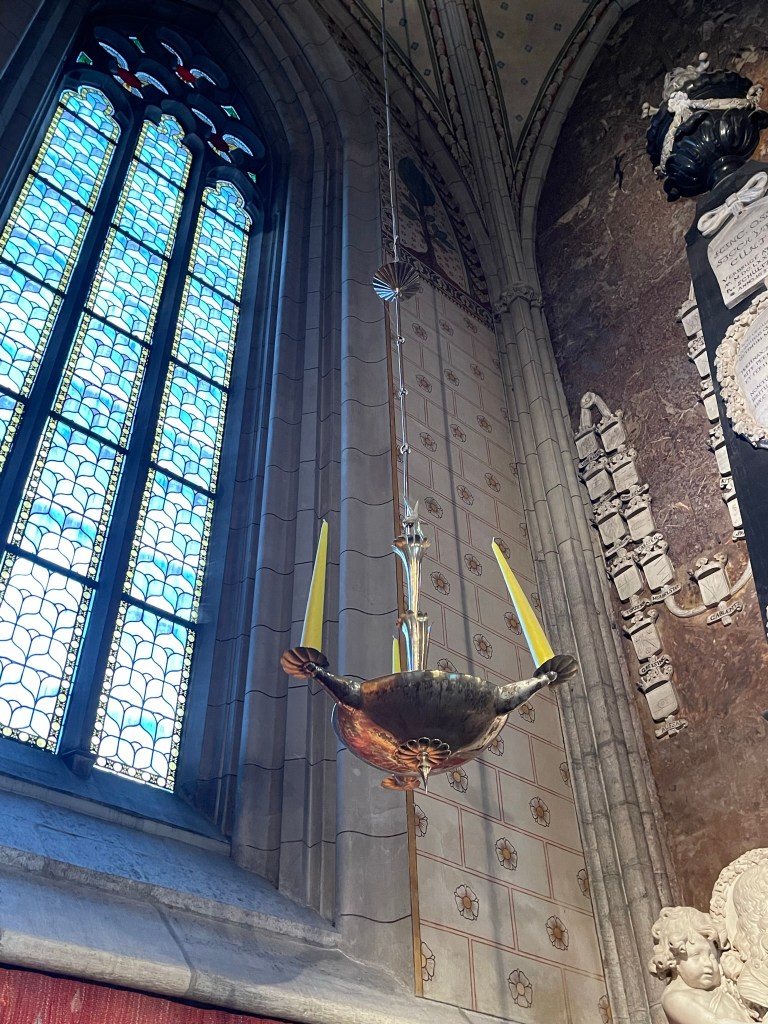
Silverkronan med tre ljushållare skänktes till domkyrkan 1924 av furst Ras Taffari (1892-1975), senare kejsare av Etiopien under namnet Haile Selassie I. Under hela sin livstid bidrog han också med nya vaxljus från den kejserliga biodlingen. De sista kvarvarande ljuset sitter ännu i kronan.
The silver crown with three candle holders was donated to the cathedral in 1924 by Prince Ras Taffari (1892-1975), later emperor of Ethiopia under the name Haile Selassie I. Throughout his life, he also contributed with new wax candles from the imperial beekeeping. The last remaining candles are still in the crown.
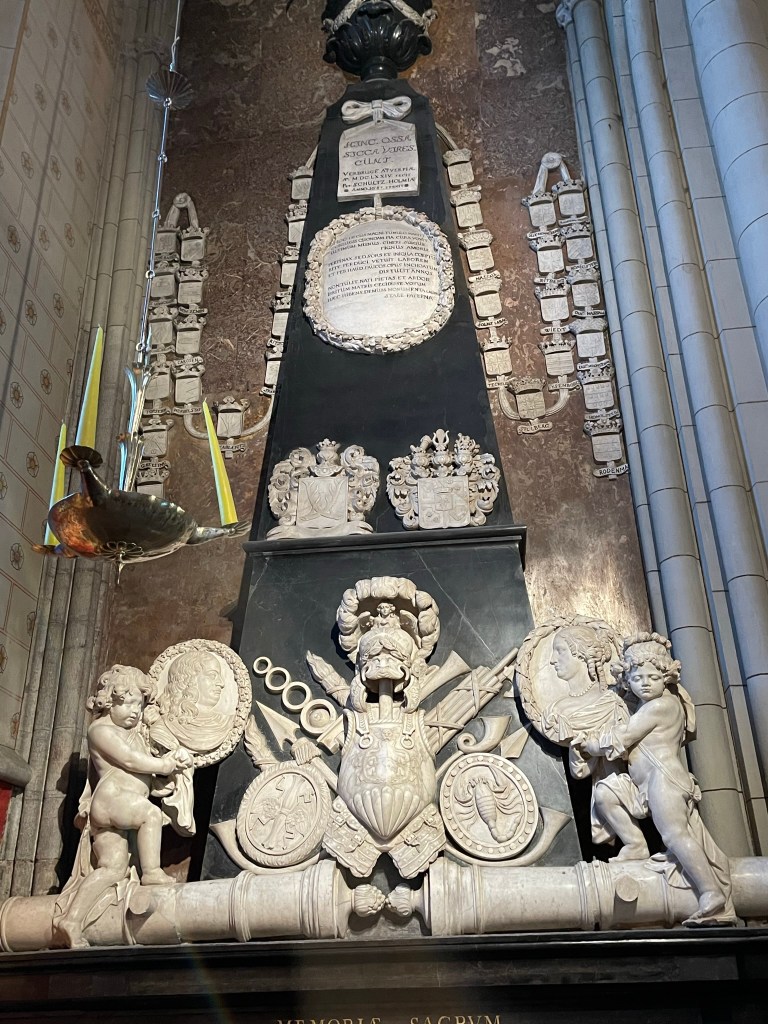
Vid Minneskorets östra vägg står en åtta meter hög obelisk av svart polerad kalksten, monumentet över fältmarskalken och diplomaten greve Christopher von Dohna (1628-68) och hans hustru Anna Oxenstierna.
At the eastern wall of the Memorial Choir stands an eight-meter-high obelisk of black polished limestone, the monument to the field marshal and diplomat Count Christopher von Dohna (1628-68) and his wife Anna Oxenstierna.
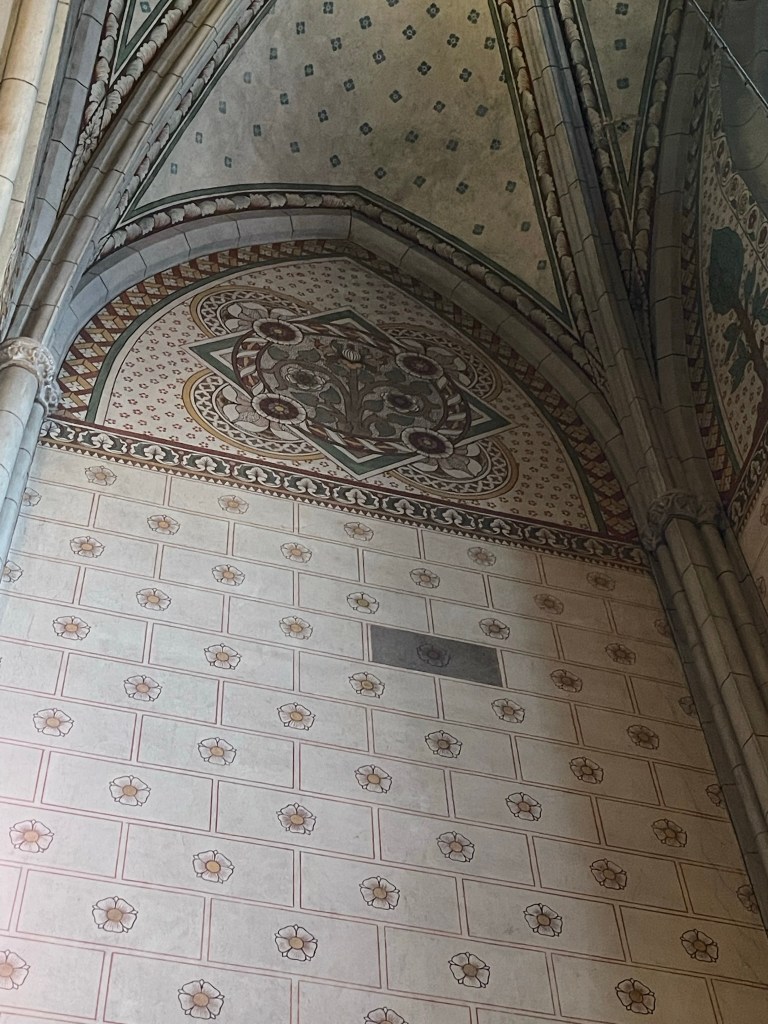
Sju metes upp på västra väggen finns en mörkare ruta i väggmålningen. Vid restaureringen 1971-76 lämnades ett par sådana rutor utan rengöring för att visa hur hårt smutsade väggarna blivit sedan målningarna utfördes på 1890-talet.
Seven meters up on the west wall there is a darker box in the mural. During the restoration in 1971-76, a couple of such squares were left without cleaning to show how heavily soiled the walls have been since the paintings were made in the 1890s.
 Discover Sweden with Alex